
At 26, Bahaa Al-Nabih has already built a company, lost the office it operated from, been displaced more than five times and seen his home destroyed twice.
But when he talks about Tomouh, the technology company he founded in Gaza in 2021, he does not describe himself as starting again from nothing.
“I don’t want to say that we are back to zero,” Bahaa says. “We now have experience, a team and a previous success story to build on.”
Tomouh began while Bahaa was still a student and taking his first steps as a freelance software developer. Through his work, he began to notice a gap in the market: a shortage of specialised Arabic digital solutions built around the needs of businesses and entrepreneurs in the region.
Alongside his friend and co-founder Mohammed, Bahaa decided to turn that observation into a company.
Their aim was to help entrepreneurs move from an idea to something tangible. Tomouh worked with startups to develop mobile applications, websites and minimum viable products, helping founders turn early concepts into digital products they could test and take to market.
What started as an idea between two young developers grew into a team of more than 12 people.
Before the war, Tomouh had worked with more than 20 clients and startups, developed over 15 mobile applications and built more than 10 websites. Its work increasingly reached beyond Gaza, including clients in Saudi Arabia and other international markets.
For Bahaa, establishing a consistent presence in the Saudi market and competing for projects through international freelancing platforms were among the company’s proudest achievements. It showed him that a team working from Gaza could build technology for customers well beyond its borders.
When everything around the company changed
The war transformed both Tomouh and Bahaa’s life.
The company’s office in Gaza City was completely destroyed. Two members of the team were killed, including Mohammed, Bahaa’s friend, co-founder and one of the first people to believe in the idea behind Tomouh.
Mohammed had been there when the company was still only an ambition. For Bahaa, continuing to build Tomouh also means carrying forward part of the dream they created together.
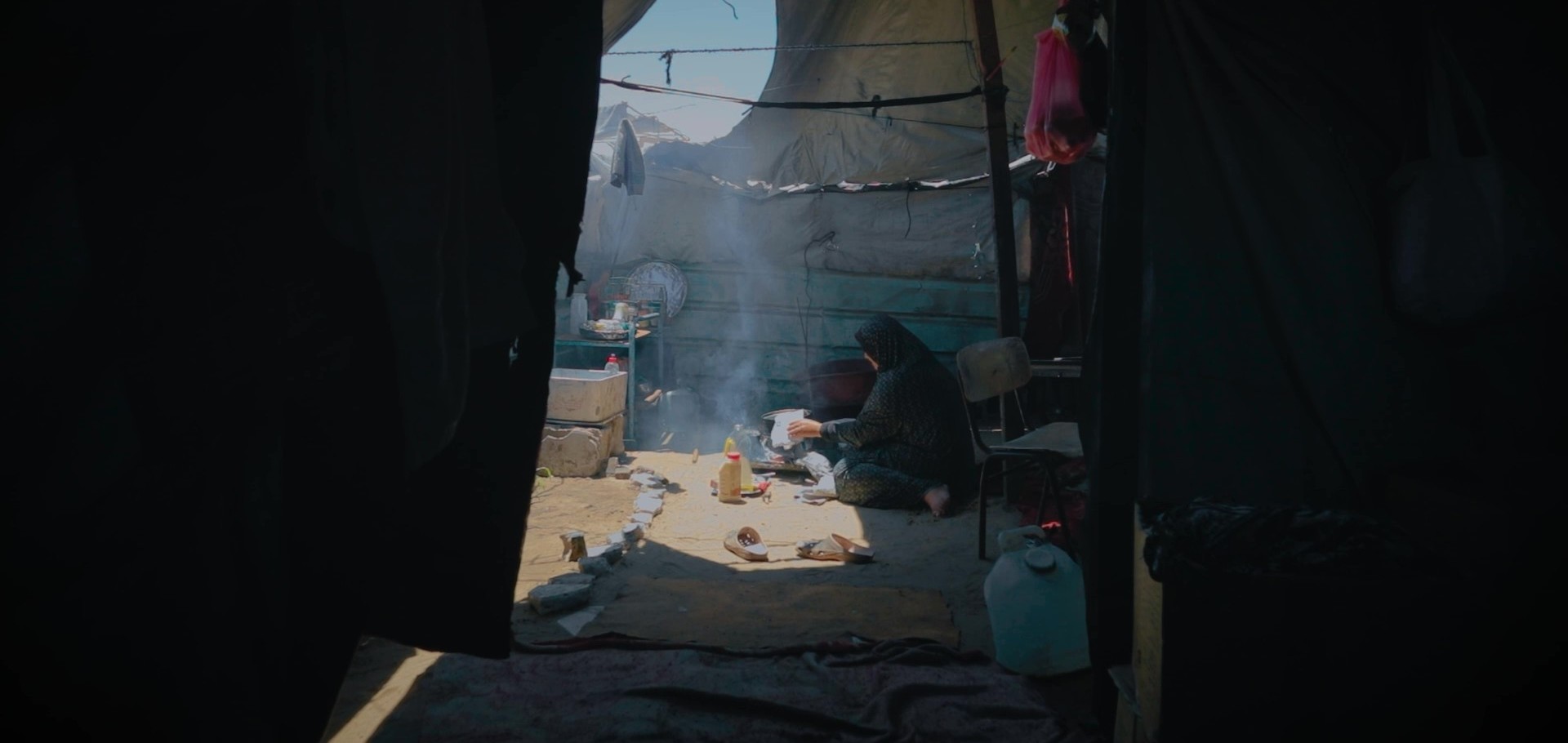
At the same time, Bahaa was experiencing repeated displacement himself. He has been forced to move more than five times within Gaza.
His home had already been destroyed once, in 2021. He rebuilt it completely. Less than a month after the reconstruction was finally finished, the latest war began. The house was destroyed again.
Running a technology company under these conditions became increasingly difficult.
Electricity and internet access were no longer reliable. For a company dependent on digital communication with clients abroad, losing internet access meant losing its connection to the market.
“When the internet was cut off, almost all of our income was cut off with it,” Bahaa says.
He tried to stay in contact with clients, reassure members of his team and keep projects moving whenever circumstances allowed. But as the war continued, maintaining the team in the way it had operated before became impossible.
Yet even as Tomouh was losing the physical foundations on which it had been built, Bahaa and his team began thinking about what the company could become next.
Building Tomouh’s first product
Before the war, Tomouh primarily provided technology services to other businesses. Bahaa now wants the company’s next chapter to be different.
His ambition is to transform Tomouh from a service-based business into a company that also develops its own products.
That ambition led to AgriEye AI, an artificial intelligence-powered platform designed to help identify plant diseases.
Using a mobile phone, a farmer can photograph a plant leaf. The platform analyses the image to identify whether the plant shows signs of disease and, when a problem is detected, provides information about potential treatment and ways to prevent it in the future.
The decision to focus on smart agriculture came from Tomouh’s search for an international opportunity rather than solely a product for Gaza’s local market.
The team identified agriculture as a large global sector where they saw a particular gap in specialised Arabic-language digital solutions. Their aim is to differentiate AgriEye AI through Arabic accessibility, simplicity of use and features designed around the needs of its users.
The idea has already faced its first test.
Tomouh entered AgriEye AI into the 10 Hour Challenge during Palestine AI Week, where the team had just ten hours to build an MVP. The project finished third at the Gaza level.
The prototype was created specifically for the competition and was not released publicly, but the result gave Bahaa and his team greater confidence in the idea. They are now working towards a more complete first version that can eventually be launched for users.
From recovery to mentorship
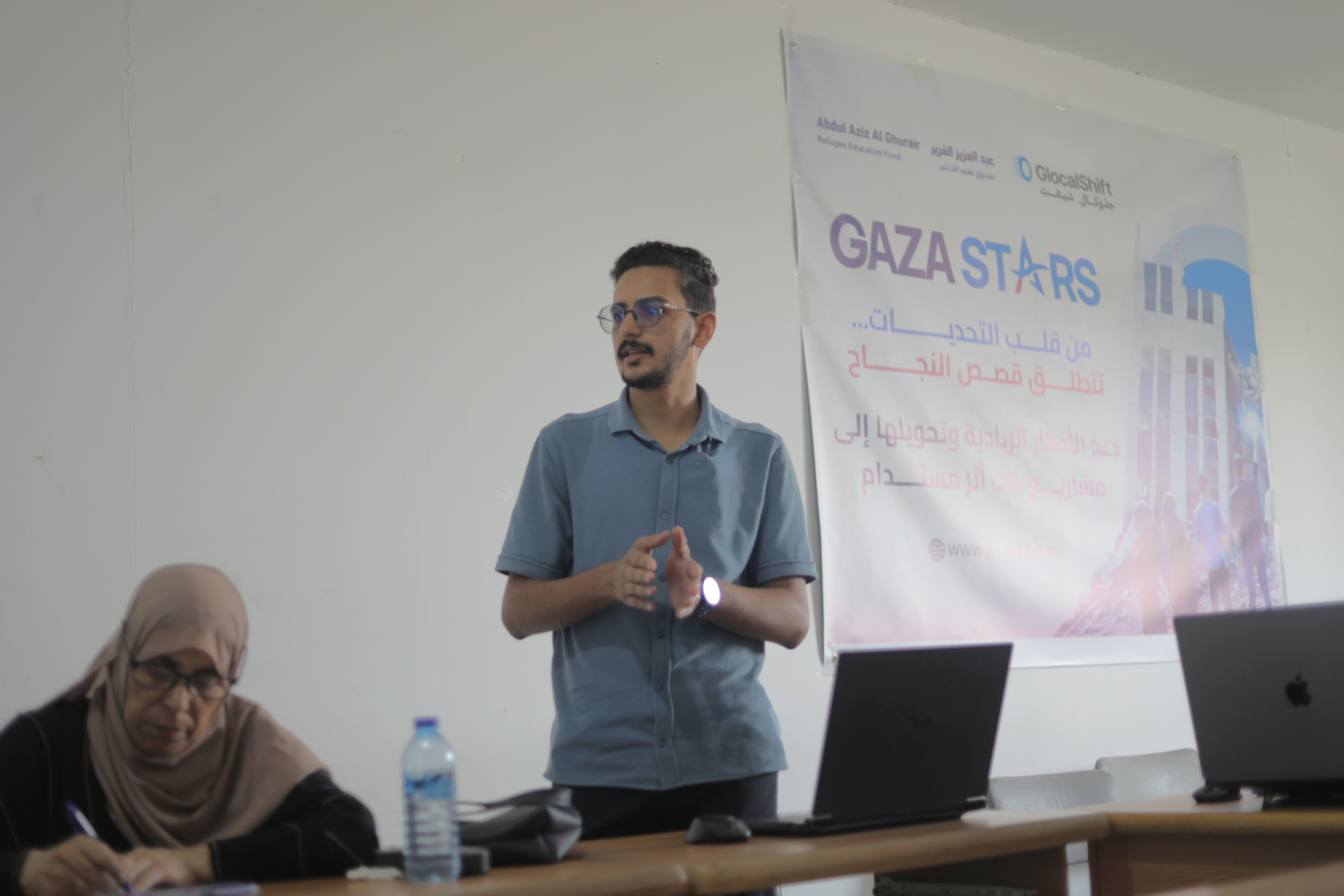
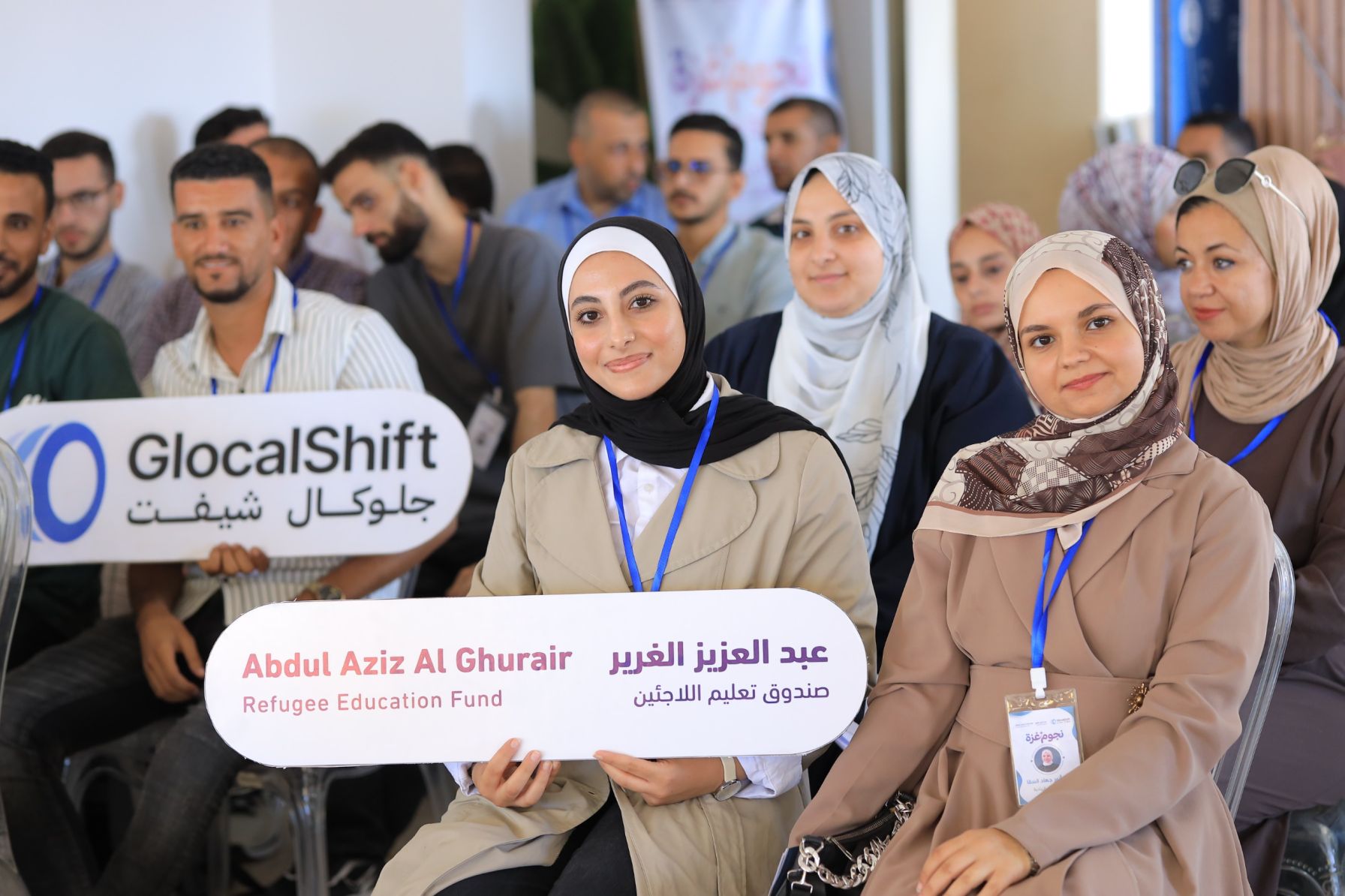
As he works to rebuild Tomouh, Bahaa joined Gaza Stars, part of GlocalShift’s Learning to Earning programme, delivered in strategic partnership with the Abdul Aziz Al Ghurair Refugee Education Fund.
Gaza Stars supports entrepreneurs in Gaza to rebuild businesses disrupted by the war or develop new ventures through training, mentorship and pathways towards seed funding.
Bahaa joined through the Recovery Track, designed for entrepreneurs seeking to rebuild businesses that existed before the war.
One part of the training in particular stayed with him: design thinking.
The session encouraged him to rethink how Tomouh approaches both its services and its products. Instead of beginning with an idea the team wants to develop, Bahaa says he has become more focused on first identifying a real problem experienced by the customer and then designing a solution around it.
He has now qualified for the mentorship phase of Gaza Stars.
His hope is to progress further and eventually secure monetary support that could help Tomouh move from surviving to rebuilding.
.jpg)
A place to work, and a company to grow
If Bahaa succeeds in securing funding, one of his first priorities will be remarkably basic for a technology company: finding a stable place to work.
He wants to rent an office with reliable electricity and internet where the team can work together again. Unlike Tomouh’s previous office, he also wants the new space to allow the company to provide in-person technical training.
Another priority is officially registering and licensing Tomouh for the first time, which Bahaa believes will strengthen the company’s credibility with international clients and potential partners.
Funding would also support the cloud infrastructure and AI services needed to develop and launch AgriEye AI, provide greater stability for the core team during the rebuilding period and help Tomouh reconnect with international clients through platforms such as LinkedIn and global freelancing marketplaces.
Saudi Arabia and the wider Gulf remain particularly important markets for the company.
But Bahaa does not simply want to recreate the Tomouh that existed before the war.
He wants to build something larger.
.jpg)
Beyond rebuilding
Over the next three to five years, Bahaa hopes Tomouh can become one of the region’s leading Arab companies in digital product development and artificial intelligence.
He describes the future he wants as product first: a company that does not only provide technology services for others, but develops products of its own that can compete internationally.
He wants AgriEye AI to be used across the Gulf and Middle East and, eventually, in markets beyond the region.
He also wants to rebuild Tomouh’s team and eventually surpass the more than 12 people who worked there before the war.
His first goal is to bring the current core team into stable, full-time employment. From there, he hopes to create new technical, marketing and administrative jobs for young people in Gaza.
For Bahaa, employment is not simply an outcome of growing the company. It is part of the reason for growing it.
He wants Tomouh to show other young people that building a career in technology from Gaza is possible. The company is also preparing to offer free workshops in coding and artificial intelligence, with the longer-term ambition of contributing to a wider technology community beyond the company itself.
The office where Tomouh once operated may no longer exist. Its team has been scattered, and some of the people who helped build it are gone.
But Bahaa believes a company is made of more than the walls around it.
“Even if everything is destroyed, even if we go back to zero, the idea doesn’t die,” he says. “We are still here, and we will keep trying until we reach our ambitions, God willing.”
For Bahaa, that is what Tomouh remains.
“Tomouh is not a building or an office. Tomouh is an idea, a team and people who believed in it.”

.jpg)
.jpeg)
