
.jpg)
More than a decade of conflict has left Syria with a paradox: a young population highly educated on paper but largely unequipped for the jobs its own recovery will require. Universities kept graduating engineers, IT specialists, and nurses throughout the war. What collapsed was everything around them: the laboratories, industrial partnerships, and structured pathways into employment that turn a degree into a career. The result is a generation with theoretical knowledge and nowhere obvious to apply it, at precisely the moment Syria needs skilled hands to rebuild its industry, health system, and digital economy.
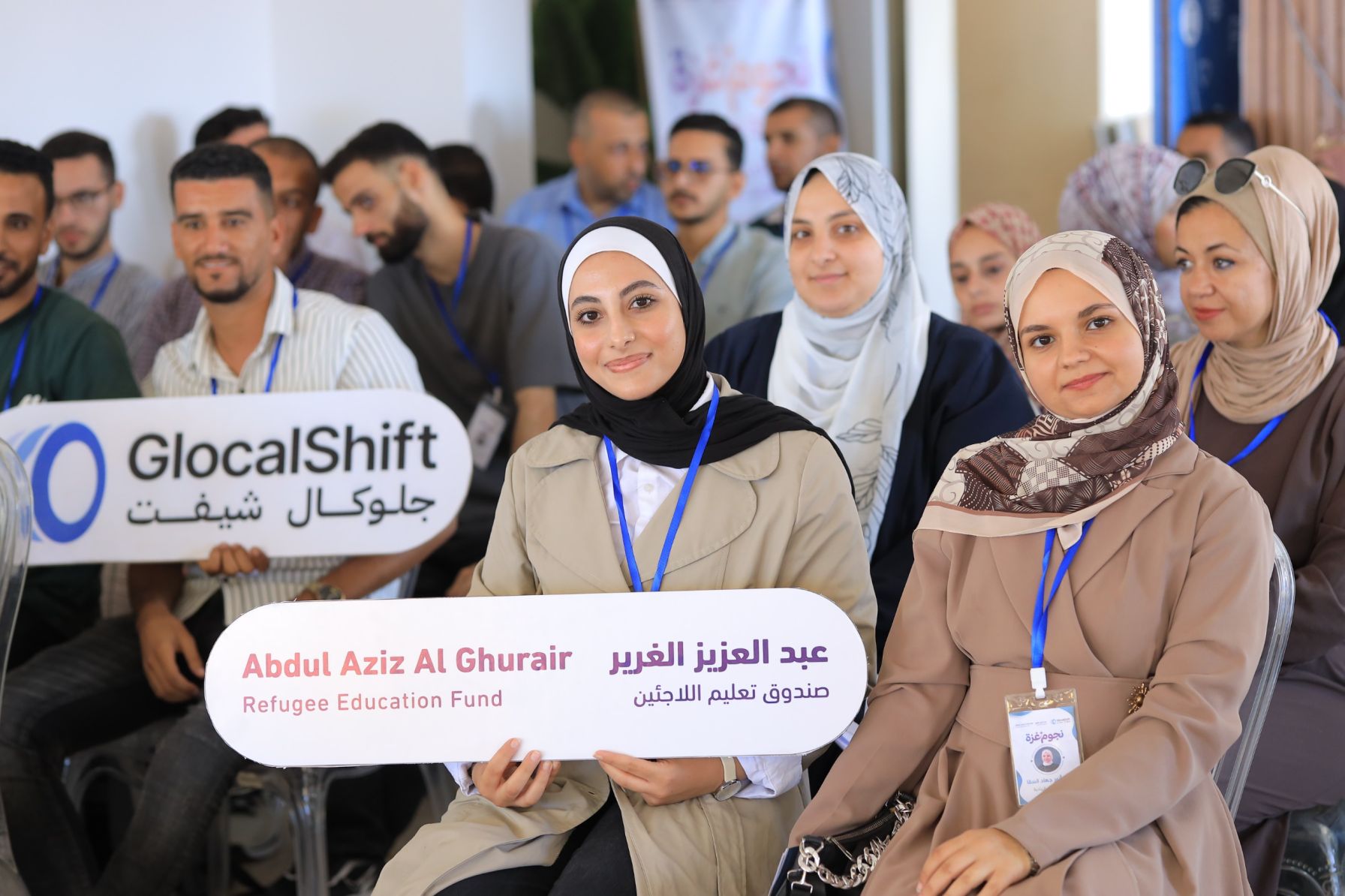
This is the strategic problem that Learning to Earning, part of the regional Learning to Earning programme, was designed to solve. Delivered through the Abdul Aziz Al Ghurair Refugee Education Fund and GlocalShift's partnership with Education Without Borders (MIDAD), the model doesn't treat training as an end in itself. It is built around a single question: can skills training be deliberately engineered to convert directly into income, employment, and self-reliance, at a scale that matters for a country's recovery? Six months into the first cohort, the early evidence suggests the answer is yes, and the "how" is as instructive as the results themselves.
A design built around the recovery agenda, not a generic curriculum
Rather than offering a standard vocational package, the programme built the first cohort around four tracks chosen for their direct relevance to Syria's reconstruction needs: programming and application development, automation and advanced manufacturing, industrial control and modelling, and healthcare-related technical skills. Each was a deliberate bet on where the local and regional economy is short of qualified people. Industrial control and automation serve factories rebuilding in Aleppo, healthcare technicians support an overstretched hospital system, and programming meets a labour market where remote, digital work can bypass the access and mobility constraints that limit almost every other sector.
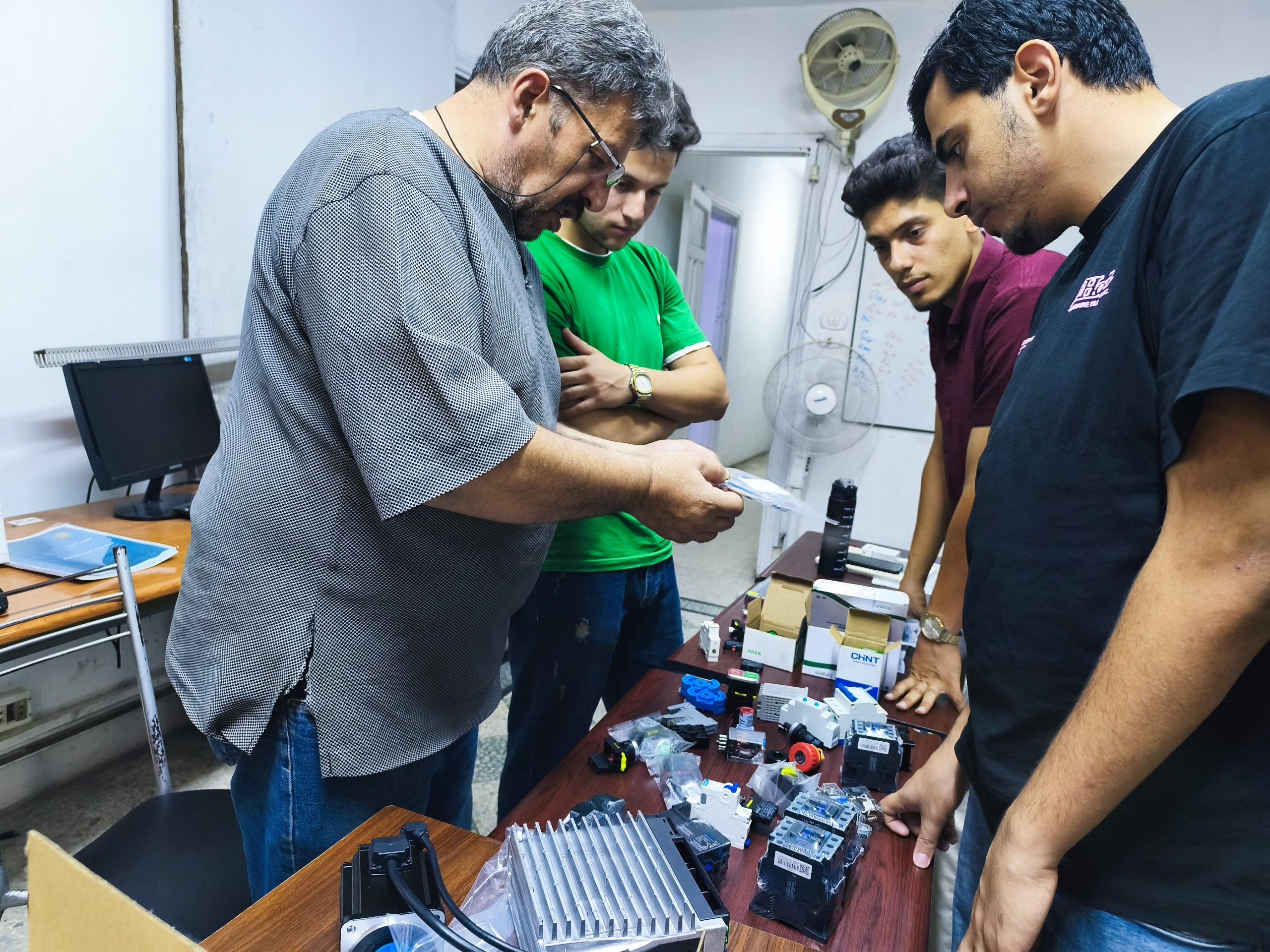
That logic extended to delivery, too. Training combined online instruction, reaching students in both Aleppo and Idlib despite the access barriers between them, with intensive, hands-on sessions in real institutional settings: the University of Aleppo's Innovation Centre, the University Hospital of Aleppo, and dedicated training halls. Even the calendar was strategic. The four-month cycle, running from April to August 2026, was built around university exam schedules and religious holidays, so the programme reinforced rather than competed with participants' existing academic paths.
The uptake validated the design. Of 649 young people registered for the wider programme, 500 joined this first cohort: 140 in programming, 140 in automation and advanced manufacturing, 140 in industrial control and modelling, and 80 in healthcare and nursing. By the end, 394 had completed the full 220-hour course successfully, a completion rate that matters as much as enrolment, in a context where dropping out is often the easier option.
.jpg)
Closing three gaps at once: skills, gender, and geography
What makes the model strategically significant is that it was engineered to close more than one gap simultaneously. The first is the skills-market gap: nearly half of participants came from displaced or otherwise vulnerable backgrounds (54.2%), groups typically furthest from structured training and formal employment. The second is geography. By pairing remote delivery with physical labs, the programme reached Idlib-based students who would otherwise have no access to the University of Aleppo's facilities at all.
The third, and most deliberately targeted, is gender. Women made up 45.8% of the first cohort, 298 participants across healthcare, programming, automation, and industrial control. In the industrial control track specifically, that participation ran directly against prevailing norms. In Syria, factory and industrial-facility work is still widely coded as a male domain, and female participants had to prove their competence in an environment still dominated by men. MIDAD's response was not to soften the track for women but to hold the technical bar steady and let performance do the arguing, building confidence through genuine hands-on, field-based practice rather than a parallel or watered-down curriculum. Trainers report that this approach shifted attitudes, even as growing women's participation in that specific track remains unfinished work.

The numbers behind "earning"
The programme's name sets its own benchmark, and the first cohort's early labour-market results are the clearest test of whether the model works as designed. Eighty healthcare graduates have been hired into stable positions in local hospitals. Ten programming graduates, based in both Aleppo and Idlib, are now working remotely for local companies, and a further ten have launched independent freelance careers. Across automation, modelling, and industrial control, twelve more graduates have moved into jobs with local companies and industrial facilities. Support continues for participants still transitioning into internships or searching for their next opportunity.
One case captures the strategic intent especially well. A displaced student in Idlib, with no prior income, joined the online programming track and is now working as an independent freelance web developer, proof that a remote, digitally delivered track can generate real income even where physical access to opportunity remains blocked.
What this looks like at the individual level
Behind the aggregate figures are individual trajectories the model was built to produce. Yasmine Dabbagh, 28, from Aleppo, was a nursing student whose path into the profession had been stalled for years by the war. She joined the healthcare track to gain the practical, clinical experience her studies alone couldn't provide, spending four months training inside the University Hospital of Aleppo's neonatal intensive care unit under specialist supervision, mastering critical equipment, case management, and team leadership under real clinical pressure.
She didn't just complete the training; the hospital hired her on a permanent contract, leading the paediatric intensive care team.
"War deprived us for years of the chance for real learning and hands-on experience, but this training reshaped my professional identity and made up for everything I had missed. Today I don't just know how to operate neonatal intensive care equipment. I lead an entire team to save these children's lives."
Yasmine is now looking to extend her impact beyond her own ward, aiming to help develop regional protocols for newborn care and mentor the next generation of nurses coming through the same training pipeline she once did.
.jpg)
How the Abdul Aziz Al Ghurair Refugee Education Fund and GlocalShift are advancing locally led solutions for Syria
The strategic core of Learning to Earning is that its impact isn't meant to depend on continuous donor funding. By embedding training inside existing institutions, including the University of Aleppo's Innovation Centre, the University Hospital of Aleppo, and local industrial facilities, rather than building parallel structures, MIDAD ensures the infrastructure, expertise, and industry relationships remain in place for future cohorts regardless of what happens to any single grant cycle.
The same logic applies to people. Graduates who move into stronger roles are already becoming multipliers. Alumni like Yasmine want to mentor incoming nurses, graduates promoted into leadership positions are shaping the training protocols and workplace standards that will guide the cohorts still to come, and families are seeing the direct, compounding benefit of a household member's stable income. This is the mechanism by which a single training cycle is designed to become a self-reinforcing pipeline rather than a one-off intervention.

What comes next
Plans are already underway for a second phase of training to reach the rest of the 649 registered participants. But the real measure of success won't be in a completion rate or a placement number. It will be in how many more stories like Yasmine's this model can produce, young Syrians who walked in uncertain and walked out leading.

%20-%20frame%20at%200m21s.jpg)