

At the beginning, some of the projects were little more than ideas.
They had potential, but the business models were still unclear. Some entrepreneurs were trying to work out whether their ideas could respond to the realities of Gaza’s market. Others were attempting to revive businesses that had operated before the war, but now faced destroyed infrastructure, disrupted supply chains and a radically changed economy.
Months later, the difference is visible.
“At the beginning, the project was simply an idea. It wasn’t clear and there was still a lot of uncertainty. Today, we have technical solutions that are ready to enter the market.”
The reflection came as Gaza Stars entered its latest stage, with entrepreneurs presenting their projects to an evaluation panel after completing training and tailored mentorship.
The programme began with 2,018 applications from across Gaza. From those, 300 entrepreneurs were selected: 150 for the Startup Recovery track and another 150 for the Innovation track.
Now, 83 entrepreneurs who completed the mentorship stage are being assessed as the programme works towards selecting 30 finalists.
Starting again after everything changed
Gaza Stars was created around two different realities facing entrepreneurs in Gaza.
For some, the challenge is recovery. They already had businesses before the war, but need to rethink how they operate, find customers again and rebuild financially.
For others, the starting point is a new idea: a product, service or technology designed in response to problems they see around them.
The programme therefore operates through two tracks. Startup Recovery supports existing businesses with business continuity, financial planning and market re-entry. The Innovation track works with early-stage entrepreneurs on developing business models, validating their ideas and preparing products for the market.
The response was significant. Of the 2,018 applications received, 600 were for Startup Recovery and 1,418 for Innovation, with applicants coming from all five Gaza governorates.
Gaza Stars is the first startup competition in Gaza since October 2023. It is locally led, bringing together Palestinian trainers, facilitators in Gaza and diaspora mentors to support entrepreneurs through training, mentorship and seed funding.
Turning training into something practical
For the selected entrepreneurs, the programme moved quickly from ideas to practical questions.
How much will the product cost?
Who will buy it?
Can the business continue operating under current conditions?
Can the idea generate enough income to survive?
What would it take to grow?
Participants completed 48 hours of structured training. Those rebuilding existing businesses worked on recovery, financial management and market re-entry, while Innovation participants focused on business modelling, financial planning and preparing new ventures.
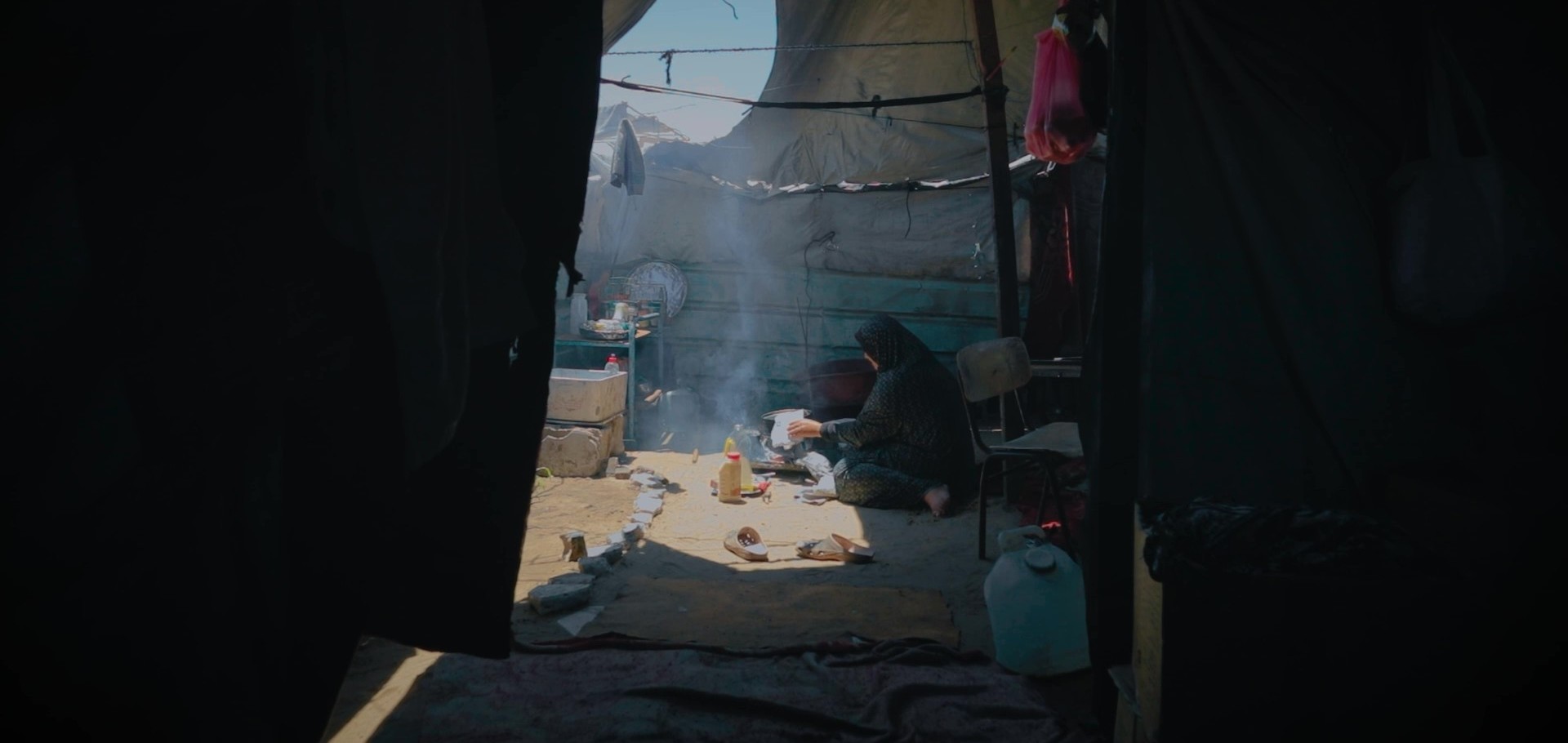
The programme has been delivered in circumstances that make even ordinary business activity difficult. Sessions have required flexible arrangements and continuous adaptation to conditions on the ground.
Yet attendance reached 85%, while 80.2% completed the training and participant satisfaction reached 82%.
Women also account for 44.05% of the core and reserve participant pool, above the programme’s target of 40%. Participants come from Gaza, the central area, Khan Younis, North Gaza and Rafah.
From a classroom to a business
The next stage was more individual.
Eighty-three participants went on to complete tailored mentorship, with each participating team receiving at least three sessions. Mentors worked with them on market validation, minimum viable products, business models, pitching and investor readiness.
For many, this was where an idea started to look more like a business.
Ghadir, for example, is rebuilding an educational project centred on learning through play, at a time when children in Gaza have lost so much access to ordinary childhood and education.
Her story is about much more than restarting a business. It asks what learning can look like in a place where schools, homes and routines have been repeatedly disrupted.
Then there is Saree, a delivery application developed in Gaza whose earliest version began with code written down by hand.
The two projects could hardly be more different. But both show how entrepreneurs are trying to respond to everyday needs while thinking about whether their ideas can survive financially.
What makes an idea worth backing?
That question has become central as Gaza Stars enters its evaluation stage.
The panel is not simply looking for the most impressive presentation.
It is looking for businesses that can work.
“We are looking for projects that are practical, sustainable and scalable, that can generate income and create future employment opportunities for young people, with the potential to eventually move beyond the local market and compete in global markets.”
For the evaluators, sustainability is particularly important.
The question is whether a project can continue after the programme ends, create dignified work and contribute, even on a small scale, to reviving economic activity.
The current assessment combines participants’ progress during training and mentorship with project presentations, structured interviews and panel evaluation. From the 83 entrepreneurs who completed mentorship, 30 finalists are expected to be selected.
Thirty finalists, then the next test
Once the evaluation is completed, the programme will move towards finalist selection and awards.
A total of $36,000 in seed funding is planned across the two programme tracks, subject to final assessment, approval and verification.
Under the programme design, 10 winning teams are expected to receive awards, with five selected from each track.
But the story of Gaza Stars is not only about who eventually wins.
For some entrepreneurs, progress has already meant taking an idea they could barely define and turning it into something they can present to a market.
For others, it has meant looking at a business they built before the war and asking a much harder question: how can it exist now?
Entrepreneurship cannot rebuild Gaza on its own. The scale of destruction requires far more than individual businesses can provide.
But local businesses matter.
They create income. They preserve knowledge and skills. They give people the possibility of work. And, when they survive, they can create opportunities for others.
When Gaza Stars began, its premise was that Gaza’s entrepreneurs were not simply waiting for recovery to arrive.
Several months later, many of them are already trying to build part of it themselves.
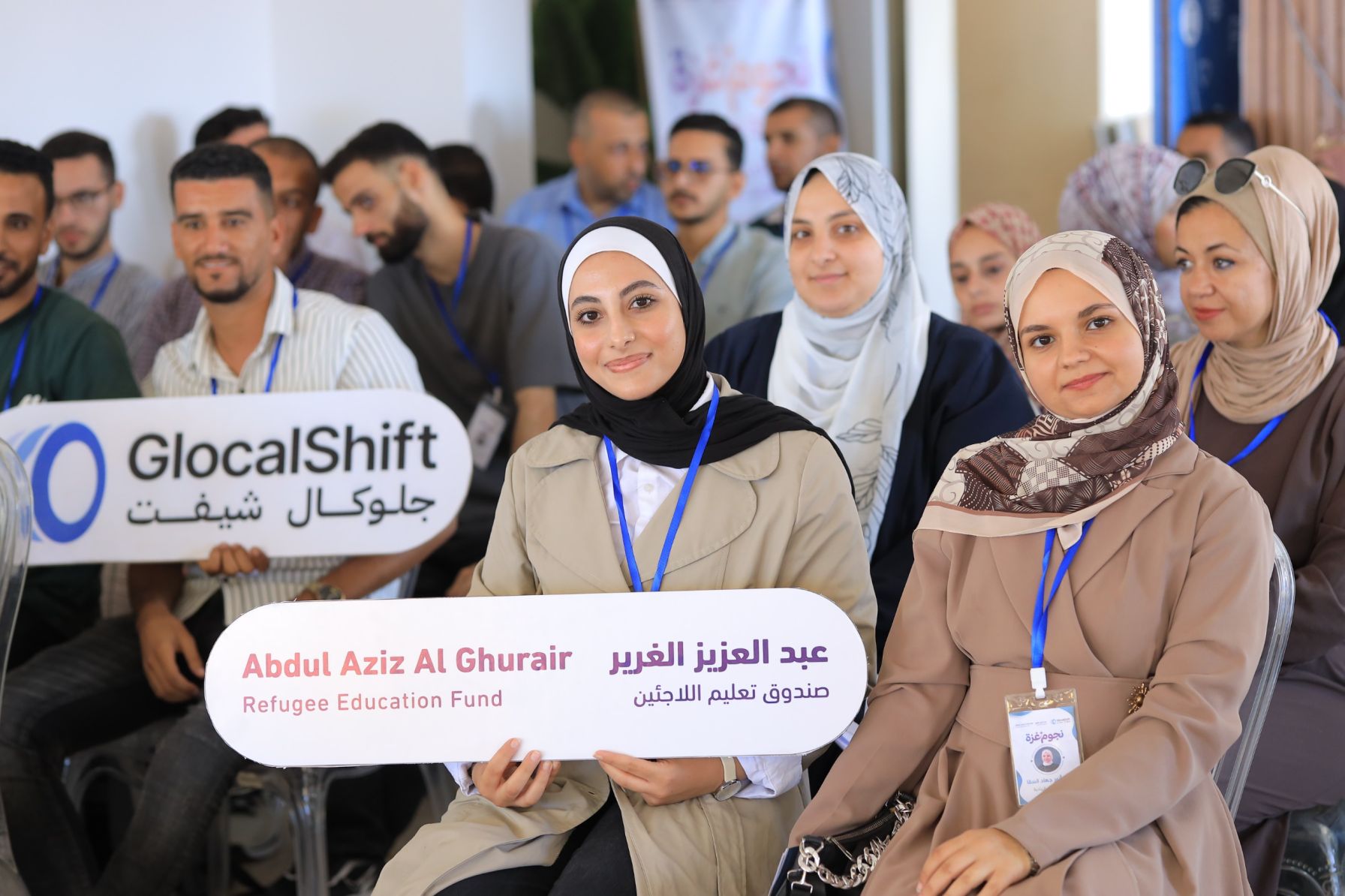
Gaza Stars is part of GlocalShift’s Learning to Earning initiative, delivered in strategic partnership with the Abdul Aziz Al Ghurair Refugee Education Fund.
.jpg)
%20-%20frame%20at%200m21s.jpg)
.jpeg)
