
In the intensive care unit of Al-Rantisi Hospital in Gaza City, a premature baby girl, born at just 28 weeks, struggles to breathe. Her lungs, barely formed, depend entirely on a steady flow of oxygen. Without it, she would not survive the night. She is one of hundreds of patients across the Gaza Strip for whom oxygen is not a comfort but the difference between life and death.
After months of devastating bombardment and a near-total blockade, Gaza's health system is operating at the absolute edge of collapse. Hospitals are running on empty: generators sputtering on dwindling fuel, surgical theatres overwhelmed, and oxygen supplies critically depleted. The shortage of medical oxygen has become one of the most acute and least visible crises within a crisis.
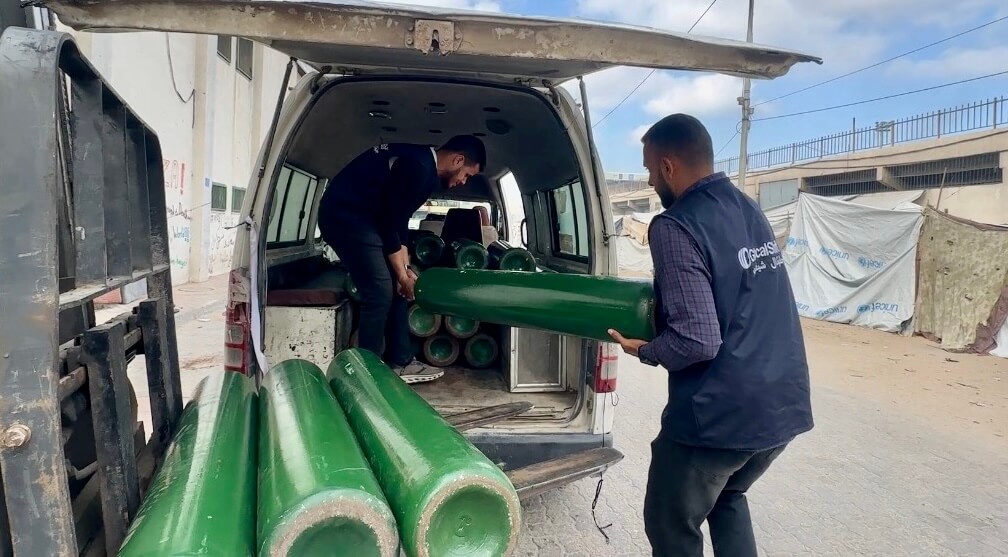
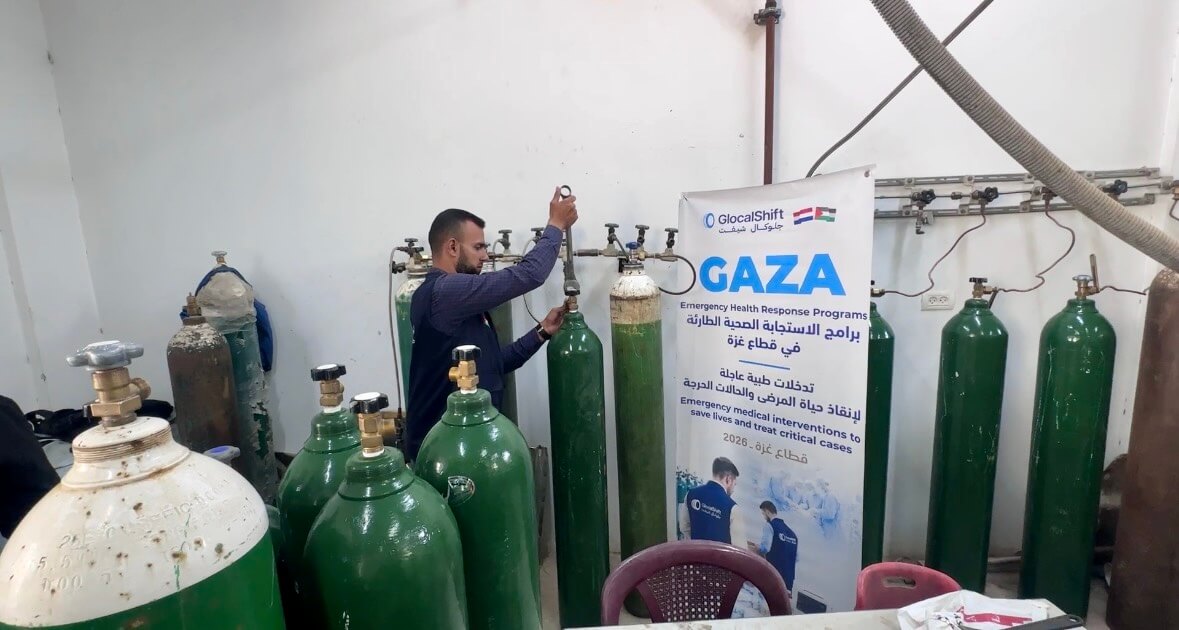
Upon receiving an emergency appeal from the Gaza Ministry of Health, GlocalShift coordinated the delivery of 60 oxygen cylinders, each fitted with the medical regulators required for safe clinical use, to five hospitals across Gaza City and the central Gaza Strip.
Five Hospitals. One Lifeline
Working in coordination with the Gaza Ministry of Health, GlocalShift distributed the oxygen cylinders to the following facilities:
- Al-Rantisi Hospital — Gaza City
- Al-Shifa Medical Complex — Gaza City
- Friends of the Patient Hospital (Asdiqaa Al-Marid) — Gaza City
- Al-Helou International Hospital — Gaza City
- Al-Aqsa Martyrs Hospital — Deir Al-Balah, Central Gaza Strip
Each of these hospitals is currently overwhelmed far beyond its intended capacity, receiving patients displaced by ongoing military operations, treating the war-wounded alongside premature infants, and managing complex care with drastically reduced resources. By supplying oxygen cylinders together with functioning regulators, which are often unavailable separately, Glocal Shift ensured that clinical teams could immediately put the equipment to use and maintain life-sustaining care for their most vulnerable patients: newborns in neonatal intensive care, patients on ventilators, and those recovering from surgery.
"A hospital without oxygen is not a hospital. It is a waiting room. Thanks to this delivery, we can continue to function as a medical facility and honour our duty to our patients, at least for now."Medical Director, Al-Shifa Medical Complex
Glocal Shift includes medical regulators in every oxygen cylinder consignment precisely because delivering tanks without them would leave hospitals with supplies they cannot safely use. Our teams work closely with Ministry of Health counterparts to ensure that what is delivered is clinically operational from the moment it arrives.






The Collapse of Gaza's Oxygen Infrastructure
Before October 2023, Gaza had a functioning, if fragile, medical oxygen supply chain. Industrial oxygen plants produced and refilled cylinders for hospitals and clinics. The central oxygen generation station at Al-Shifa Medical Complex served as a critical hub for the Strip's largest healthcare facility.
Today, that infrastructure has been devastated. According to the Gaza Ministry of Health:
- The majority of oxygen generation stations in Gaza have been damaged, destroyed, or rendered non-operational due to fuel shortages and structural damage from bombardment.
- The oxygen cylinder stockpile across Gaza's health facilities has been critically depleted, with hospitals unable to refill empty tanks due to the destruction of supply chains.
- Al-Shifa Medical Complex, historically Gaza's largest hospital and a central node in the oxygen supply network, suffered severe damage and has faced repeated disruptions to its operations.
- Al-Aqsa Martyrs Hospital in Deir Al-Balah has become the primary referral hospital for central Gaza, functioning under enormous strain with patient volumes far exceeding its design capacity.
The patients most at risk from oxygen shortages include premature and low-birth-weight infants requiring incubator and respiratory support; patients recovering from major surgery; those with severe respiratory infections, including pneumonia now endemic in displacement shelters; and critically wounded patients requiring ventilator support.
A Health System Under Siege
Gaza's health crisis did not begin with oxygen. It is the cumulative result of 18 months of sustained pressure on every pillar of the medical system.
The United Nations Office for the Coordination of Humanitarian Affairs (OCHA) and the World Health Organisation (WHO) have repeatedly warned that Gaza's health system is on the verge of total collapse. Fewer than half of Gaza's hospitals are even partially functional. Medical supply stocks are critically low. Healthcare workers, those who remain, are operating under extreme duress, many having lost their own homes and family members.
The shortage of oxygen sits at the intersection of several overlapping failures: the destruction of generation infrastructure, the blockade on imports of medical equipment, the fuel crisis preventing generators from powering what remains of the supply chain, and the surge in demand from a population enduring one of the most intense and sustained military campaigns in modern history.
GlocalShift calls on donor governments, international bodies, neighbouring states, and the international medical community to treat Gaza's health emergency as the acute humanitarian catastrophe it is and to mobilise resources accordingly.

.jpeg)
.jpeg)

%20-%20frame%20at%200m21s.jpg)