
%20-%20frame%20at%200m21s.jpg)
For Lina Omar Bashir Al-Hartani, sewing has been part of her life since childhood. She began learning the craft at the age of 10 and later gained professional training in sewing and tailoring. In 2021, she founded Pattern World for Fashion, initially as a small training centre.
The business gradually grew. Lina expanded the number of sewing machines, began offering production alongside training and became an accredited training provider. In 2023, the centre trained around 300 students, supported by a team of eight core staff and up to 15 workers in its production lines. Its courses ranged from sewing and tailoring to embroidery, crochet and computerised pattern design using Gerber and Optitex.
Then the war destroyed what she had built.
On 14 September 2025, the building where the centre was located in Al-Rimal was hit. The upper floors were destroyed, including Lina’s premises. When she eventually returned, she found the apartment completely destroyed and could not even enter because the building’s staircase had collapsed. Twenty sewing machines, five overlock and buttonhole machines, computers, furniture, materials and other equipment were lost. Lina estimates the damage at around $50,000. Nothing survived from the old centre.
Starting again meant finding whatever was available.
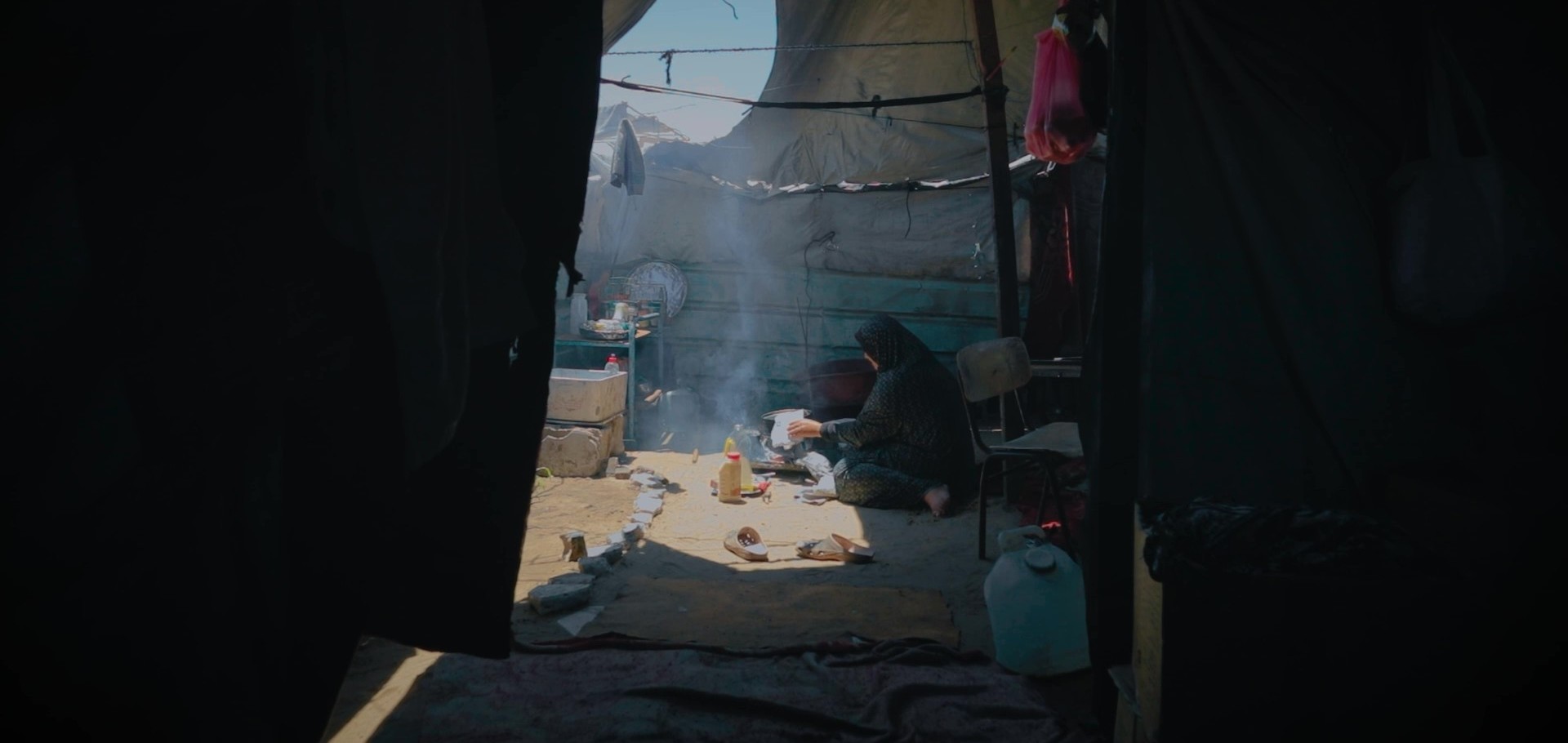
Today, Lina works from a rented space that is much smaller than her previous centre. She has five machines: some are rented from a friend, one was bought after the war with support from her husband, and another was provided through a grant. None survived the destruction of the original centre.
She has resumed sewing and tailoring and has started offering limited training. Four trainees currently share the small space around a cutting table, using the five machines available. Her current income is around 20% of what it was before the war.
%20-%20frame%20at%200m19s.jpg)
Access to materials is another challenge
New fabrics are difficult to find and, according to Lina, prices have risen to around three times their previous level. At times, the shortage means she has to turn down orders or adapt designs according to whatever fabric is available.
Reusing clothing has therefore become an increasingly important part of her work.
Customers bring old clothes to be altered or transformed. A woman’s dress can become a child’s dress, while other garments are redesigned rather than discarded. Even small pieces of leftover fabric can be turned into useful items such as pin cushions.
“Recycling has become much more important because of the shortage and the high prices,” Lina says.
She wants recycling to become part of the training offered through her centre, giving women practical skills while making better use of the materials already available.
For Lina, rebuilding the business is also about adapting it to the realities of recovery.
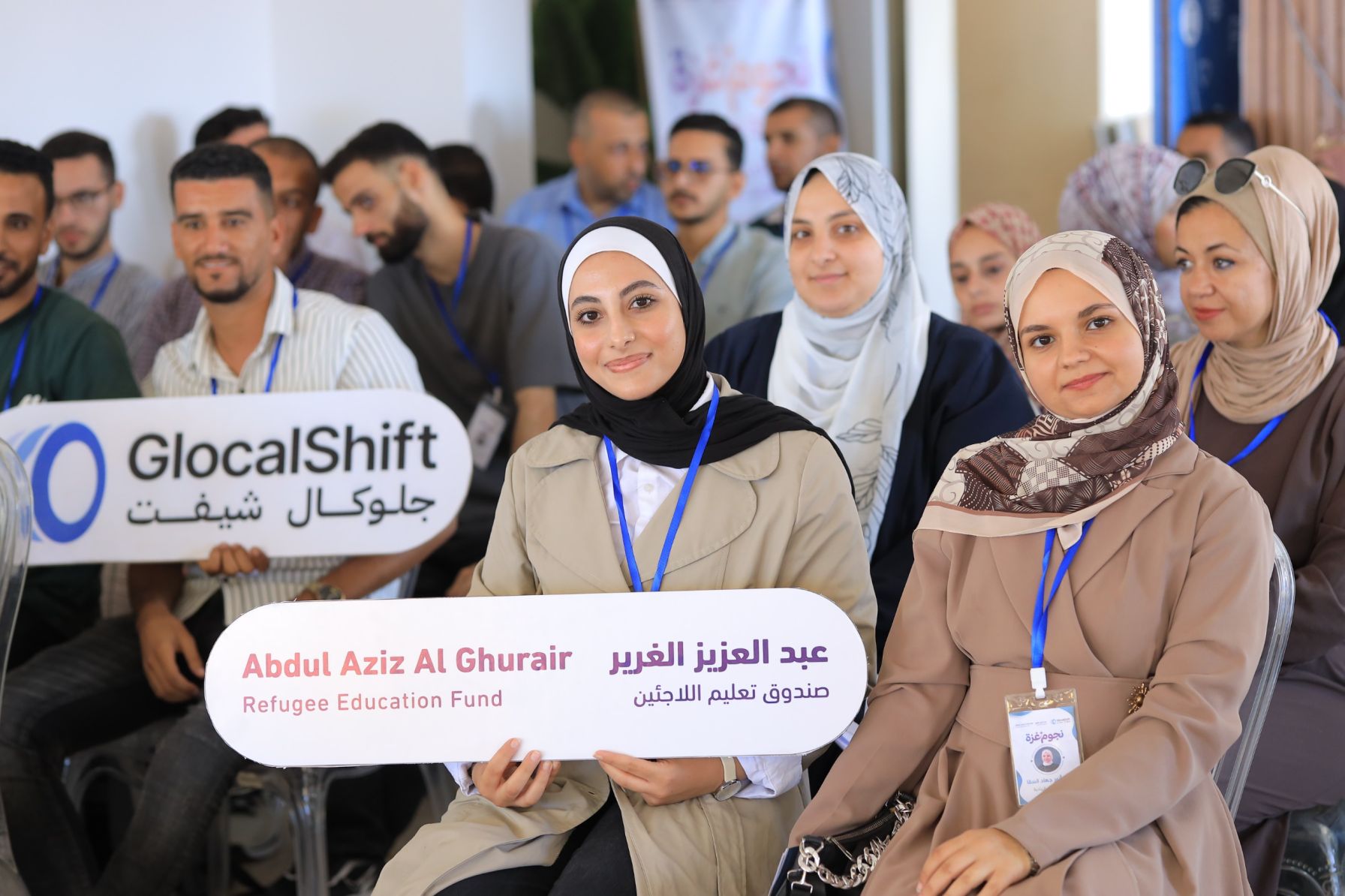
Through Gaza Stars, part of Learning to Earning programme, delivered in strategic partnership with the Abdul Aziz Al Ghurair Refugee Education Fund, she joined the recovery track and received training in areas that she says were particularly relevant to running a business after the war. Sessions on pricing, sales management and financial planning helped her rethink how she manages costs, cash flow and sources of income. She has also started planning courses that require less space and electricity, including embroidery and crochet.
%20-%20frame%20at%200m6s.jpg)
The timing of the training was particularly demanding.
Lina attended six-hour, in-person sessions during the final two weeks of her pregnancy. She travelled from Al-Tuffah to Al-Saha, took transport to Al-Rimal and then walked to the training location. On one day, she experienced severe abdominal pain and back pain and had to leave the session early, then walk a long distance before finding transportation home. She continued attending because she saw the programme as an opportunity to develop the business and increase her income.
A few months earlier, Lina had lost her husband, Ramzi Al-Shawa, killed in April 2026, who had helped establish her new workshop, including its electricity, water and other infrastructure. His encouragement had been one of the reasons she returned to her profession.
After his death, Lina became the sole provider for her family. She was caring for her two-and-a-half-year-old daughter while pregnant with her second child, who was born on 3 August 2026. Her mother, sister and mother-in-law helped care for her daughter while she worked and attended training.
%20-%20frame%20at%201m53s.jpg)
Today, the sewing business is the family’s main source of income.
Lina’s next step is to expand the small workshop. She plans to build a wooden mezzanine that could accommodate up to 10 additional machines and allow her to increase the number of trainees from four to 15. She also needs sewing, buttonhole and overlock machines, a laptop, software for computerised pattern design, training furniture, raw materials and a solar power system.
Her goal is to rebuild Pattern World for Fashion as both a sewing workshop and a training centre, with a stronger focus on practical skills and opportunities for women. She plans to introduce courses in recycling, embroidery finishing and other skills, while eventually bringing back computerised fashion-design training.
She also wants women who complete the training to be able to work from home or find employment in sewing workshops.
For Lina, recovery means learning to operate with less while gradually rebuilding capacity.
She hopes that, within a year, Pattern World will once again be a fully functioning workshop and training centre, helping women develop skills and earn an income.
“I want my daughters to be proud of what their mother has done,” she says, “and to learn not to give up, no matter how difficult the circumstances are.”

.jpg)
.jpeg)
