
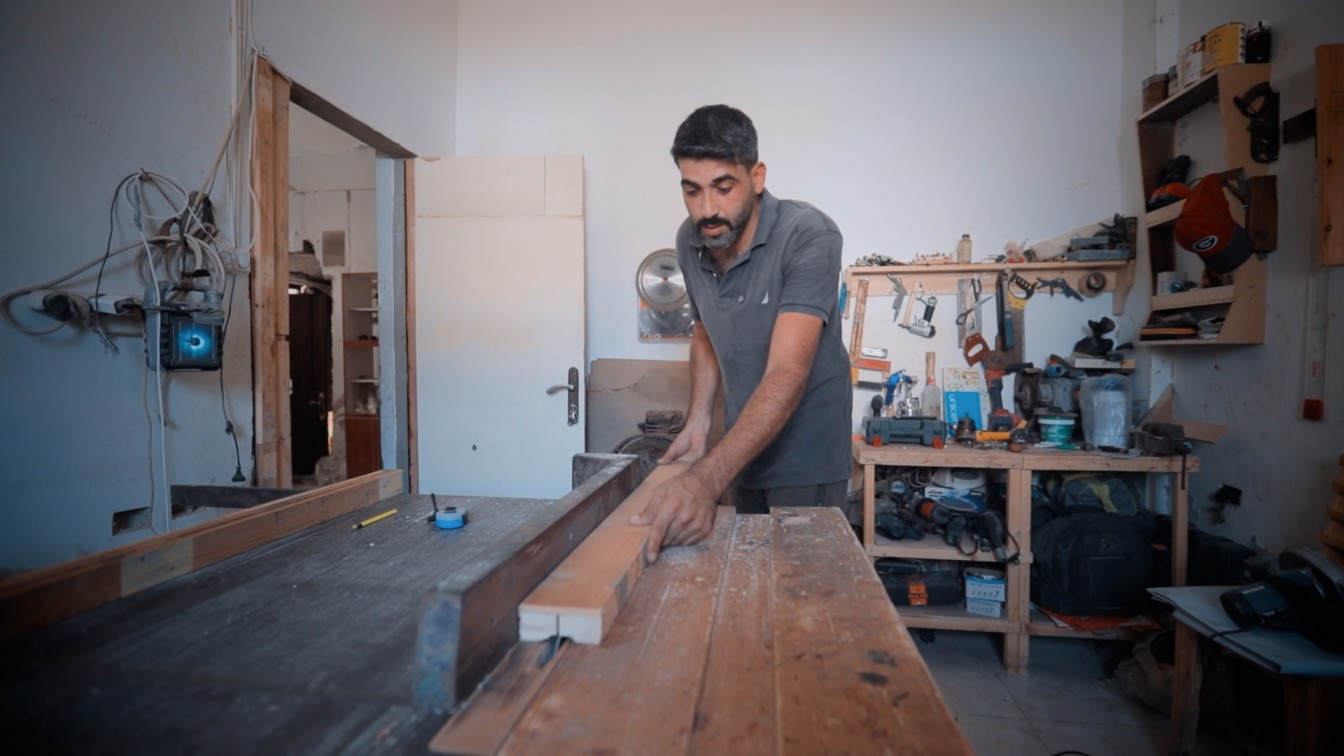
Salim al-Madhoun has been a carpenter since he was 15. He learned the trade from his older brother, who has since died, and in 2017 opened a workshop of his own in Beit Lahia, northern Gaza.
By the time the war began, the business had grown into a 250-square-metre workshop spread across three units. Salim employed three or four people and made bedroom sets, doors, household furniture and decorative woodwork. He also took on larger orders and tenders. It was the main source of income for his family, and he had plans to expand further and open a showroom.
The workshop was hit more than once during the war. The first attack damaged some of the machines. A later strike, shortly before Salim was displaced to western Gaza, burned the workshop completely. He says he lost six large machines, along with smaller equipment, stock and raw materials. He estimates the machinery and materials he had before the war were worth around $60,000.
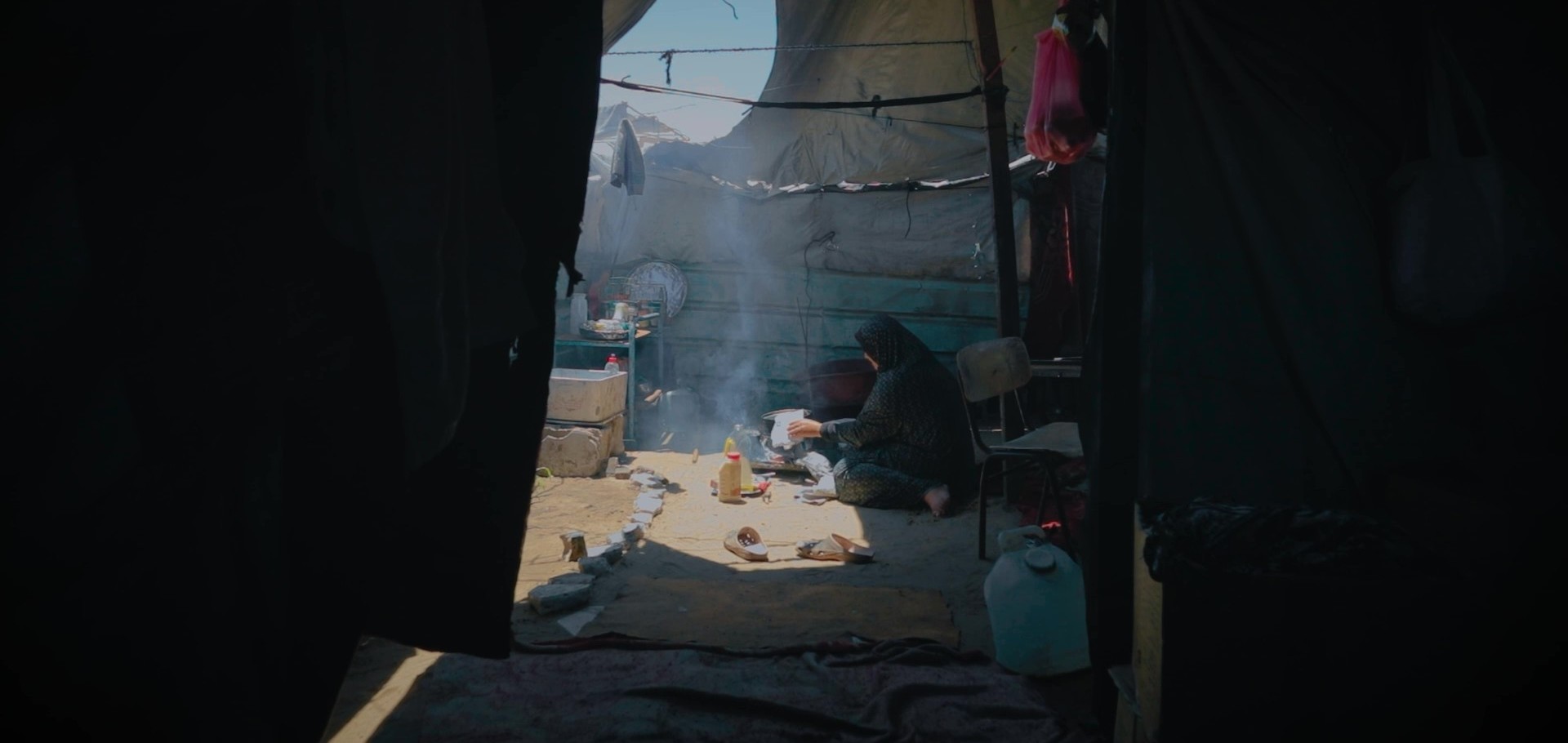
For a period, he stopped working altogether. But while displaced, he could see that carpentry was still needed. Families living in tents needed furniture and ways to close or strengthen their shelters. Others were trying to make partially damaged homes usable again.
Salim decided to return to Beit Lahia. He recovered a machine from the remains of the workshop, repaired it himself and began taking on work again.
“Life has to keep moving,” he says. “You have to try once, twice, three times, four times, until you get back to the goal you are thinking about.”
Working with what is available
The workshop Salim returned to was very different from the one he had left.
Before the war he routinely worked with beech, mahogany, treated MDF, plywood and other types of timber. Most of those materials, he says, are now either unavailable or extremely difficult to find. When a customer asks for something that cannot be made with the wood on the market, Salim offers another design or material instead.
The shortage is felt across Gaza. In June 2026, humanitarian shelter organisations reported continued restrictions on the entry of materials including timber, plywood, nails and toolkits, alongside rising costs and disruptions to supply chains. The need for those materials is extensive: UN satellite analysis found that, as of 16 June, an estimated 82 per cent of structures across Gaza had sustained damage.
For Salim, one answer has been to make much greater use of wood that already exists in Gaza.
He has reused timber for years. When he first learned carpentry in 2008, he sometimes worked with the wood from pallets, known locally as mashateeh. Recycling became more useful during restrictions on timber entering Gaza in 2017, but remained a relatively small part of his work while new wood was widely available.
That has changed.
Today, wooden pallets are one of his main sources of raw material. Some come from platforms used to carry aid and other goods into Gaza; others are bought from traders. Salim says pallets that are no longer needed have often been broken up, discarded or burned. He buys or collects them instead and looks for the pieces that can still be used.
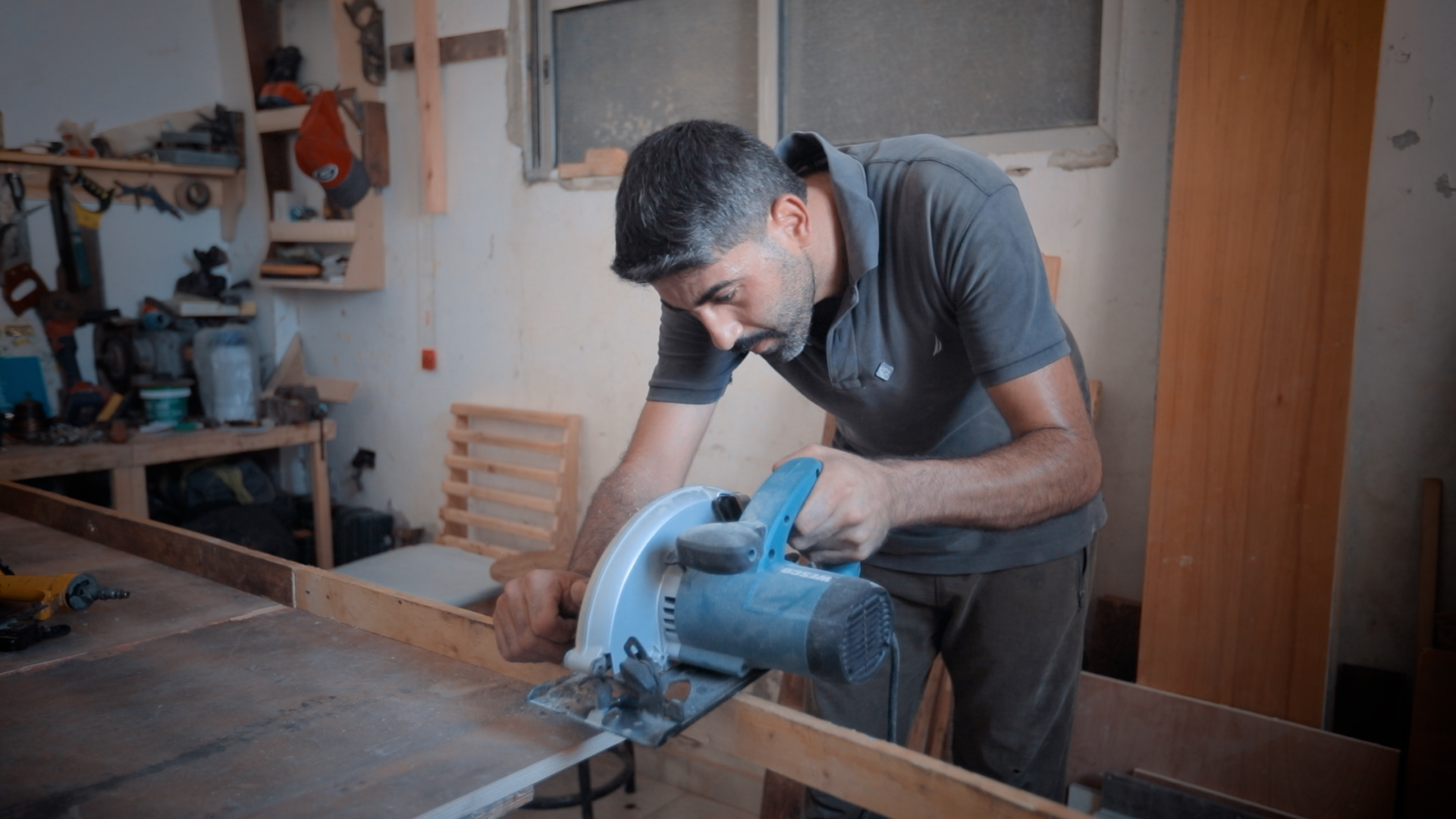
Preparing recycled timber takes more work. Nails have to be removed and the wood needs to be sorted, cut and prepared before it can be used again. Salim estimates that about half of the wood he comes across is suitable for recycling. Although the process requires more labour, the material is cheaper than buying new timber.
Customers have also begun bringing him wood recovered from old furniture and damaged homes.
Some pieces that would otherwise be thrown away become cupboards, beds or shelves. Pallet wood is also being used to furnish tents and caravans and to close exposed sides of temporary shelters. Salim makes school desks and seats, and says there is still demand for bedroom furniture, including from young couples preparing to marry.
Since returning to work, he estimates that more than 300 people have used his products or services. Depending on the orders he receives, the workshop produces around 30 to 50 pieces a week.
Furniture made to move
For families who have lost their homes, Salim has begun making lower-cost furniture with displacement in mind.
The pieces need to be useful, but they also need to be relatively easy to move. A family living in a tent may not remain in the same place for long. Salim therefore thinks about whether furniture can be moved, reused and, eventually, recycled once more.
The demand for this kind of work is unlikely to disappear soon. In early August, humanitarian organisations were still repairing openings in damaged homes in Gaza City, including walls, windows and doors, while warning that shelter stocks remained insufficient.
Salim does not see recycled wood only as a temporary response to shortages. He wants it to remain part of his business even if new timber becomes available again.
“Reusing it protects the environment and reduces waste,” he says. Wood that might have been burned or destroyed can instead be turned into something people need.
Eventually, he would like to establish a workshop specifically for collecting, sorting and recycling wood. He already buys some timber from people and groups recovering it from rubble, and he wants to develop a wider range of products made from recycled materials. If supplies become available, he is also interested in experimenting with combining pallet wood and epoxy for more decorative furniture.
Rebuilding the business
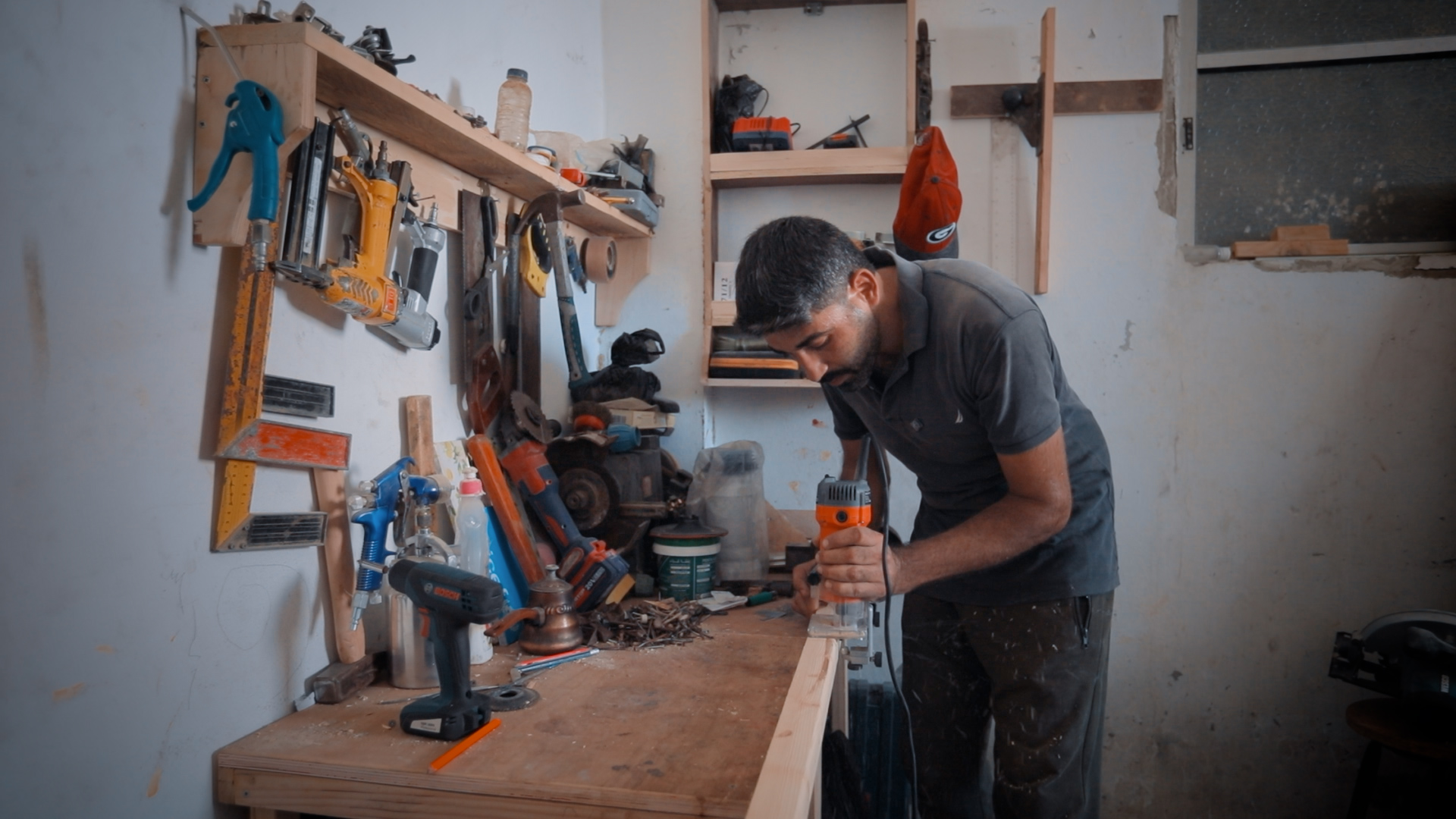
Salim is earning an income again, though he says it remains much lower than before the war. So far, he has been able to employ one person.
Before the war, he used to encourage young people to come into the workshop and learn the trade. If the business grows again, he wants to employ and train more people, including in working with recycled wood.
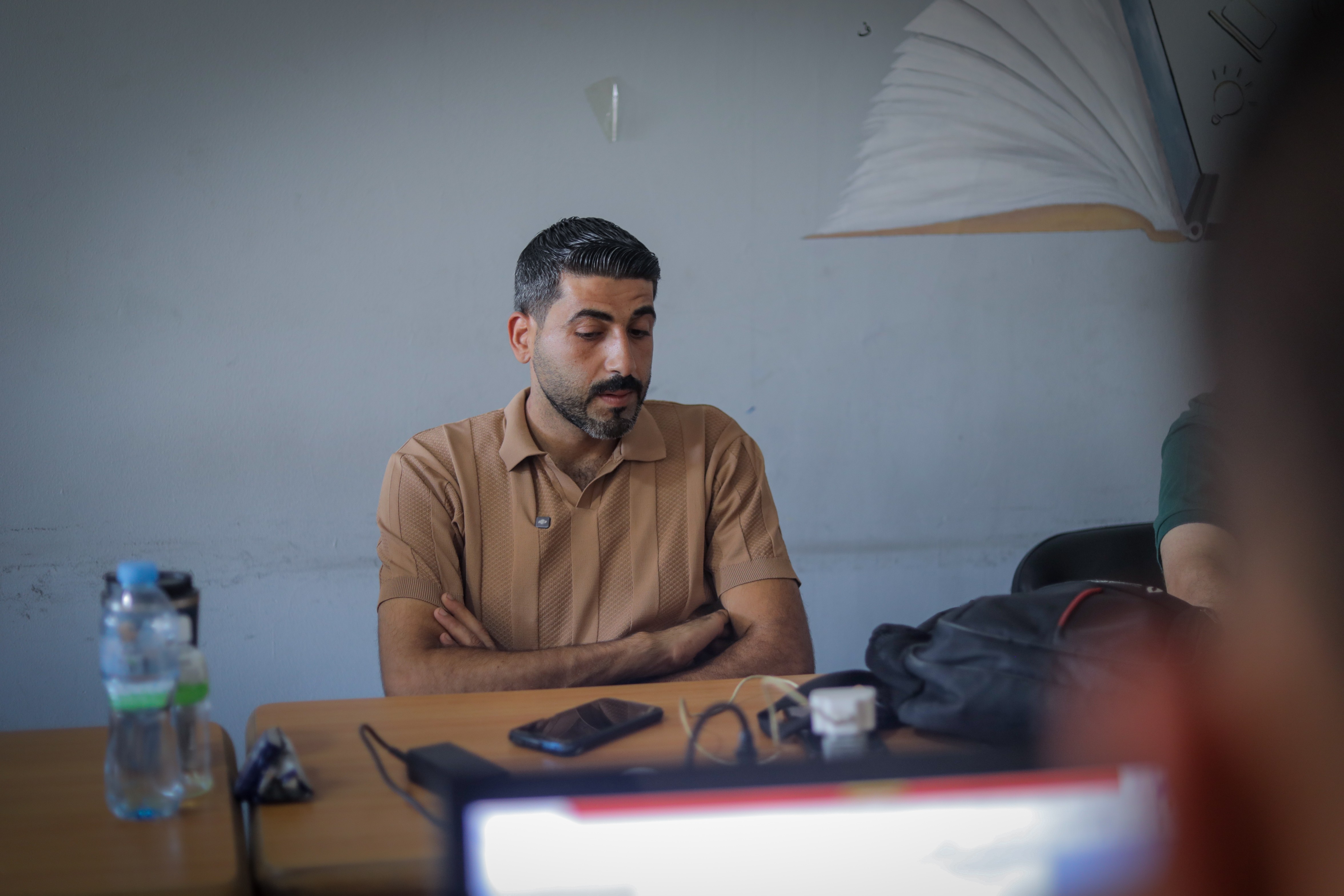
He applied to Gaza Stars after coming across the programme on social media. His initial reason was straightforward: he was looking for financial support to help the business recover. He is now in the programme’s mentorship stage.
Alongside the possibility of funding, Salim says the training has changed some basic aspects of how he runs the workshop. Business planning sessions encouraged him to keep clearer records, separate household spending from business expenses, think more carefully about marketing and identify the customers he wants to reach.
The distinction between being a carpenter and running a carpentry business had not always been something he thought about.
“The programme helped me think of the project as a business in the market, not just a craft,” he says.
Gaza Stars is part of GlocalShift’s Learning to Earning initiative, delivered in strategic partnership with the Abdul Aziz Al Ghurair Refugee Education Fund. The programme supports entrepreneurs in Gaza through business training, mentorship and opportunities to access seed funding.
Salim already knows what he would invest in first if he receives financial support: a five-function woodworking machine.
Before the war, his workshop had separate machines for many of the processes involved in preparing wood. The five-function machine would allow several of those jobs to be done using one piece of equipment. It would be particularly useful for preparing pallet wood, which needs more processing before it can be turned into furniture.
He would also like to install an independent solar power system. At the moment, electricity for the workshop comes mainly from commercial generators in the street. Power is generally available to him for about 10 hours a day, but some larger machinery cannot run on the supply, and work stops when the generators break down or are being repaired.
With better equipment and a more reliable electricity supply, Salim believes he could increase production and bring more workers into the workshop within six months.
Before the war, he wanted to grow the business he already had. He still wants a bigger workshop, but the plans have changed with the circumstances around him. Recycling, which was once only one small part of his work, is now something he wants to build into its future.
“My dream is to build a project that is bigger and stronger,” he says, “not just to bring the workshop back to what it was before.”
%20-%20frame%20at%200m21s.jpg)
.jpeg)
