
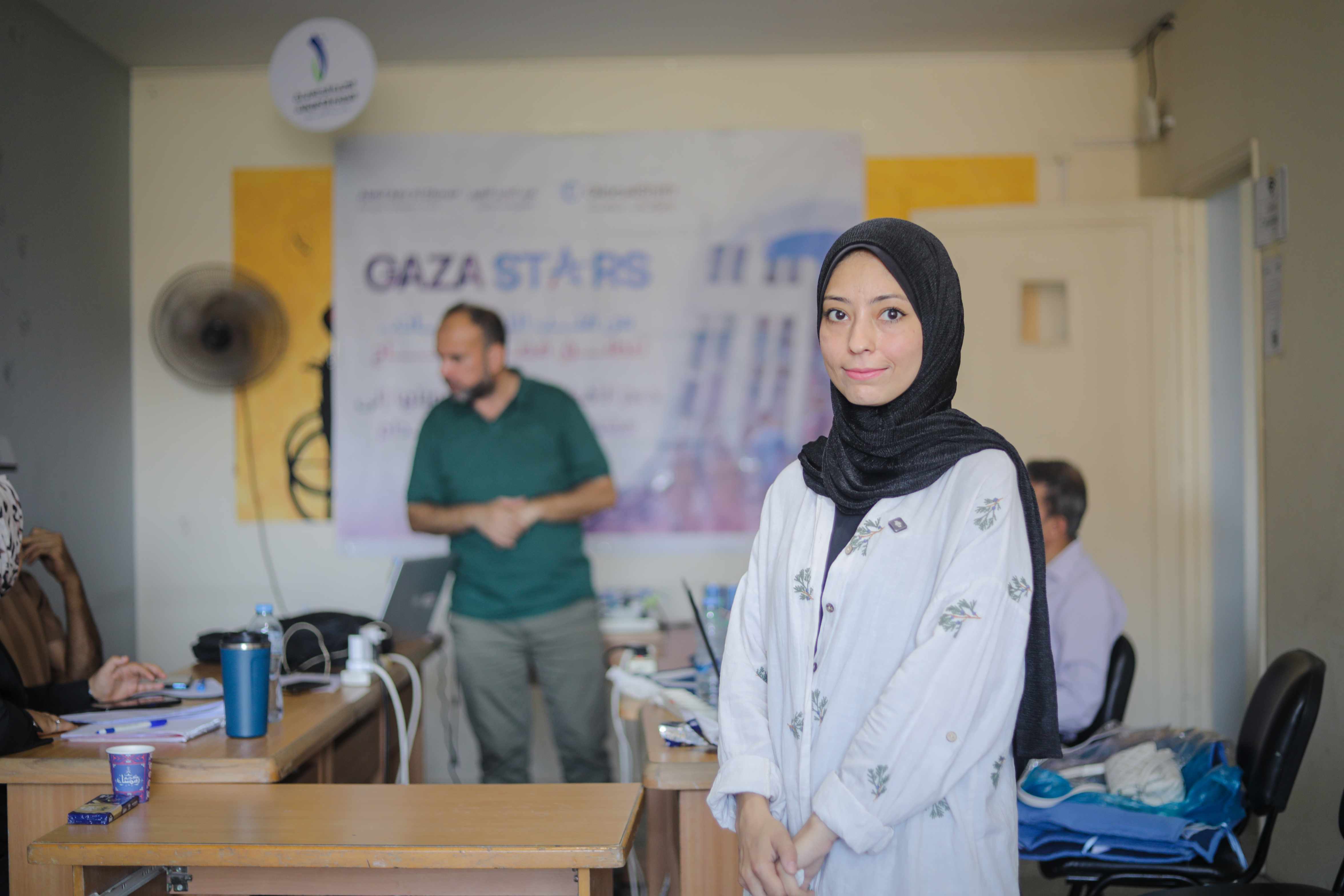
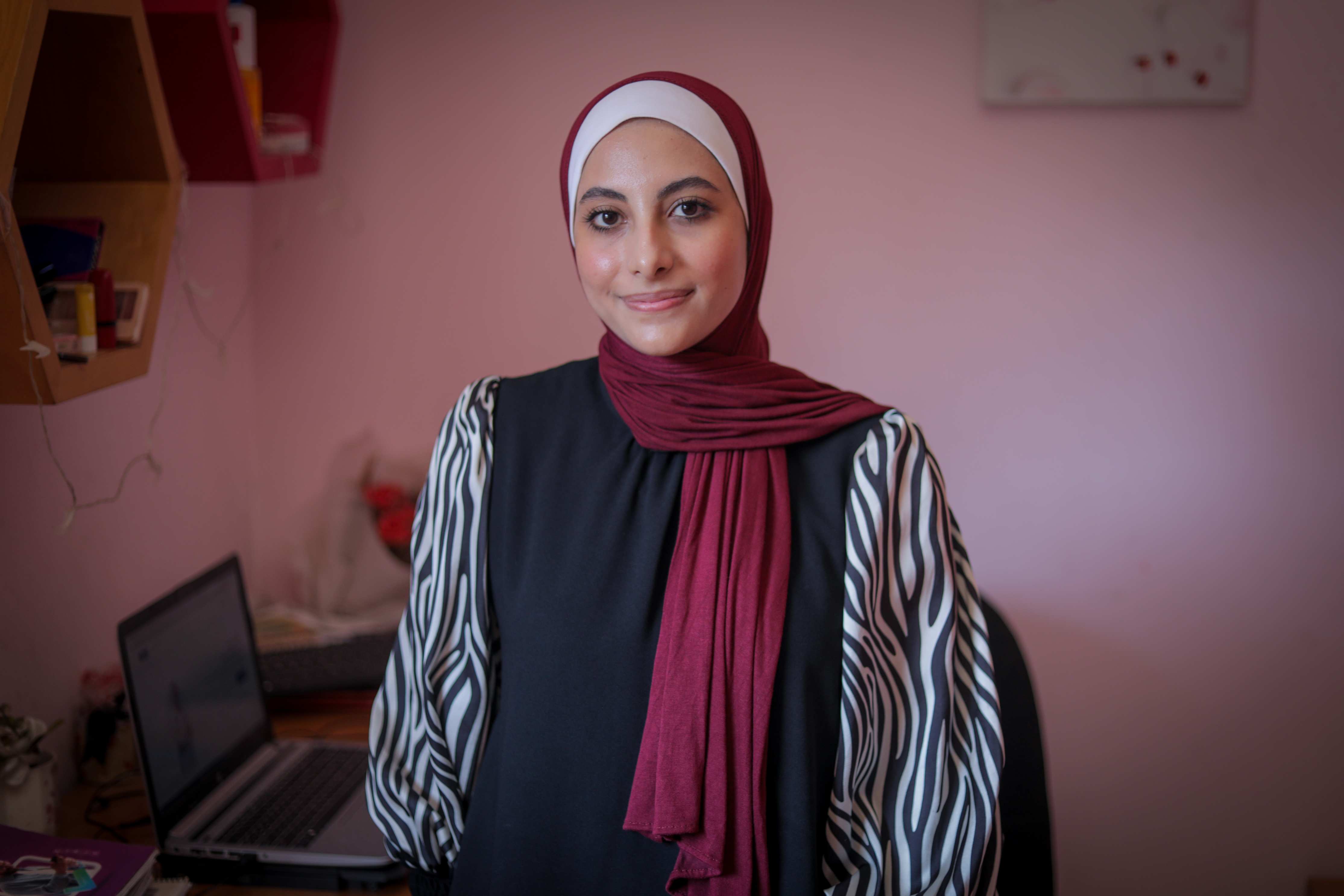
When Ghadir Khalil Al Saqqa was completing her practical teaching training at Al Azhar University in Gaza, she noticed that many of her young students struggled to stay focused during traditional lessons.
“They would lose concentration and become bored quickly,” she recalls. “A child cannot sit for 30 to 45 minutes simply receiving information in a traditional way.”
During one lesson, Ghadir tried a different approach. She created a teaching aid in the shape of a mobile phone using cardboard, paper, adhesive and brightly coloured foam. She brought it into the classroom and watched as the children’s attention immediately shifted towards it. They wanted to explore it, understand how it worked and, most importantly, play with it.

The experience changed how she thought about teaching.
Ghadir began developing educational tools that combined learning with play. What started as an idea during her university training in 2015 and 2016 became a business in 2017, which she called “Play and Learn with Ghadir”.
Her first major opportunity came through an exhibition of handmade products. While most of the exhibition featured traditional handmade items, Ghadir presented a collection of educational teaching aids. Visitors showed strong interest, and the display also attracted attention from television channels covering the event.
Before the war, Play and Learn with Ghadir produced educational tools and interactive booklets for children. Ghadir also provided training for teachers and others interested in learning how to design and make educational materials. Her customers included parents, teachers, schools, kindergartens and other organisations.
The products varied according to children’s ages and learning needs. Some were designed to develop early motor, language, emotional and visual skills, while others focused on specific subjects. One example is her “Fractions Bag”, which helps children recognise and compare fractions through play.
For Ghadir, each game begins with a learning objective. She then looks for a way to turn that objective into an activity that children can understand and enjoy. Before launching a new product, she tests it with a small group of children to see whether it achieves its intended purpose.
“Play is part of a child’s development,” she says. “Through play, children explore, communicate and learn new skills.”

The war brought the project to a halt.
Ghadir left for southern Gaza on the seventh day of the war, during the first evacuation warnings. With little time to prepare and no clear idea of how long she would be away, she left behind the equipment and materials she had built up over the years.
When she eventually returned home, she found that the house had been looted. Batteries and other alternative power equipment, printers, a heat press, sewing equipment and other production tools had been stolen. Part of her stock of raw materials had also been damaged. She estimates her losses at around $4,500.
The loss was not only financial. When schools closed and life changed dramatically, there was no longer a normal market for her products. Her main source of income disappeared, along with the plans she had for expanding the project.

Today, Ghadir is gradually rebuilding.
She works from home with the equipment that remained and some items she has been able to purchase since returning from displacement. The project is operating only partially, with Ghadir producing a limited number of lower and medium priced products while developing prototypes for new educational games for young children.
Her latest product is a visual stimulation cube designed for early childhood. So far, around 10 children have used products from the restarted project.
The challenges remain considerable. Materials such as brightly coloured cotton fabric can be difficult to find, while prices have increased. Ghadir has had to change some designs depending on what is available. Electricity shortages also reduce her production capacity and make it harder to market her products consistently.
Reusing available materials has long been part of her approach. Before the war, Ghadir already used cardboard, fabric, plastic containers and other safe materials to create educational tools. She believes teachers and parents can do the same, turning materials around them into simple learning games.
She now hopes to restart the training workshops she offered before the war, helping teachers, parents and others create educational tools using materials they can access themselves.

For Ghadir, this work matters because children in Gaza need opportunities to play as much as they need opportunities to learn.
“Children today need to have their basic right to play,” she says. “Play gives them a space to express themselves, communicate with others and make choices.”
Through the Gaza Stars programme, Ghadir has been working on how to bring her business back in a very different environment. A session on assessing the impact of crises on businesses was particularly useful, helping her understand how the war had changed the conditions in which her project operates. She also developed greater confidence in design thinking and worked on a plan for restarting the business.
Her immediate priorities are to replace essential equipment, including a printer, cutting machine and overlock machine, and to secure the raw materials needed for production. With funding, she hopes to at least double her current production capacity.

Her goal is to eventually establish an independent workshop dedicated to designing and producing educational tools and interactive games. She wants to work again with schools, parents, teachers and educational organisations across Gaza and reach at least 100 customers in the first year after a full relaunch.
Looking further ahead, she hopes to build a larger enterprise with several branches and products that can compete with imported educational games.
But at the heart of the project remains the same idea that began in her university classroom.
“Play and learning go together,” Ghadir says. “They are like two sides of the same coin.”
Gaza Stars is part of GlocalShift’s Learning to Earning initiative, delivered in strategic partnership with the Abdul Aziz Al Ghurair Refugee Education Fund.
%20-%20frame%20at%200m21s.jpg)
.jpeg)
