
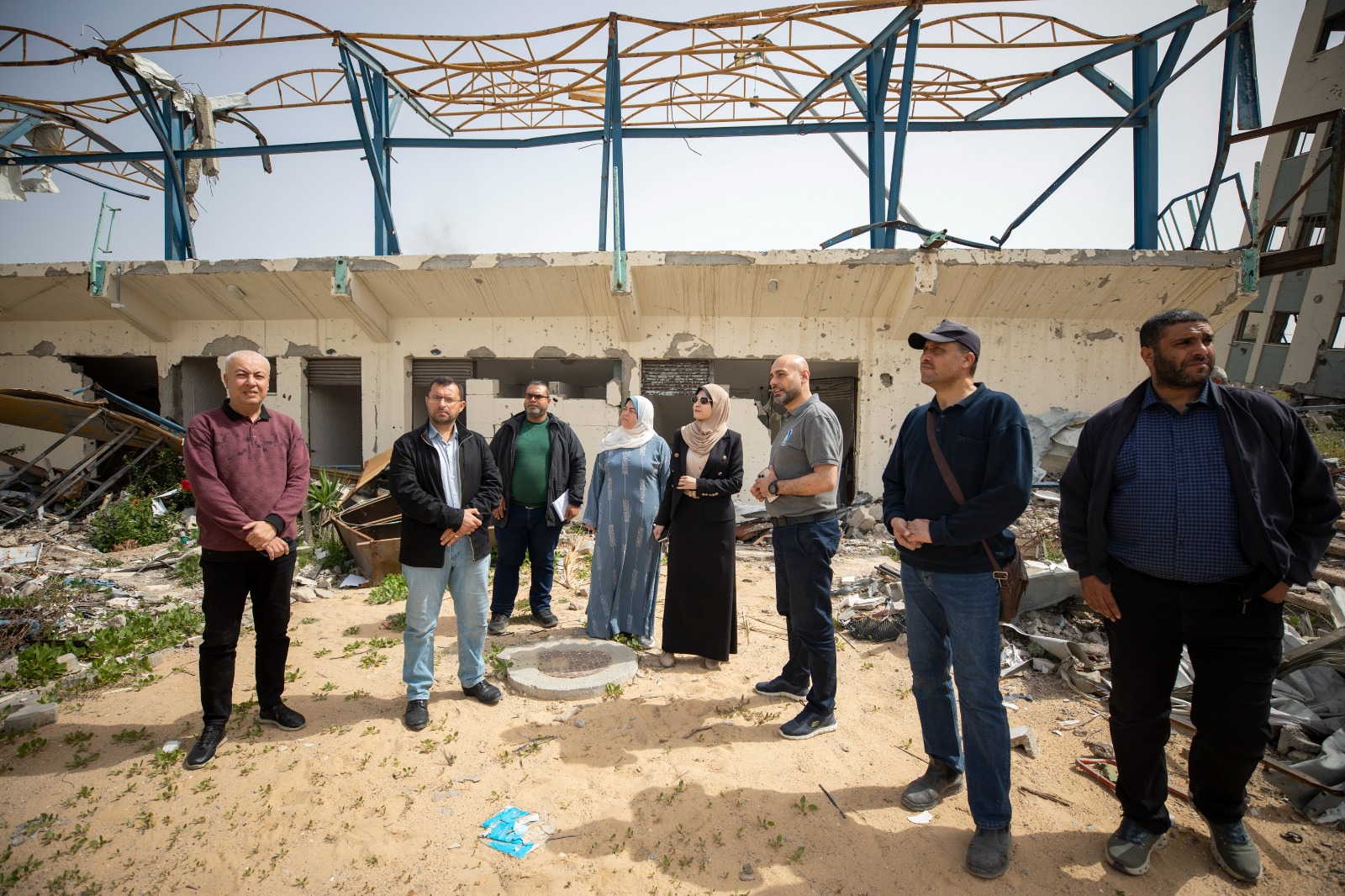
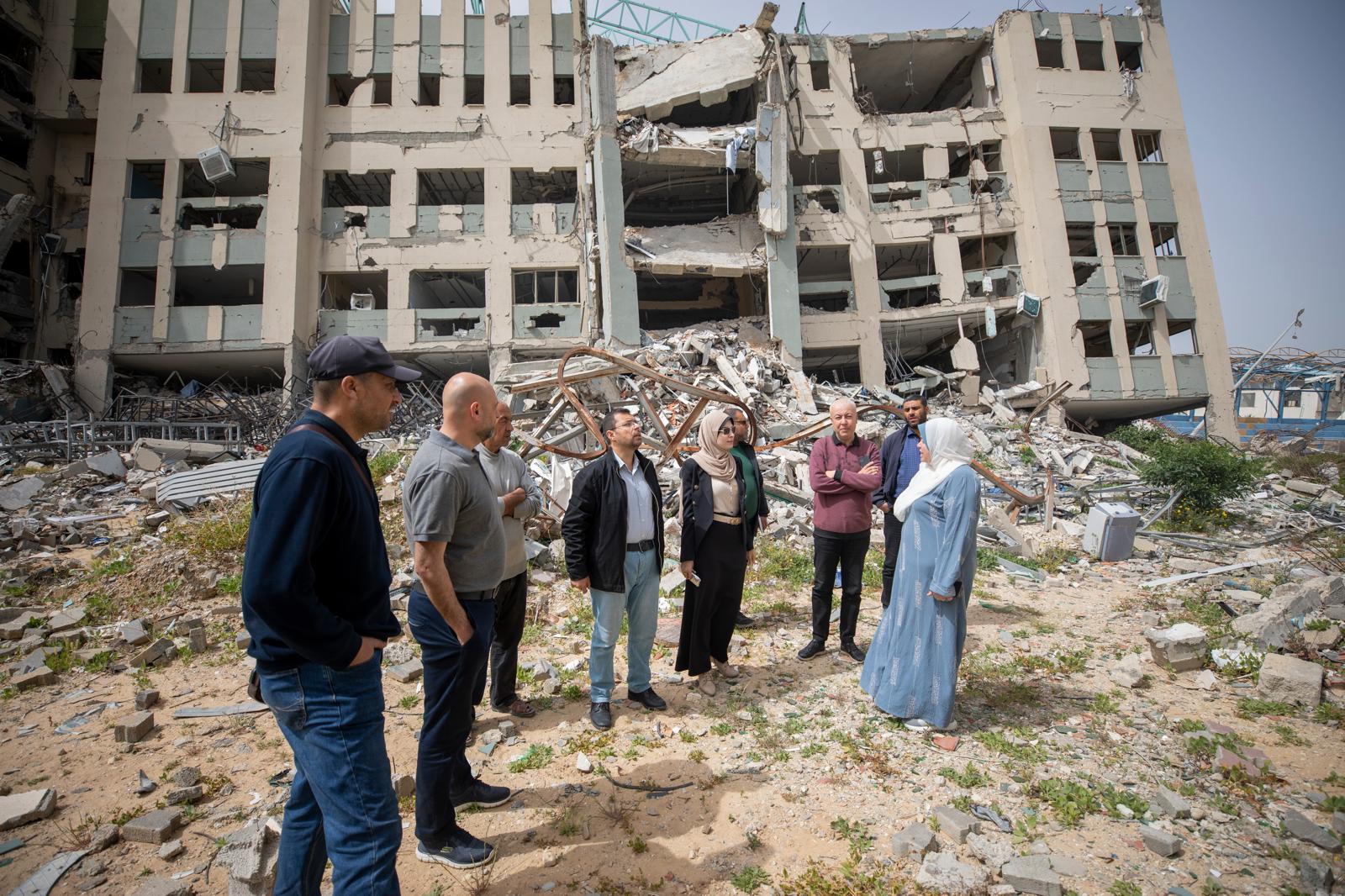
Two years into a war that has devastated Gaza's infrastructure, its institutions, and its people, education remains one of the most contested spaces: between destruction on one side and a refusal to stop on the other. It was in that context that GlocalShift visited the University College of Applied Sciences (UCAS) in Gaza City, to see that reality directly and explore how the foundation can contribute to what comes next.
The visit was led by Eng. Ghadir Shahada, Head of GlocalShift's Palestine Office, and received by UCAS President Dr Mohammed Hatem Mushtaha alongside senior academic and administrative staff.
Why This Matters Beyond Gaza
There is a tendency, in humanitarian and development contexts, to treat education as a secondary need, something addressed once the immediate crisis stabilises. UCAS challenges that framing. So does the evidence. Communities that lose their educational institutions during conflict take a generation longer to recover. The skills gap compounds. Young people who might have become professionals instead leave, or do not develop the qualifications that would anchor them.
Supporting education during crisis rather than after it is one of the highest-leverage interventions available. UCAS has kept that window open. The question is who shows up to support it.
GlocalShift's Role
Eng. Ghadir Shahada presented GlocalShift's work and its focus on development in crisis-affected communities. The conversation that followed was substantive, covering applied education, health, and environmental sustainability: areas where investment now builds the capacity Gaza will need in recovery.
GlocalShift's interest in UCAS is rooted in a simple conviction: that the institutions worth supporting are the ones that never stopped.
This visit was a first step. Further conversations are expected as both organisations work through what meaningful, long-term support could look like in practice.
.jpeg)
.jpeg)
.jpeg)
.jpeg)


%20-%20frame%20at%200m21s.jpg)