
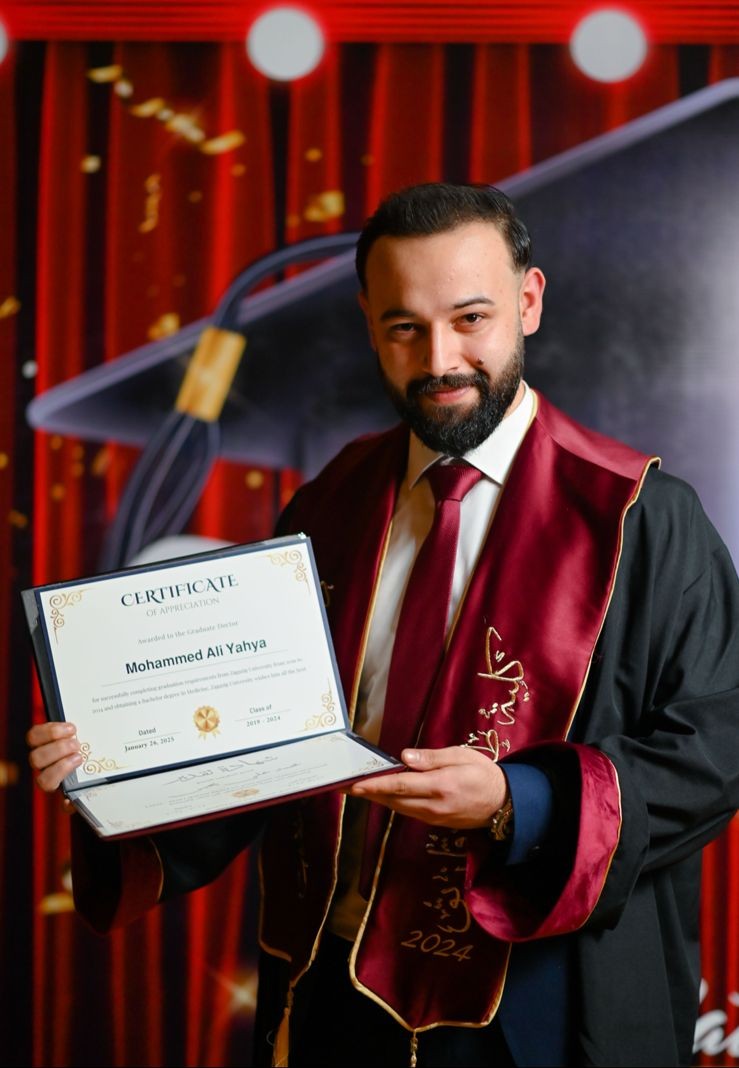
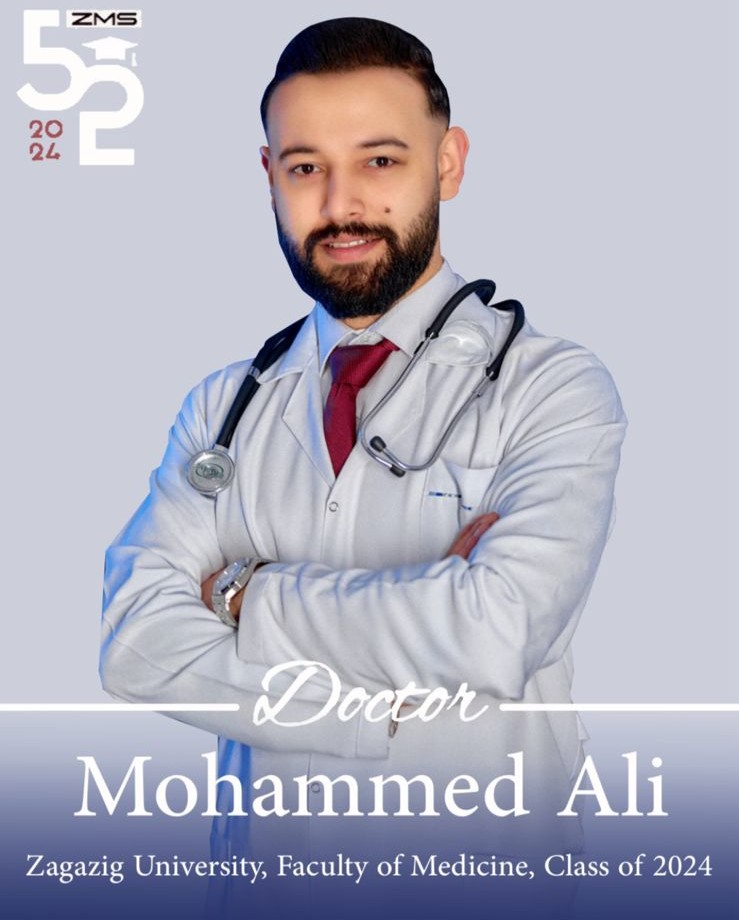
Mohammed Ali grew up in Jabalia, in northern Gaza, in a family where medicine was part of everyday life. Conversations at home often centred on hospitals, patients, and long shifts. Becoming a doctor did not feel distant or idealised. It felt both natural and necessary.
He excelled at school, completing his secondary education with a score of 93 per cent. His greatest influence was his older brother, a general surgeon working in Gaza. Watching him train, work under pressure, and shoulder responsibility shaped Mohammed’s own ambitions. Medicine, for him, was about commitment and service rather than status.
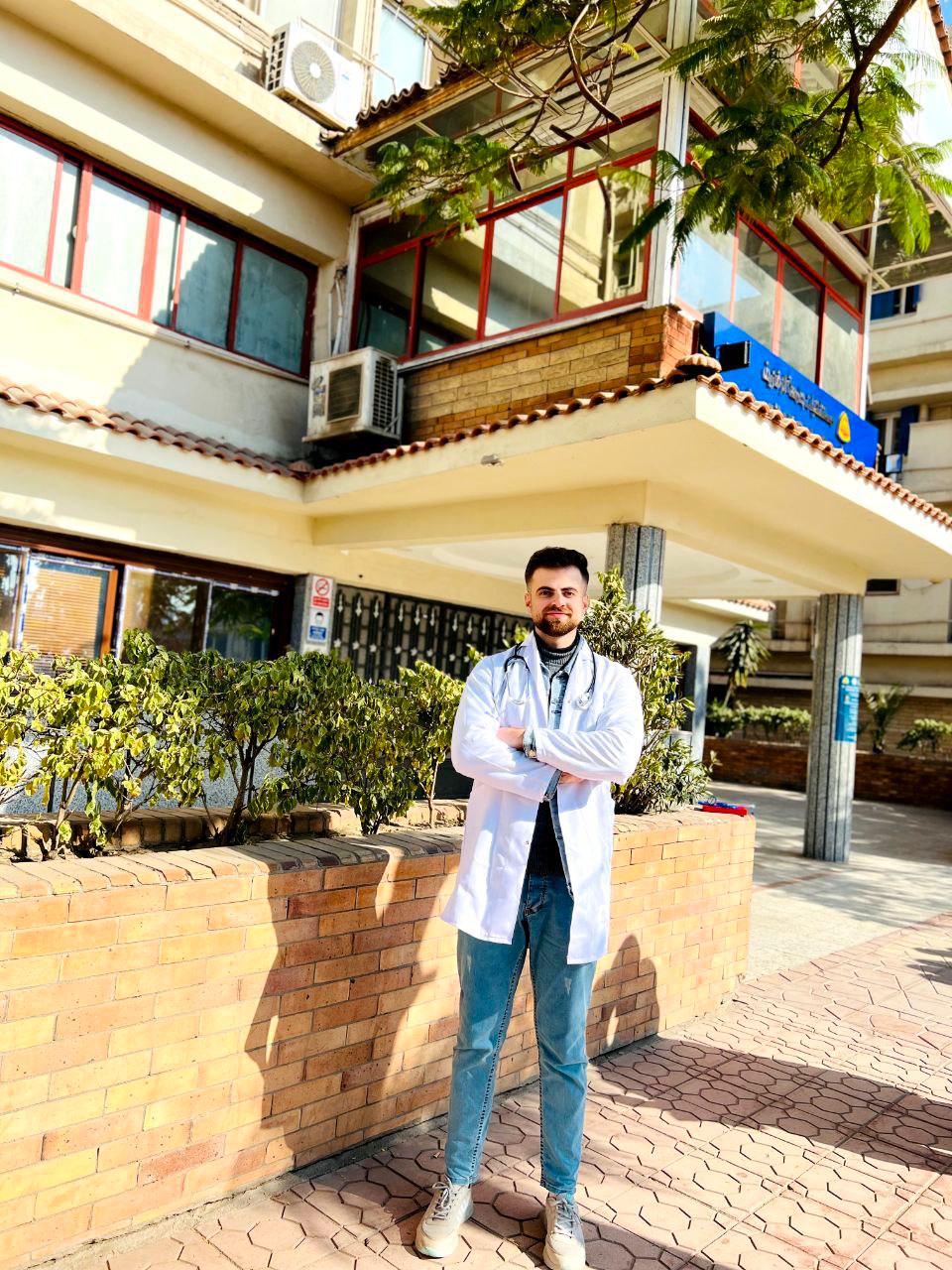
When Mohammed began studying medicine at Zagazig University in Egypt, his family supported him fully. They covered his tuition fees and living costs, allowing him to focus entirely on his studies. It was a shared decision, grounded in the belief that education offered the only reliable form of security.
“In my family, medicine has always been a responsibility,” Mohammed says. “It is about being there when people need you most.”
The war on Gaza reshaped Mohammed’s life almost overnight.
While he remained in Egypt, his family was forced to flee Jabalia within the first weeks of the war. Since then, they have been displaced repeatedly, focused on survival rather than stability. His brother continued working at Al-Shifa Hospital, treating the wounded amid shortages, exhaustion, and constant danger.
From afar, Mohammed followed events closely. He wished he were in Gaza, standing alongside his brother and other doctors as they tried to save lives. Instead, he watched from a distance, weighed down by helplessness and guilt.
As the war continued, his family’s financial support came to an abrupt end. Income disappeared, replaced by the urgent need to secure food, shelter, and safety. Tuition fees and rent in Egypt became impossible to meet.
Mohammed lived with the constant fear that he would be forced to abandon his studies, and that years of effort would come to nothing. He considered pausing his degree and searched for any form of work, despite knowing how difficult it is for medical students to balance study with paid employment. Every option felt fragile and uncertain.
“I was always worried that I wouldn’t be able to continue,” he says. “That everything I had worked for would simply be lost.”
His experience was not unique. Across Egypt and beyond, students from Gaza faced the same dilemma, caught between interrupted family support and the risk of seeing their education slip away.
.jpeg)

The Return to Rebuild scholarship
Through the Return to Rebuild Scholarship programme, funded by the Arab Fund for Economic and Social Development (Arab Fund), his tuition fees were fully covered, removing the immediate risk of interruption. The support addressed the precise gap left by the war, allowing his studies to continue at a moment when uncertainty threatened to undo years of effort.
For Mohammed, the effect was immediate. His family no longer had to search for money they did not have. He could think beyond the next semester and focus once again on learning. The scholarship did not change the reality his family faced in Gaza, but it offered stability where it was still possible.
“It didn’t change what was happening back home,” Mohammed says. “But it allowed me to keep going.”
Looking ahead
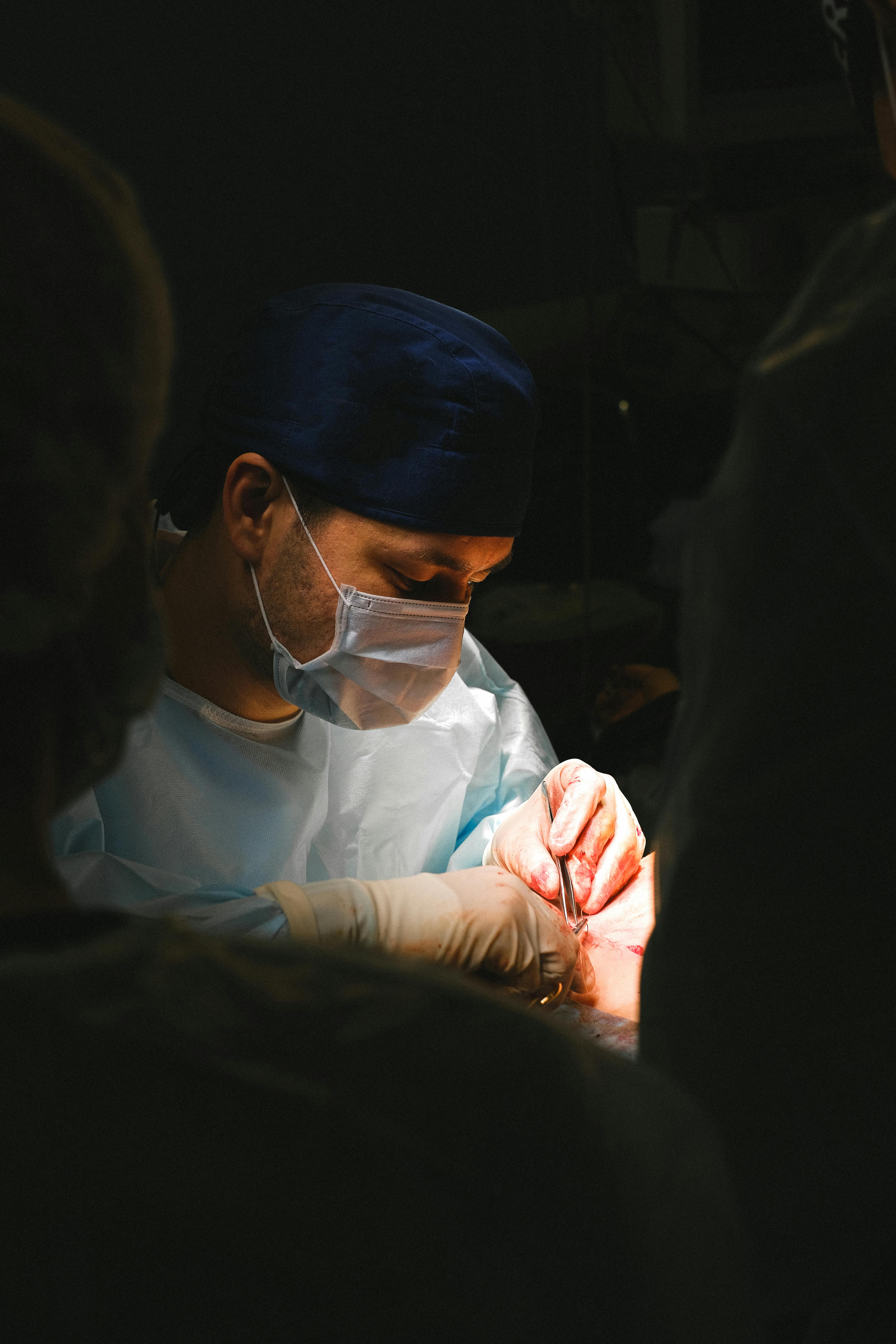
Mohammed is now focused on completing his medical degree and specialising in orthopaedic surgery. His ambitions are modest and clear: to graduate, to specialise, to be useful.
What drives him remains unchanged: the belief that doctors matter most when systems break down. Everything he is learning now, he sees as preparation for rebuilding later.
“I don’t know where I will work,” he says. “But I know why I am studying. Gaza will need doctors for years to come.”
Like Mohammed, 51 students received this scholarship in its first cohort, with nearly $300,000 awarded in tuition support to Palestinian medical students studying in Egypt.
The Scholarships to Return and Rebuild programme now aims to provide an additional $350,000 in funding, extending support to more students whose education has been disrupted by the war.
For these students, the scholarships do more than cover fees. They protect years of study from being lost, preserve hard-won skills, and ensure that a future generation of doctors will be able to return and rebuild when the time comes.
%20(2).png)
.jpeg)

%20-%20frame%20at%200m21s.jpg)