

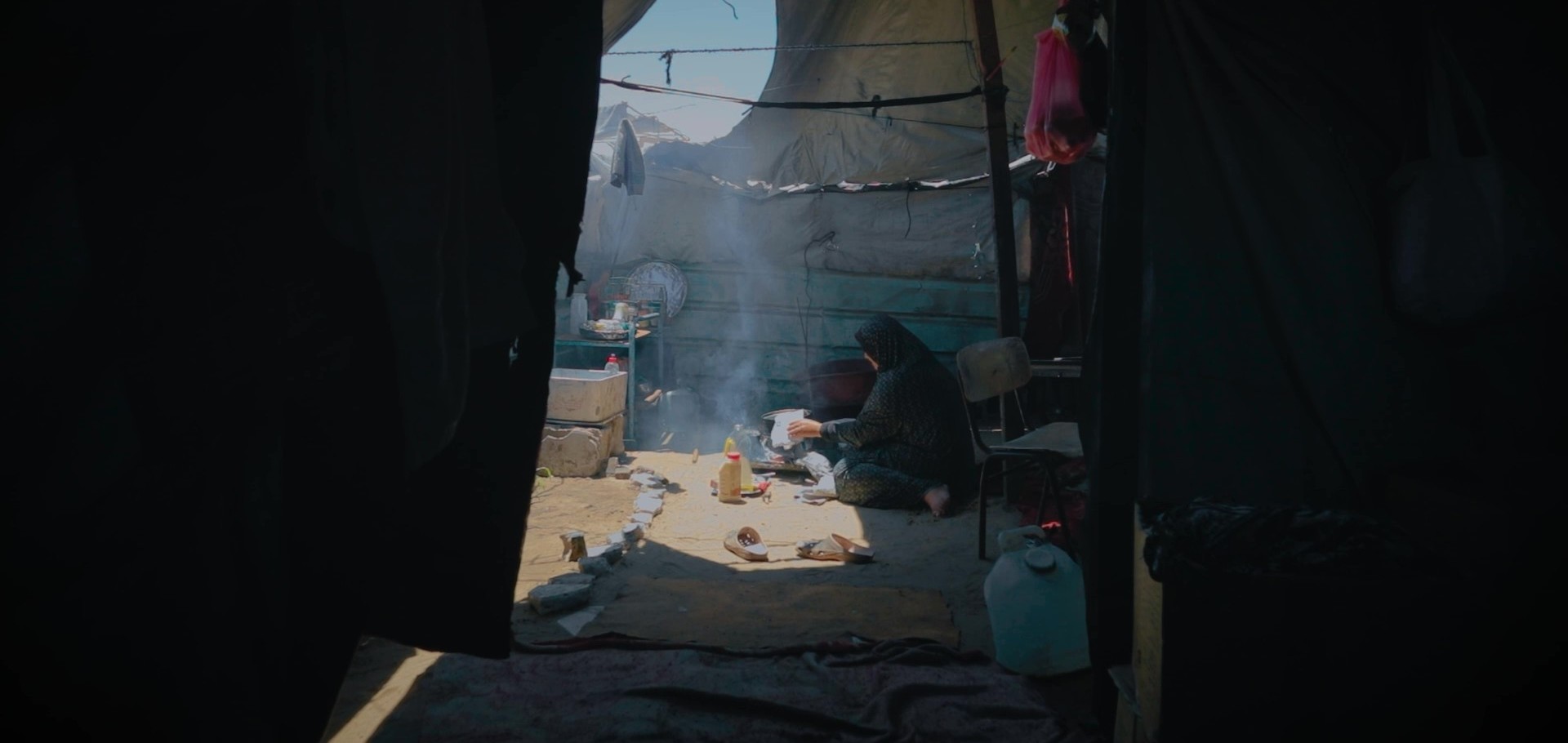
Across the Gaza Strip, displaced families are living in conditions that are both foreseeable and preventable. More than a year into large scale destruction and mass displacement, the majority of Gaza’s population has been forced from their homes. Many are now surviving in tents and makeshift shelters that offer little protection from winter rain, flooding, cold or overcrowding.
According to the United Nations Office for the Coordination of Humanitarian Affairs, the scale of displacement in Gaza is unprecedented. Hundreds of thousands of people remain without adequate shelter, while repeated weather events continue to expose the fragility of temporary living arrangements. Winter storms over recent months have flooded displacement sites, damaged shelters and left families exposed to harsh conditions, increasing health and protection risks.
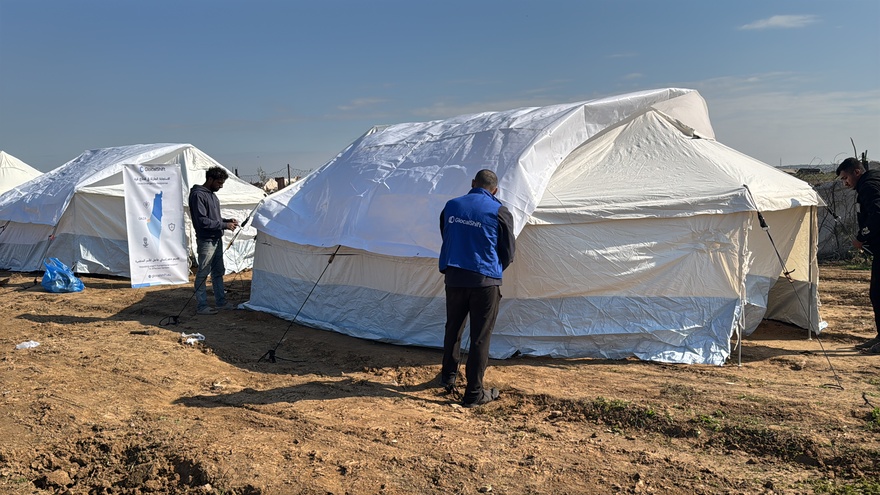
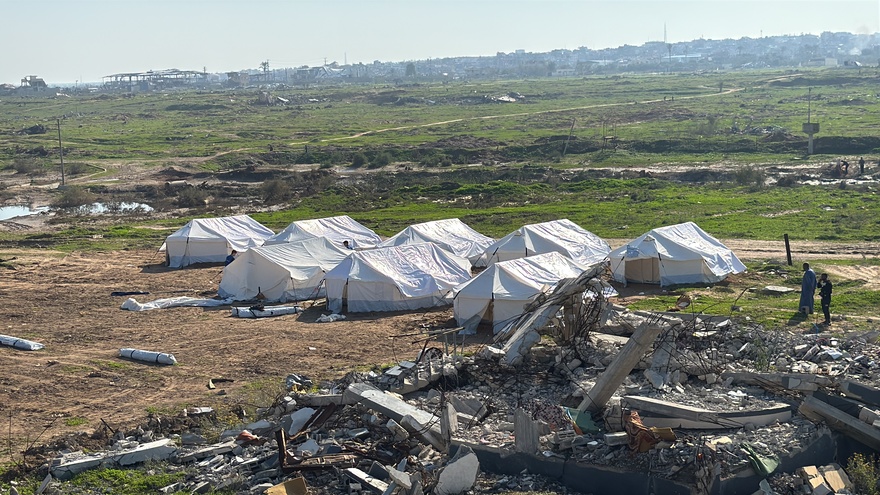
In early January, our teams distributed 150 emergency tents across northern, central and southern Gaza to families who had lost what little shelter they had. These distributions were a response to urgent need and formed part of a broader emergency shelter effort. But the experience from the ground, reinforced by UN reporting, points to a clear conclusion. Tents are not designed for prolonged displacement, and Gaza’s crisis is no longer short term.





Gaza’s shelter crisis is structural, not temporary
Tents are intended as an immediate, short term response following sudden disasters. Gaza’s reality is fundamentally different. Entire neighbourhoods have been destroyed. Infrastructure has collapsed. Access restrictions continue to limit reconstruction and the entry of durable shelter materials. Families are not moving from tents to permanent housing. They are remaining in them for months, often after multiple rounds of displacement.
OCHA has repeatedly warned that makeshift shelters in Gaza are inadequate for seasonal weather conditions. Flooding, dampness and cold increase the risk of respiratory illnesses, skin infections and water borne disease, particularly among children and older people. These are not incidental risks. They are predictable outcomes of shelter solutions that are unsuited to prolonged use.
When emergency tents become the default form of housing, the humanitarian response risks normalising conditions that fall below minimum standards of safety and dignity.
Caravans are a practical humanitarian necessity
Caravans are not a permanent housing solution, but they offer a far more appropriate response for prolonged displacement. In other humanitarian contexts marked by extended crises, including Syria and Ukraine, caravans and modular units are used to bridge the gap between emergency shelter and reconstruction.
Compared to tents, caravans provide insulation against cold and heat, stronger protection from rain and wind, lockable doors that improve safety and privacy, and the ability to connect basic services such as electricity and heating. They reduce repeated shelter replacement, lower health risks and provide families with a minimum level of stability.
Despite this, caravans remain largely absent from Gaza’s humanitarian shelter response. This is not due to a lack of evidence or humanitarian consensus, but because of restrictions on what materials are permitted to enter and how shelter solutions are categorised.
The result is a shelter response that addresses symptoms without adapting to reality.
Prolonged displacement requires a shift in approach
UN reporting makes clear that Gaza’s displacement crisis is not approaching resolution. Hundreds of thousands of homes have been damaged or destroyed. Repeated displacement has become part of daily life. Planning shelter responses as if families will return home within weeks is no longer credible.
Humanitarian assistance must be responsive to context. Continuing to rely primarily on tents in a protracted crisis exposes families to avoidable harm and places additional strain on already overstretched aid systems.
Allowing caravans into Gaza would not resolve the wider political and humanitarian crisis. It would not replace the urgent need for a ceasefire, accountability and reconstruction. But it would reduce preventable suffering while those broader solutions remain blocked.
A minimum standard, not a luxury
The debate should not be framed around whether caravans are an upgrade. The question is whether it is acceptable to continue placing families in shelters that cannot withstand known conditions, despite clear evidence of harm.
Humanitarian response is not only about speed. It is about adequacy. When displacement becomes prolonged, dignity and safety must shape shelter policy.
Tents may be necessary in the first days of displacement. Gaza is far beyond its first days.
If the international community cannot yet rebuild Gaza, it can at least stop responding to a long term crisis with short term solutions.
Tents are not the answer. Caravans are the minimum.
.jpeg)


%20-%20frame%20at%200m21s.jpg)