
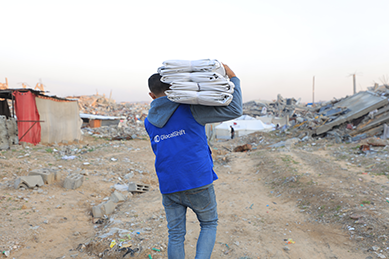
As winter rains sweep across Gaza, the scale of mass displacement becomes impossible to ignore. For hundreds of thousands of families, the destruction of homes has not been followed by recovery but by prolonged exposure to the elements. Months after widespread bombardment flattened neighbourhoods and damaged infrastructure, displacement is no longer temporary. It has become part of daily life.
With strict limits on aid entry and an effective ban on construction materials, families have been forced to assemble shelter from scraps of plastic, fabric and salvaged debris. These fragile structures provide little protection, particularly as weather conditions worsen.
When Rain Becomes a Threat
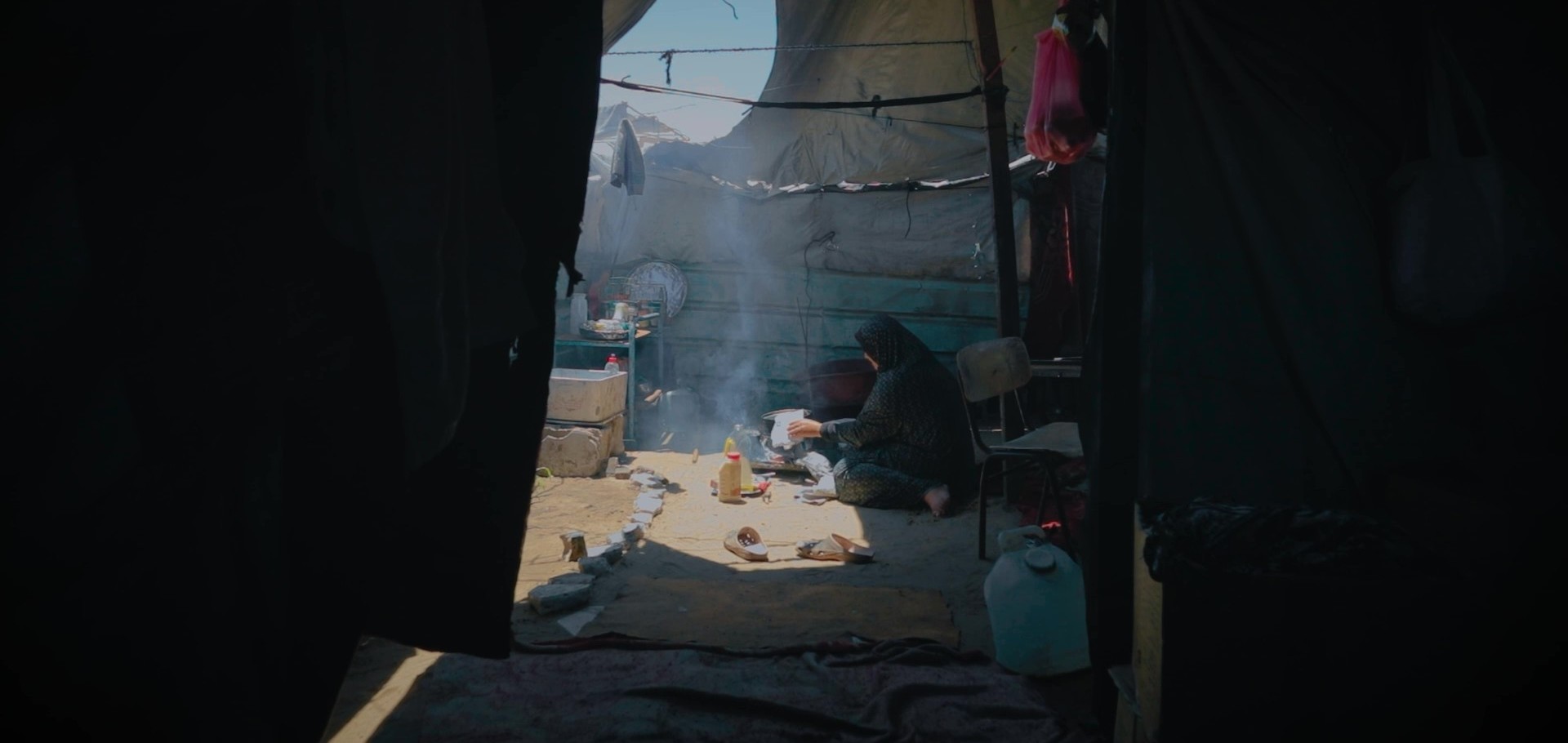
In recent weeks, heavy rain and strong winds have flooded tents and caused makeshift coverings to collapse across Gaza. Water leaks through torn plastic, soaking mattresses and blankets, leaving families to spend nights standing or huddled together to avoid the wet ground. For children and older people, the cold poses serious health risks, including respiratory illness and skin infections.
“The rain does not stop,” said Amina, a mother of four living in a tent. “When it comes, everything gets wet. Our clothes, the food, the children.”
What might be a seasonal inconvenience elsewhere has become life threatening in Gaza, where displacement sites lack drainage, insulation and basic protection from the weather.
An Emergency Response Under Constraint
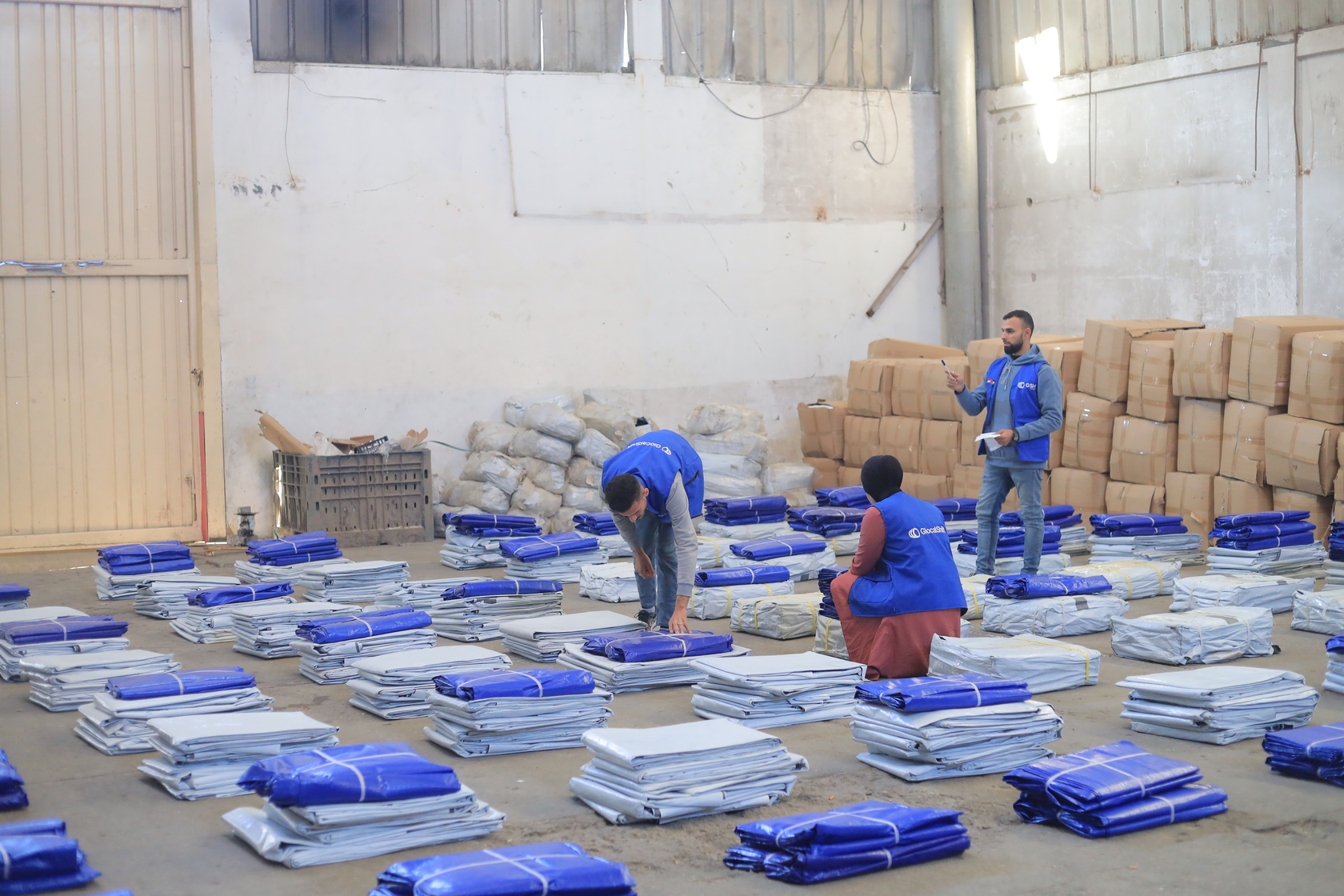
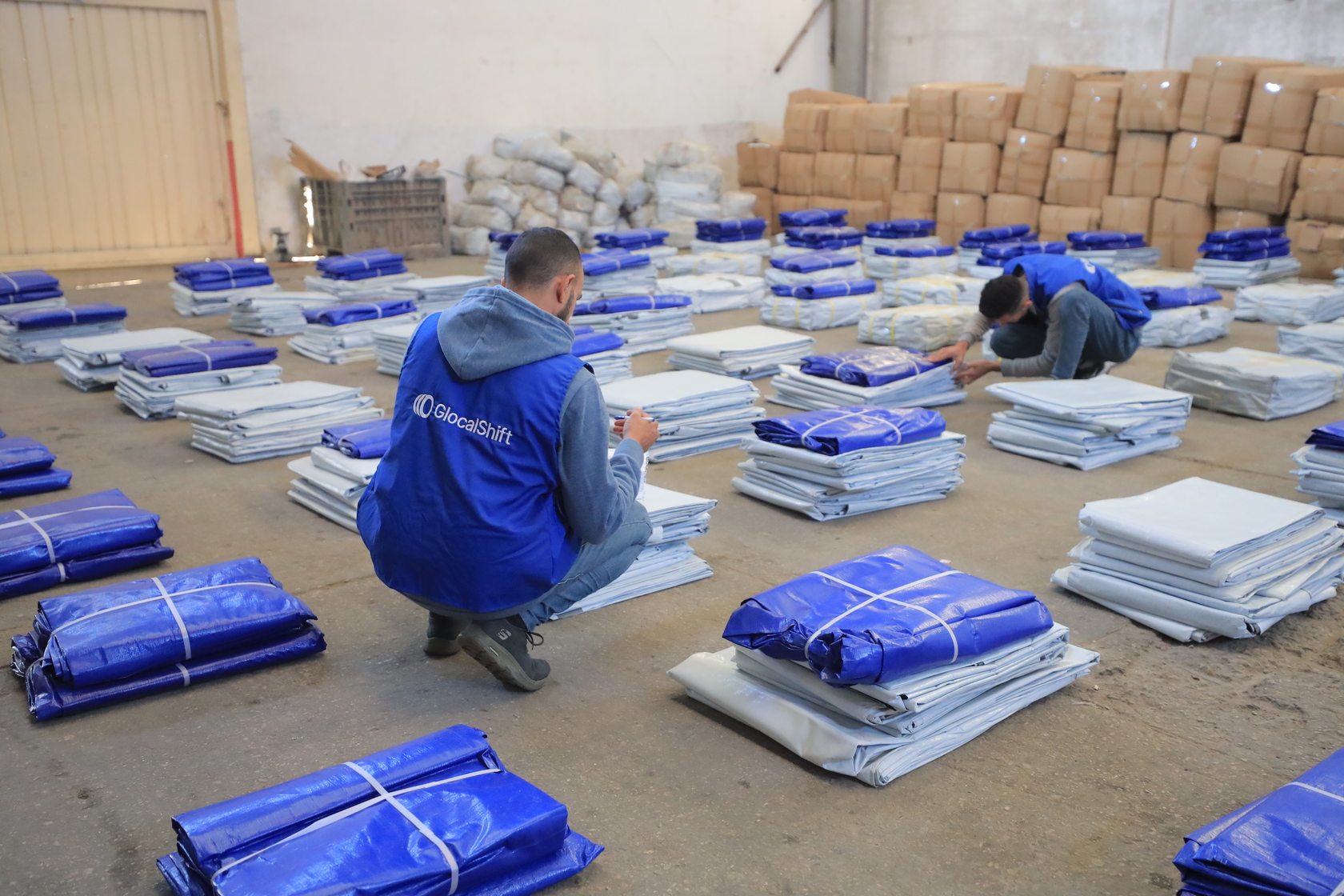
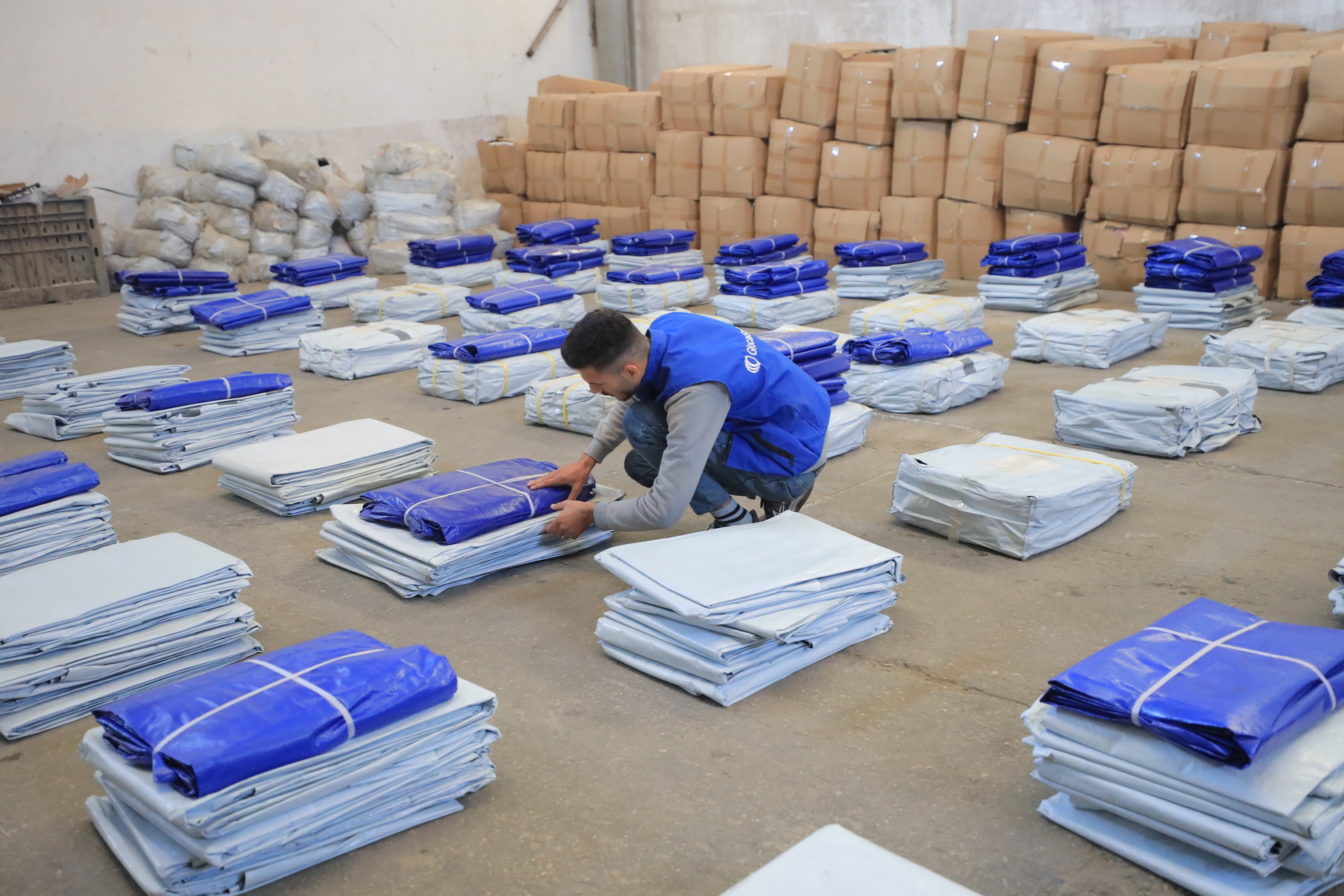
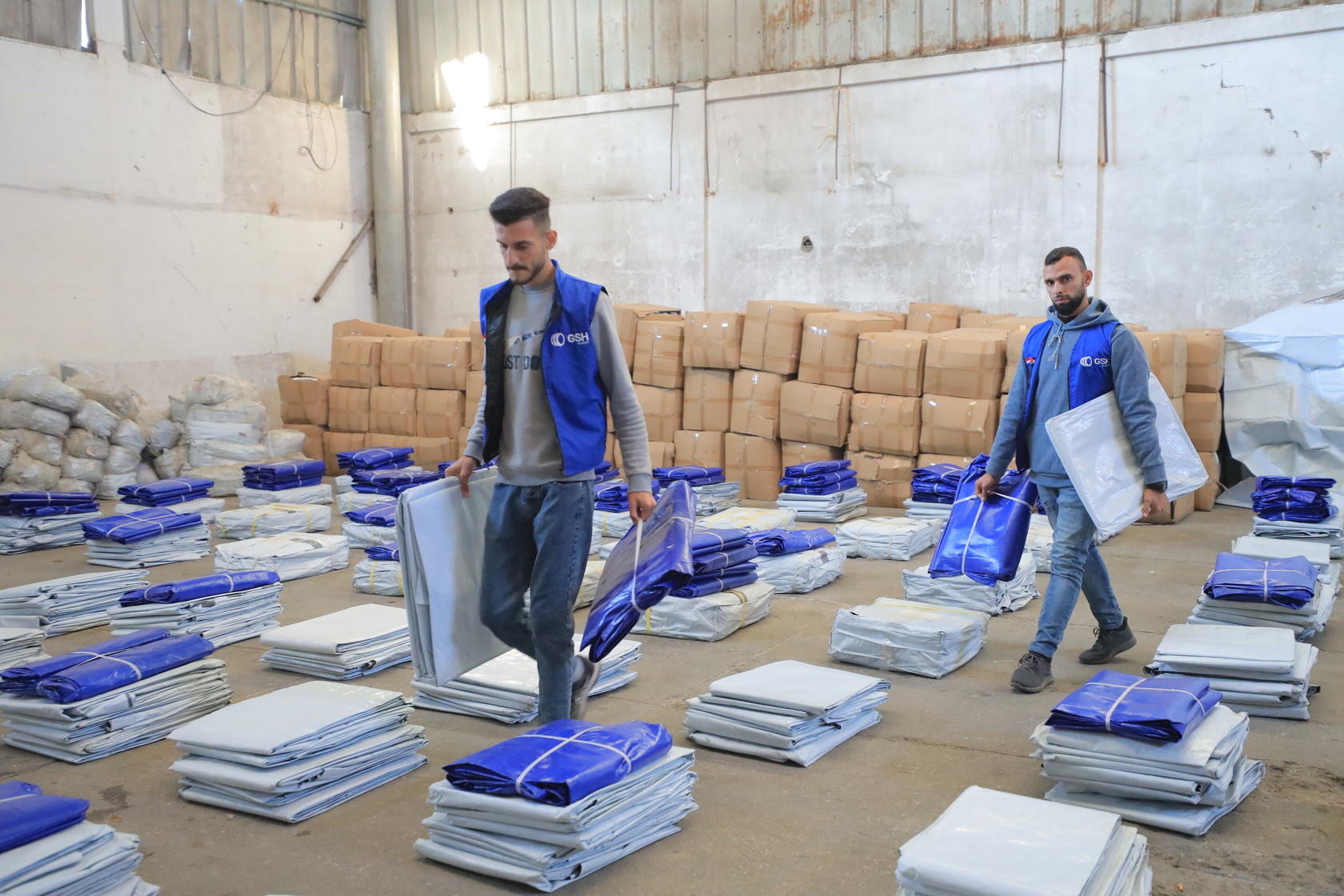
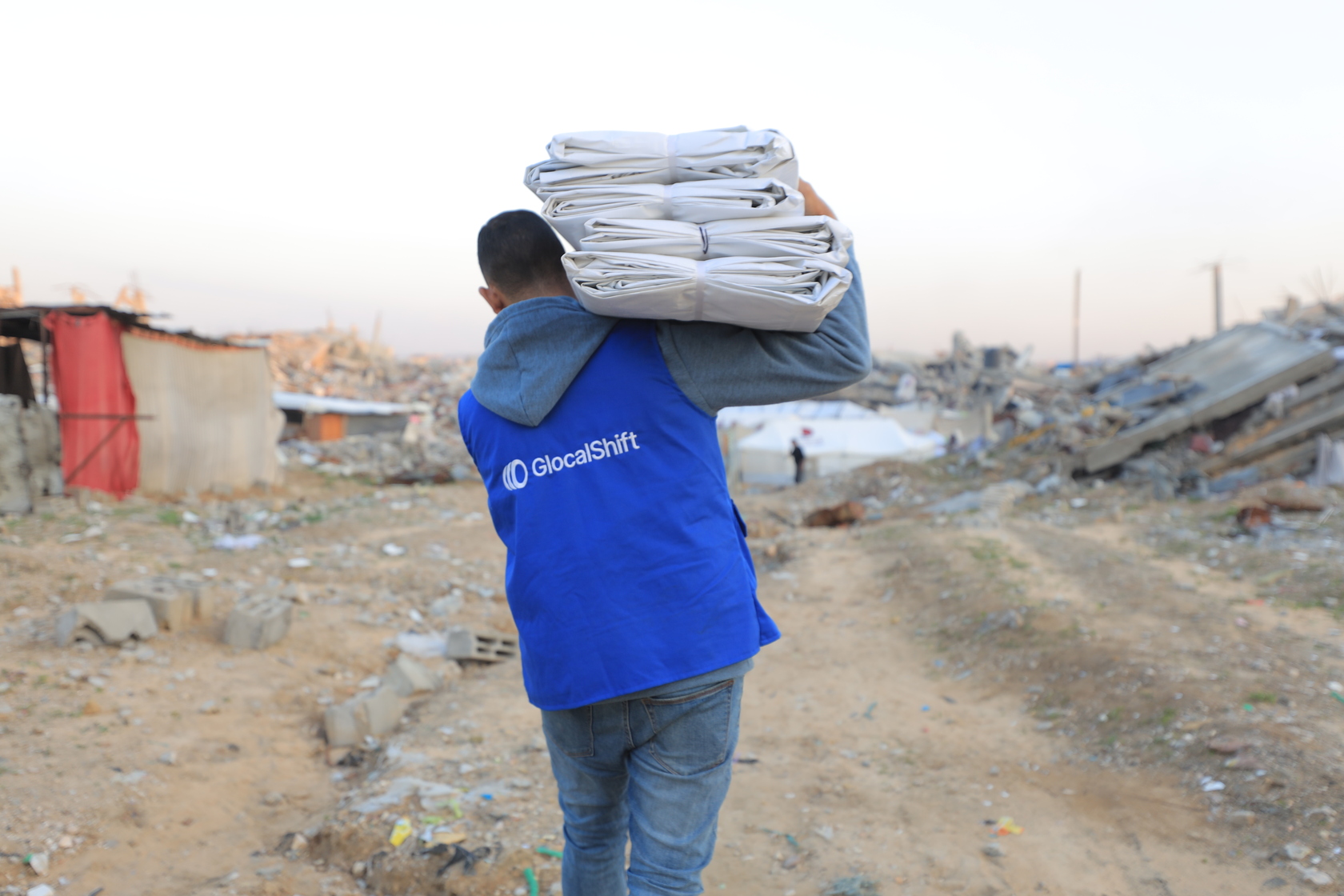
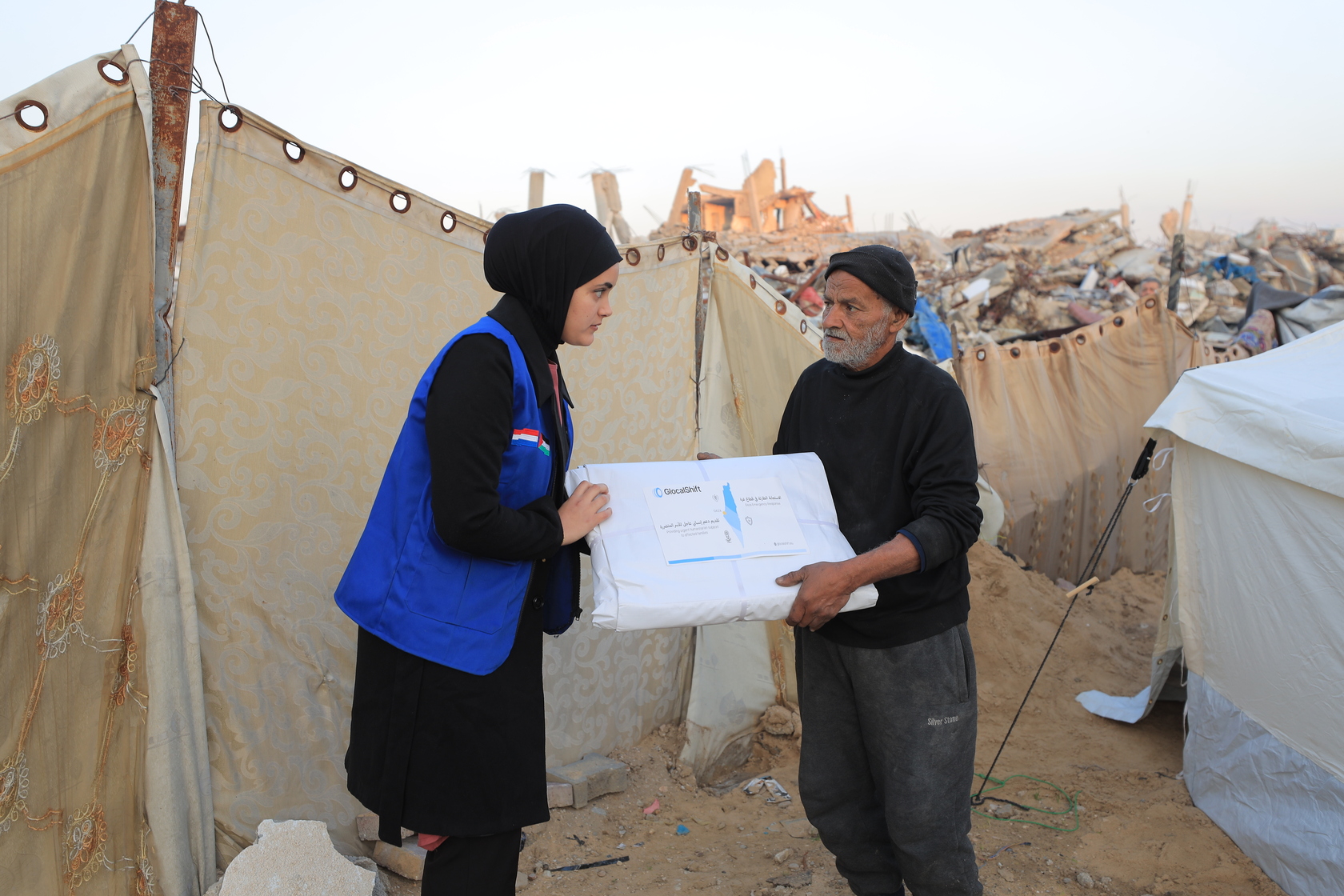
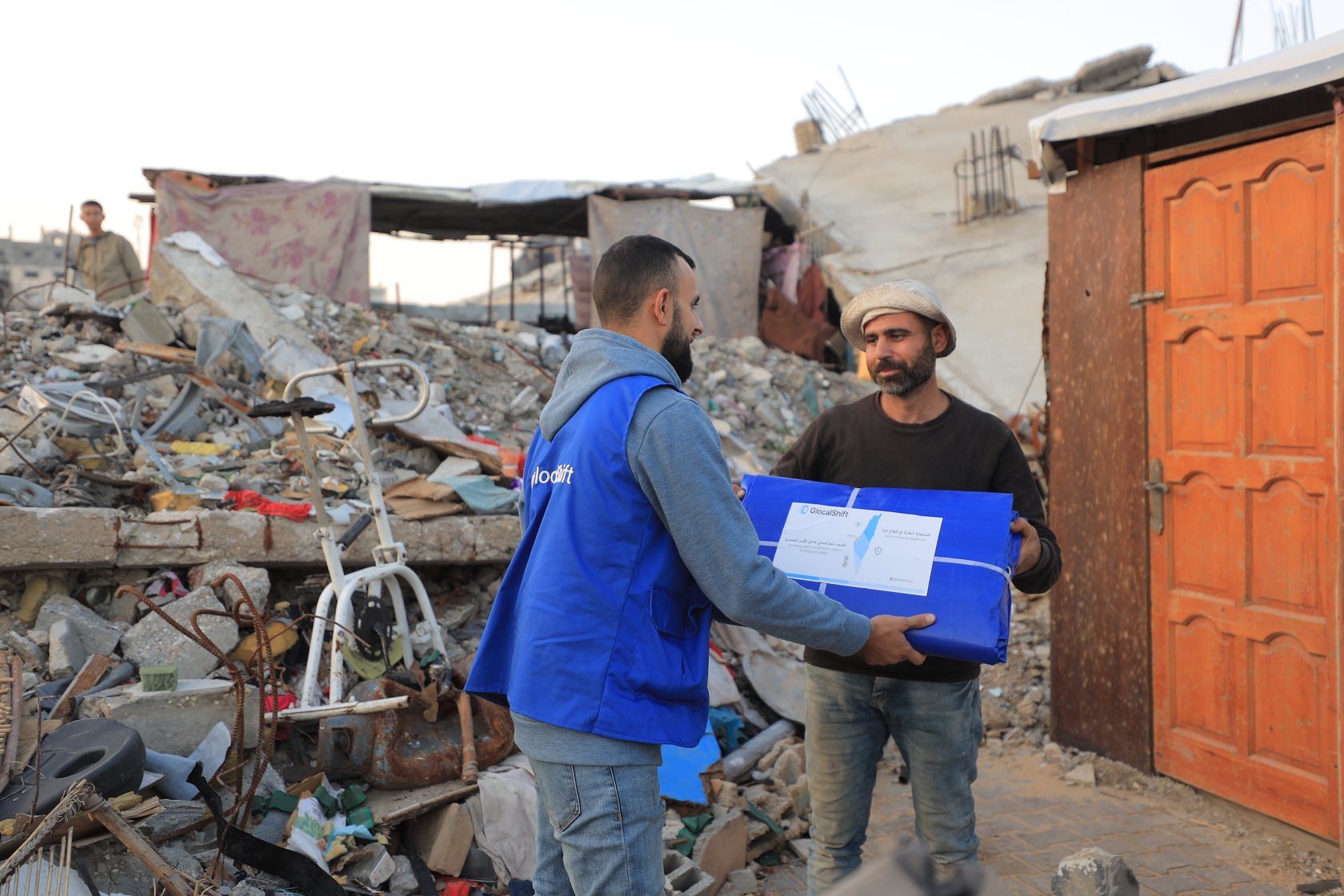
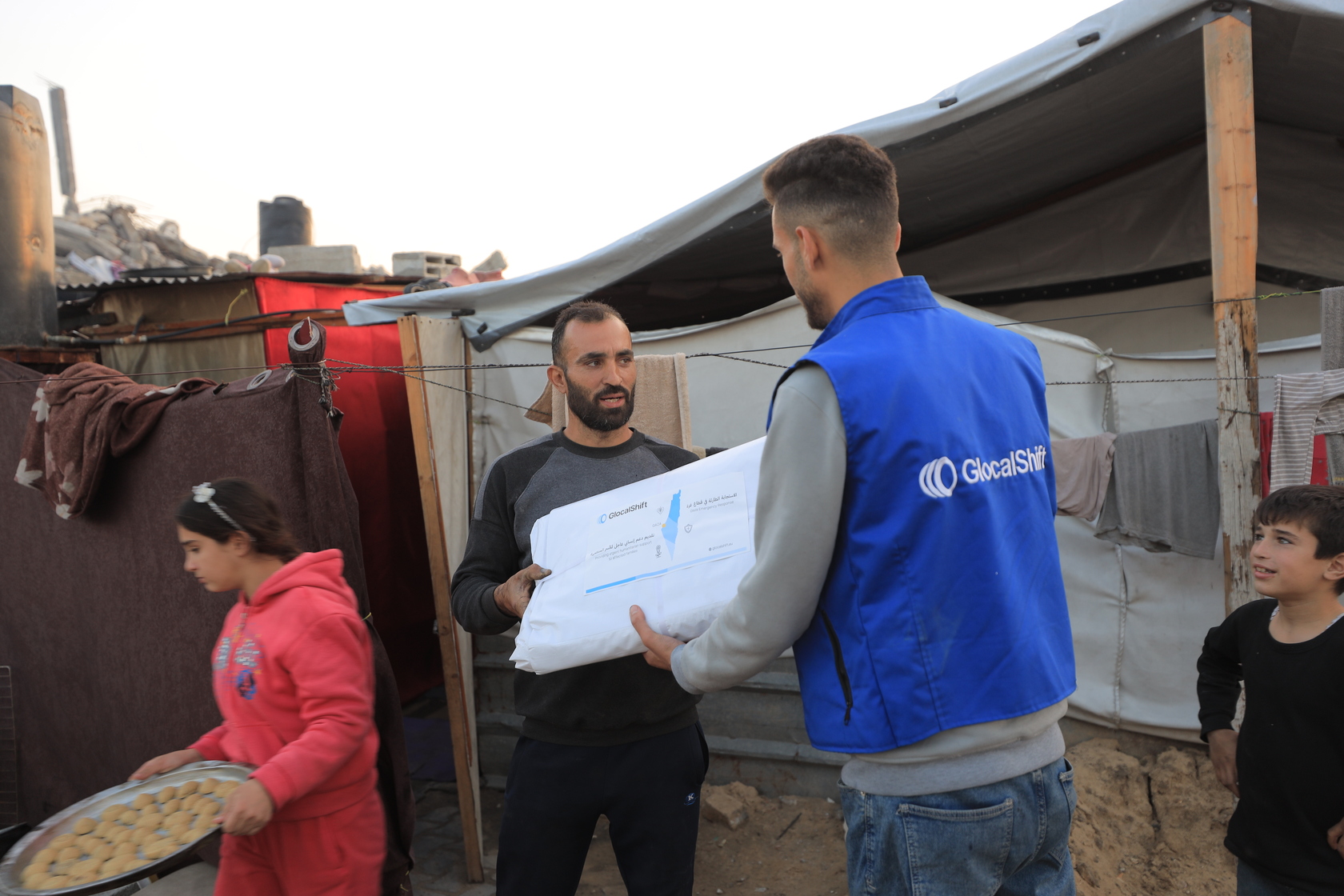
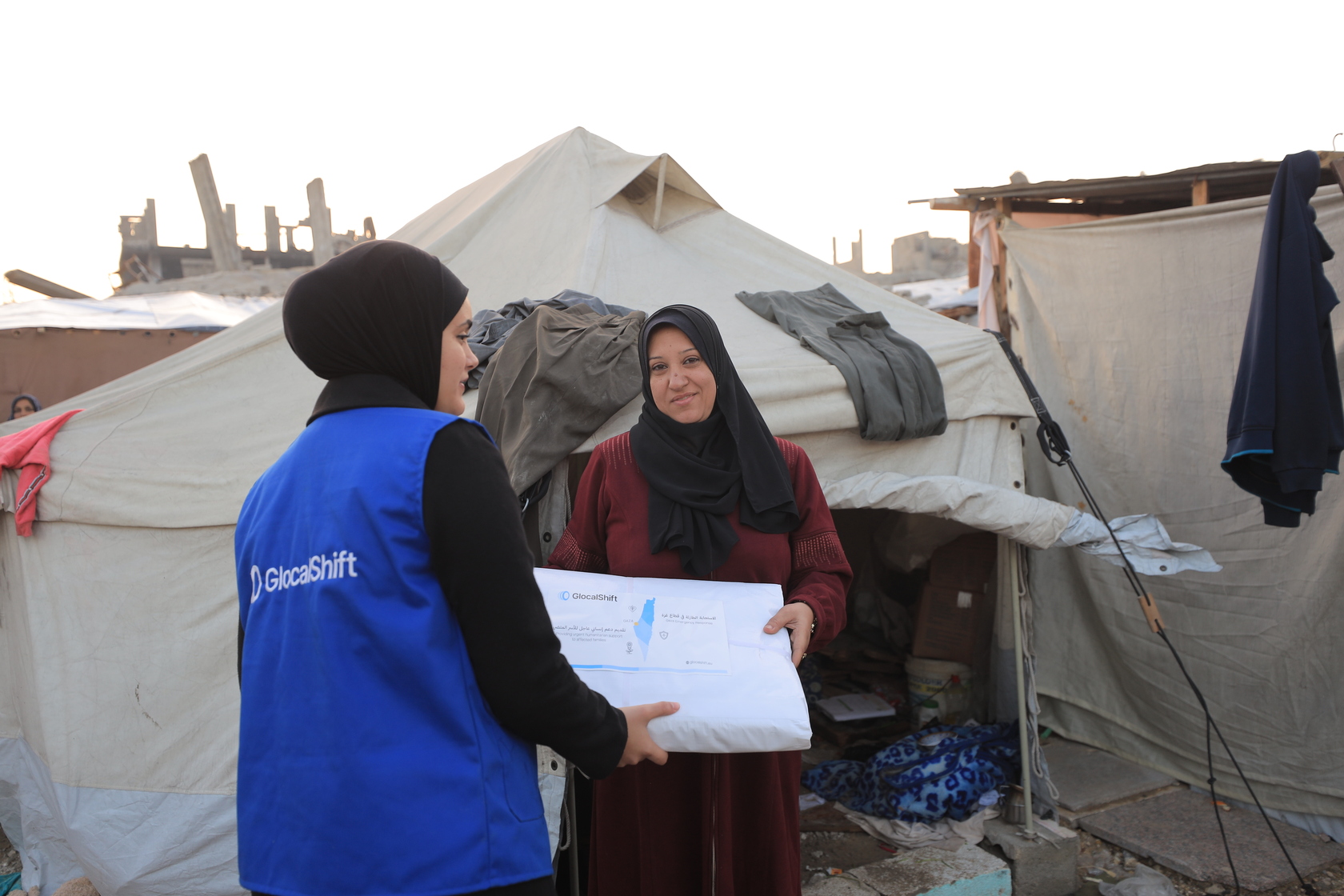
In response, GlocalShift worked with local partners to distribute nearly 2,000 tarps to families across Gaza. The distribution focused on households living in tents, damaged buildings and flood prone areas, with priority given to families with young children and others facing heightened risk.
The tarps provided immediate protection by covering exposed roofs, reducing water leakage and limiting wind penetration. Even this basic intervention required careful coordination, as access constraints and shortages continue to shape every aspect of aid delivery.
For some families, the impact was immediate. “The tarp helped us cover the roof and keep some of the rain out,” said Khaled, displaced from northern Gaza.
Relief That Falls Short
Tarps, however, are not shelter. They are a temporary measure that highlights the gap between urgent need and available solutions. Thousands of families remain without any form of protection, and those who received tarps know they offer only limited relief.
“This is not a solution,” Khaled added. “The next storm could destroy everything again.”
While emergency distributions are essential, they cannot replace safe and durable housing. As long as families remain confined to tents and improvised structures, each rainfall brings renewed risk and uncertainty.
Why Gaza Needs Caravans Now
Gaza does not need more short term fixes. It needs transitional shelter that can withstand winter conditions and provide a minimum level of safety and stability. Caravans that are insulated, weather resistant and equipped with basic services can offer families protection, privacy and dignity while reconstruction remains blocked.
Caravans are not a luxury. They are a practical and necessary response to prolonged displacement. They reduce health risks, protect children and allow families to endure winter without constant exposure to rain and cold. Without them, aid efforts remain limited to plastic sheets that cannot meet the scale of need.
“We are grateful for the help,” Amina said. “But we cannot live like this forever. We need something that can last.”
Beyond Emergency Measures
GlocalShift continues to respond to urgent needs on the ground, but emergency aid alone cannot resolve a crisis that has been allowed to persist. As winter conditions continue, the international community must move beyond short term responses and ensure the entry of caravans and shelter materials at scale.
Tarps may reduce immediate harm, but they do not provide safety, dignity or a future. Gaza needs real shelter, and it needs it now.
.jpeg)


%20-%20frame%20at%200m21s.jpg)