
.jpg)
Valeriia Bytka is a teacher. Medicine had interested her for as long as she could remember, but she never quite trusted herself with it. "I've always considered myself more of a humanities person," she says, "so I doubted I would ever be able to understand such a complex field."
Then her husband left to serve on the front line, and the question of whether she trusted herself with medicine stopped being theoretical. She was on her own now, in a house built for two people, with a kind of worry that didn't have anywhere to go. "There was this overwhelming sense of emptiness that was hard to cope with," she says.
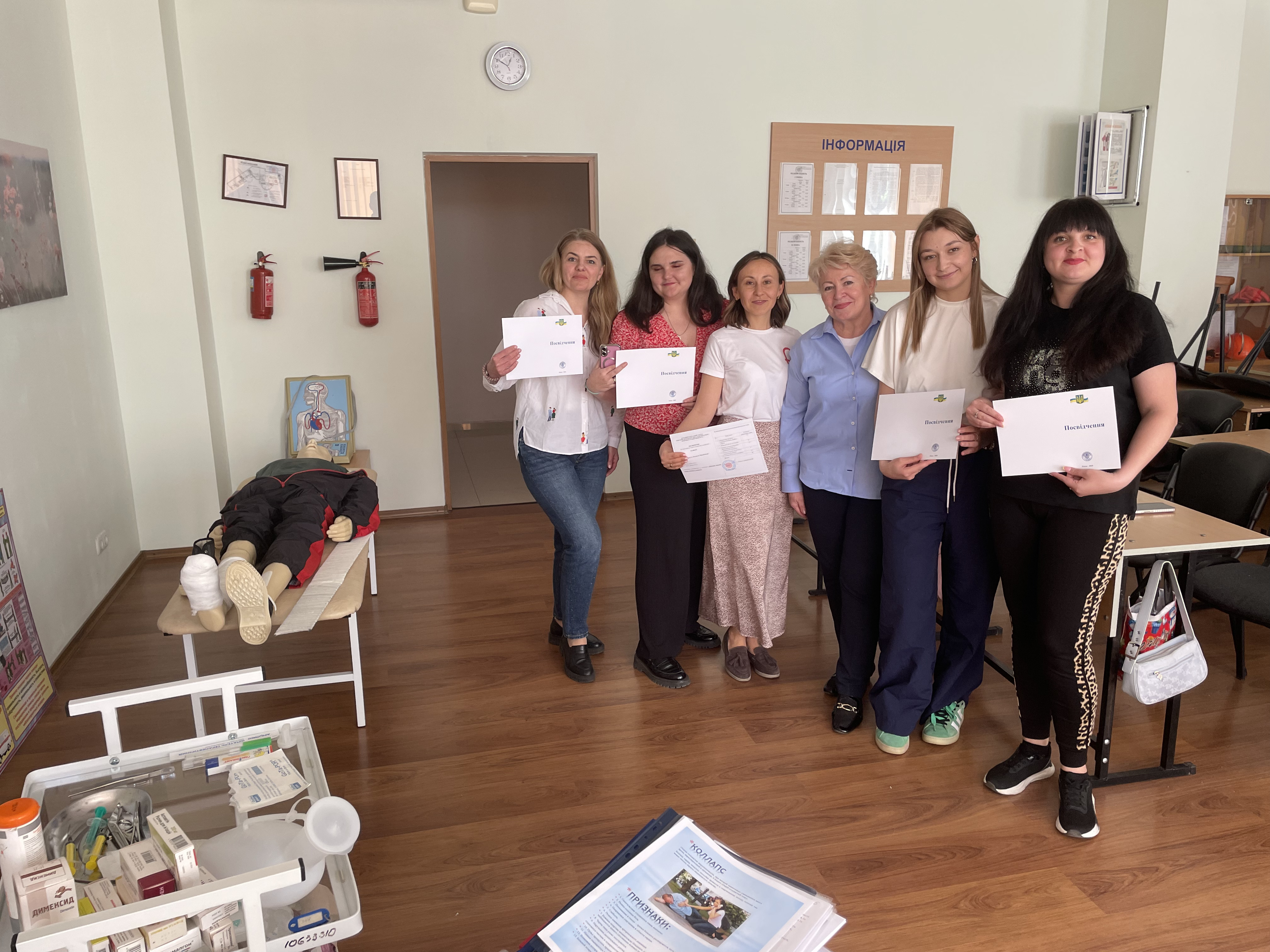
She'd heard about a reskilling programme run by GlocalShift in partnership with Prohresylni, training people in first aid to the standard of a nursing assistant. She signed up. "I decided to give it a try because the subject had always resonated with me," she says. "Before then, however, I simply hadn't felt emotionally ready to fully immerse myself in it."
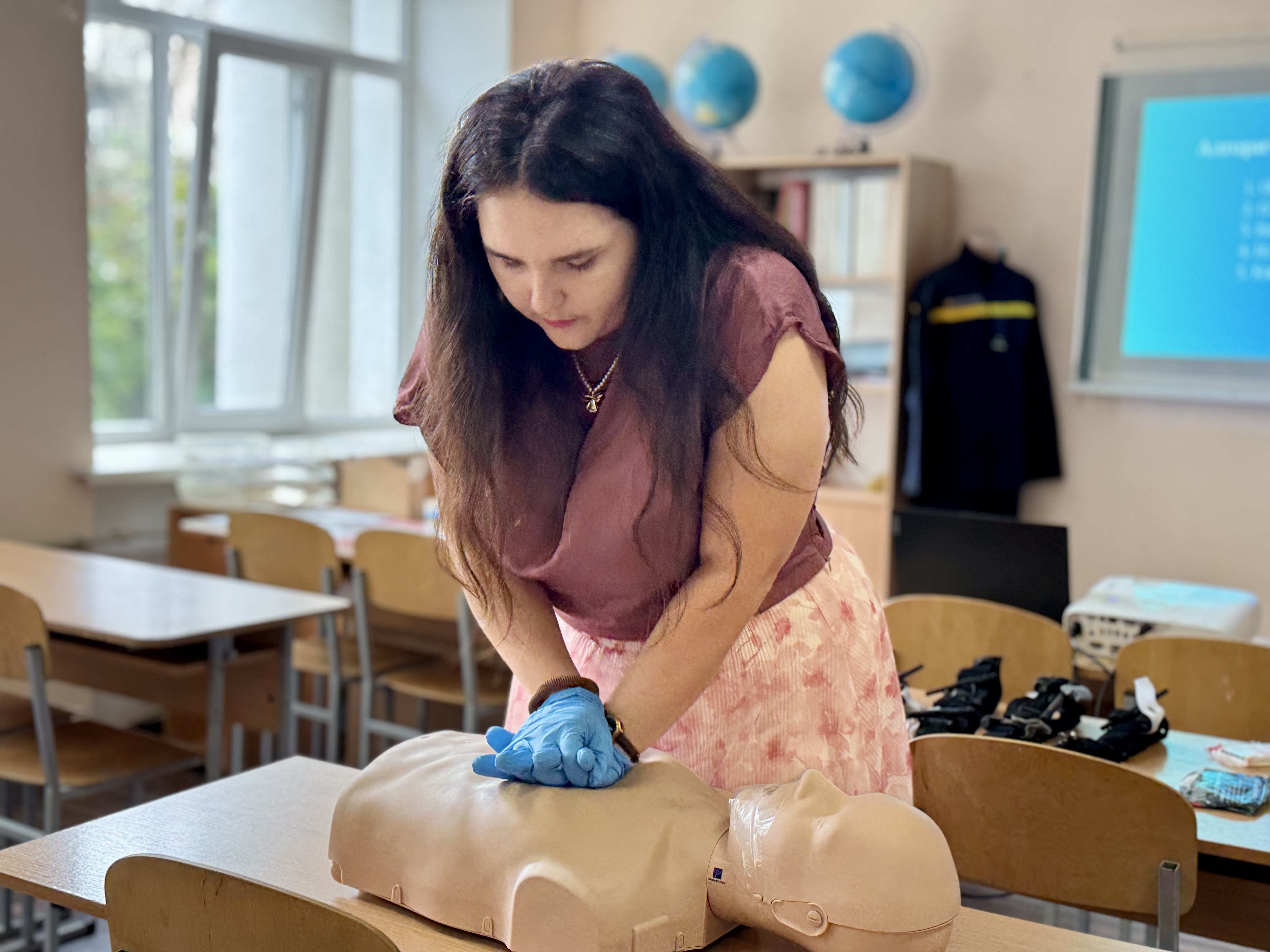
The course ran several weeks and covered the full range, including how to give an injection, intramuscular and intravenous. It was cardiopulmonary resuscitation, though, that stayed with her the most. "Fortunately, life-threatening emergencies don't happen every day," Valeriia says, "but knowing how to respond correctly in those critical moments can literally mean the difference between life and death."
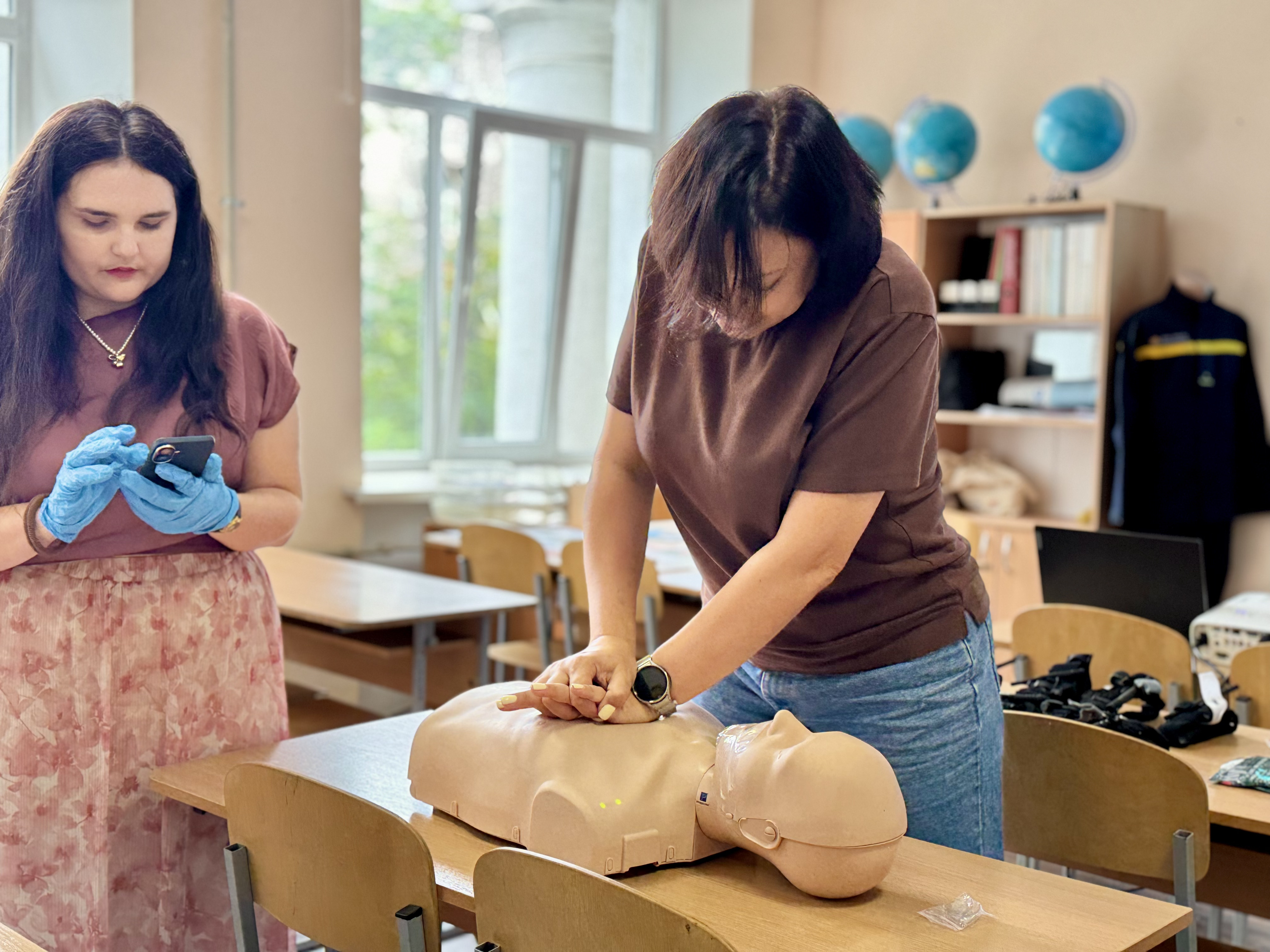
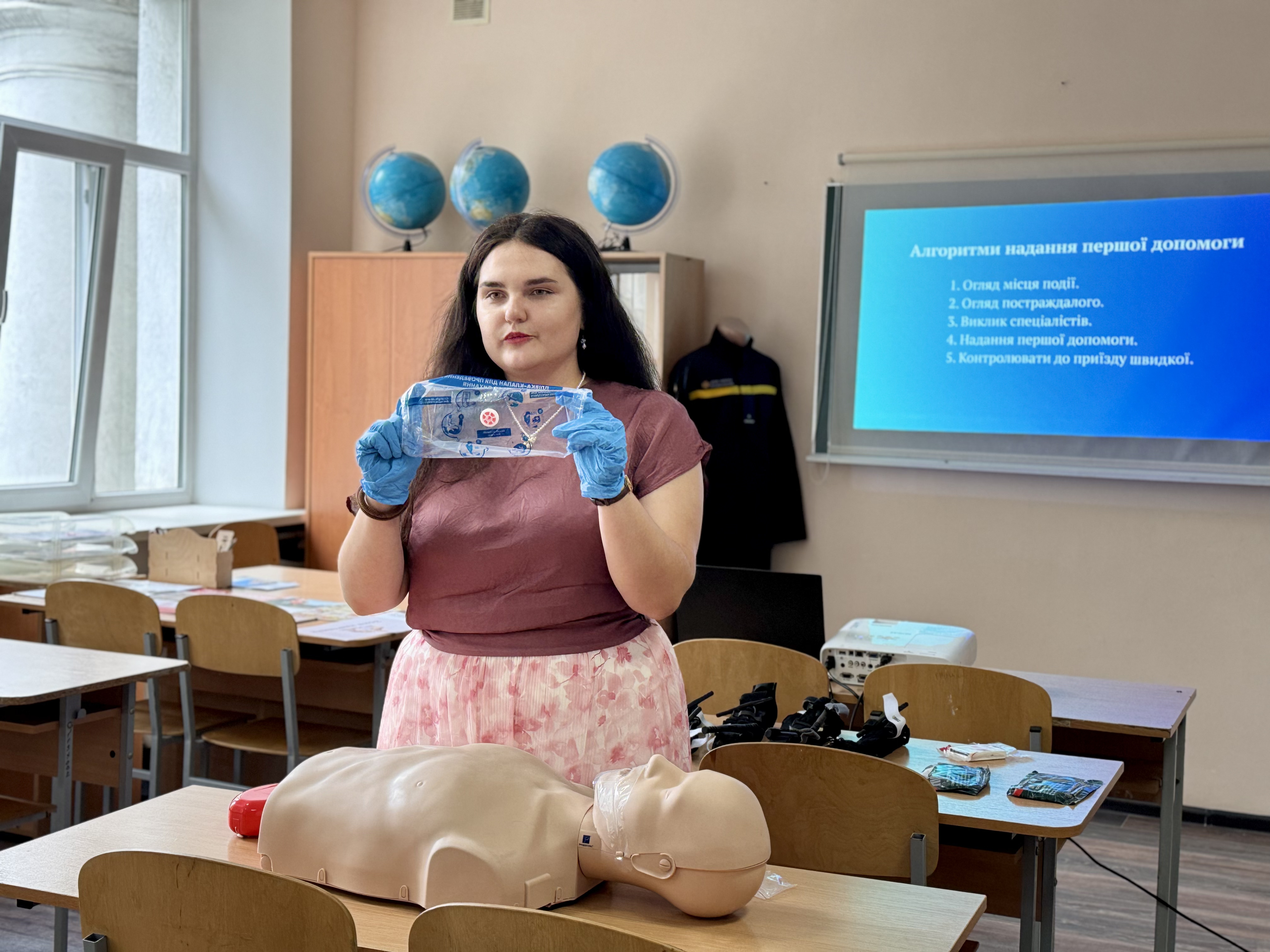
A year on, she's the one running the sessions. Her students work through the same steps in pairs, checking for breathing, finding the right hand position, counting the compressions out loud, while she moves between them, correcting grip and pace. It has almost nothing to do with a textbook. "These techniques should be refreshed at least every six months," she tells every group, "because they rely heavily on muscle memory. In a real emergency, your body needs to respond almost automatically."
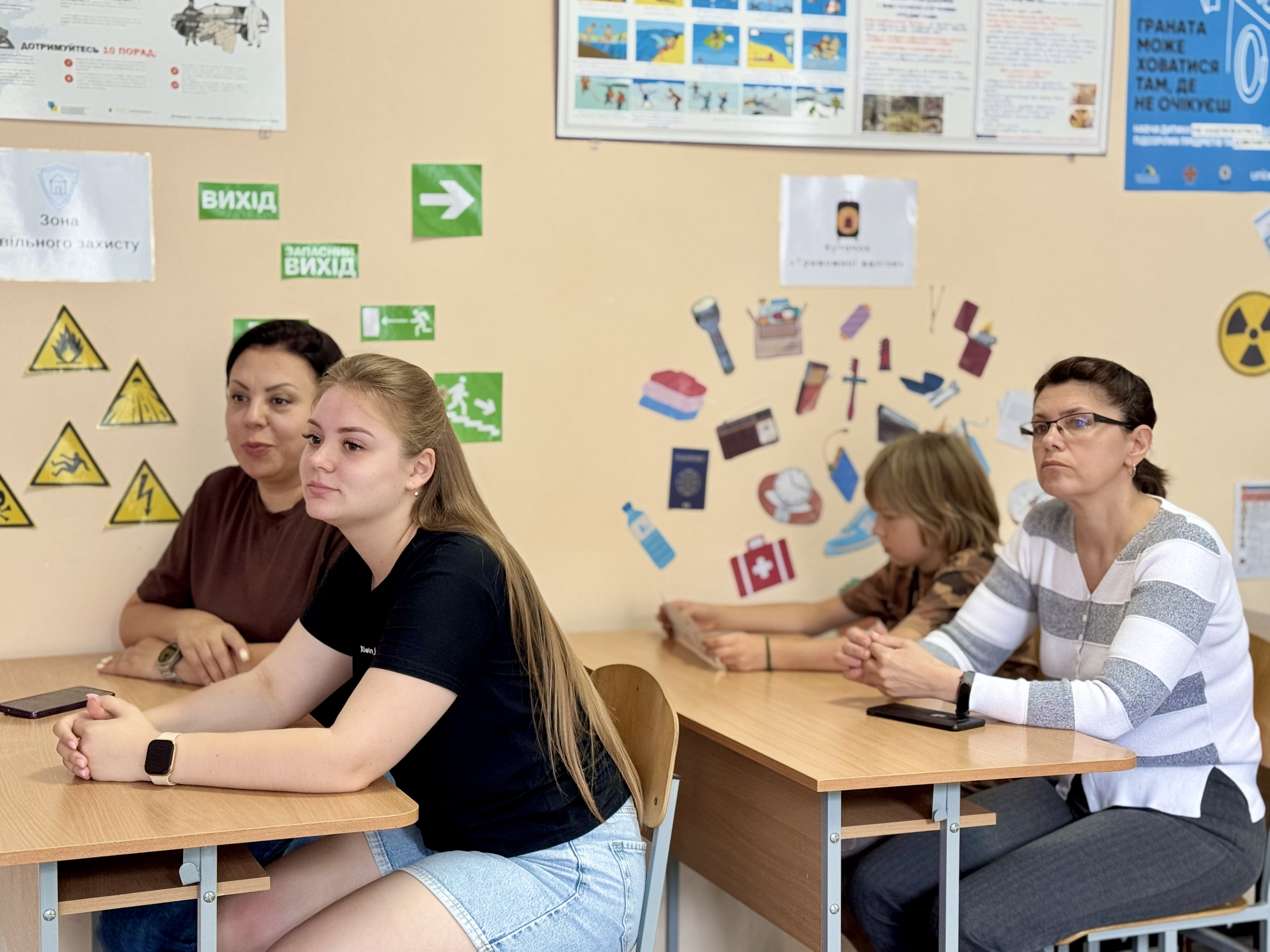
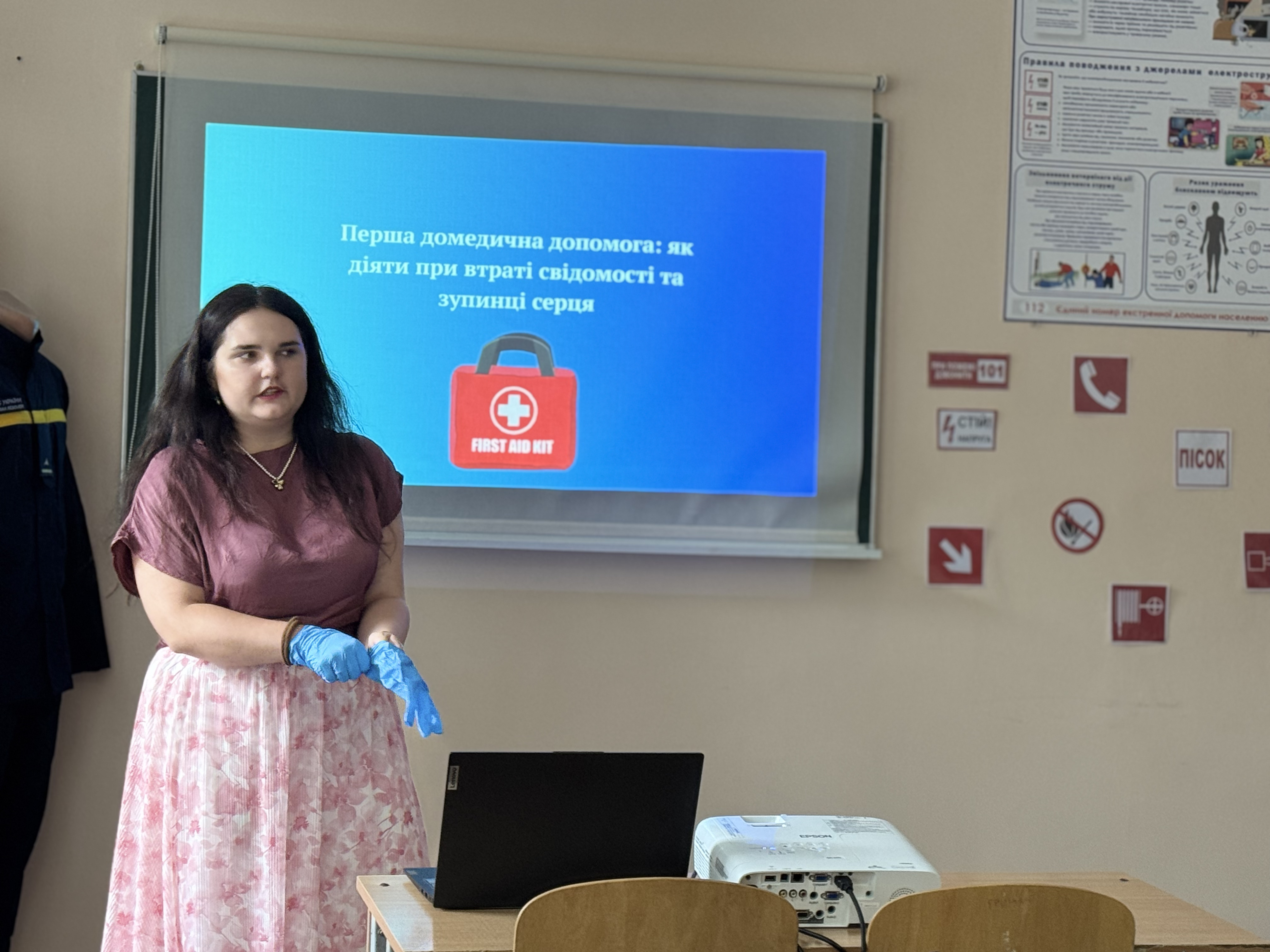
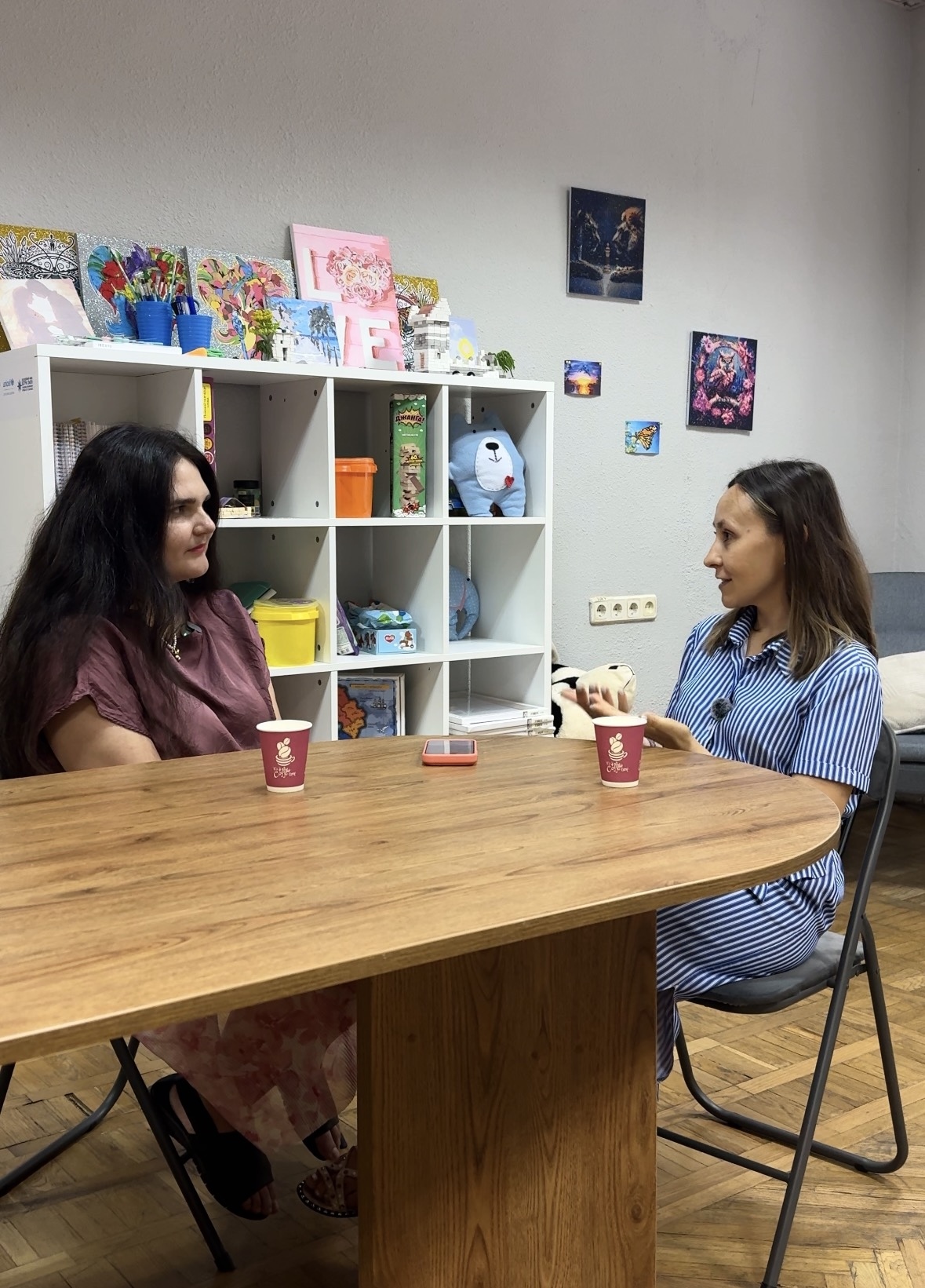
Her husband is still serving. She's asked, occasionally, whether it feels connected: teaching these same skills to teenagers from Kherson Oblast and other communities near the fighting while he's on the other side of it. She doesn't romanticise the answer.
"Teenagers may one day forget a complex academic theory or a philosophical concept they studied in class, but they are far more likely to remember the steps that could save someone's life."
The need for it isn't hypothetical. Earlier this year, a young woman died from an injury on the Odesa seashore that doctors believe was survivable, if someone nearby had known what to do before the ambulance arrived. Several people at Valeriia's most recent session told her that was exactly why they'd come. "Many people have read bits and pieces online or watched short videos on social media," she says, "but they lack a structured understanding of what to do in an emergency. They don't know the correct sequence of actions."
The work pays now, too. She's brought in for sessions by outside organisations, and her college has added a course to her schedule on first aid and support for people under acute stress. Her mother likes to joke that she's gone so far into it she'll end up in healthcare for real.
Valeriia has no plans to leave teaching. But she's not ruling it out either.
.jpg)