
%20(2).png)
Nu'man Abu Shamlakh grew up in Beit Lahia, in northern Gaza, with a dream that never wavered. From an early age, he wanted to become a surgeon and dedicate his life to caring for the people of his community.
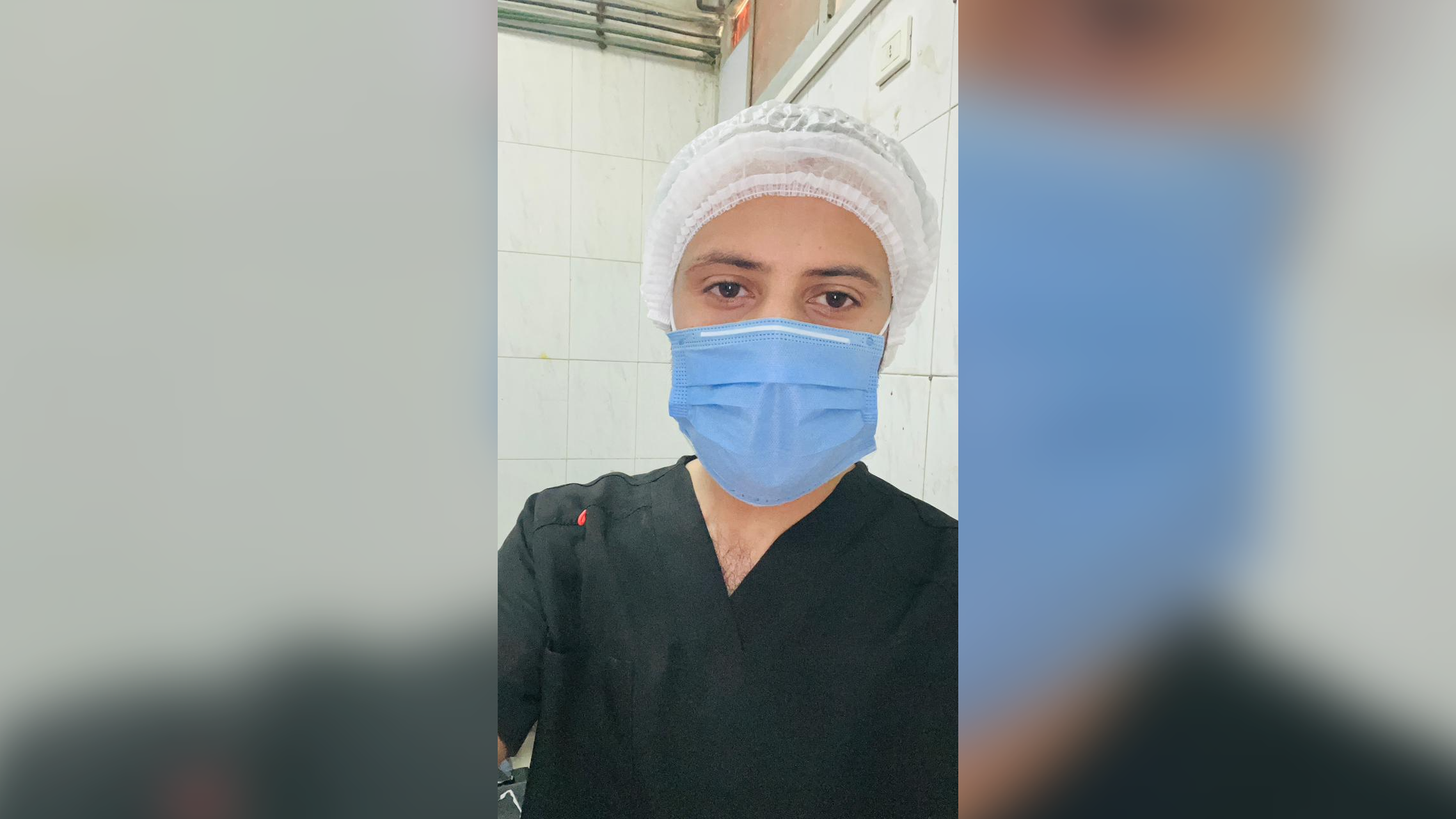
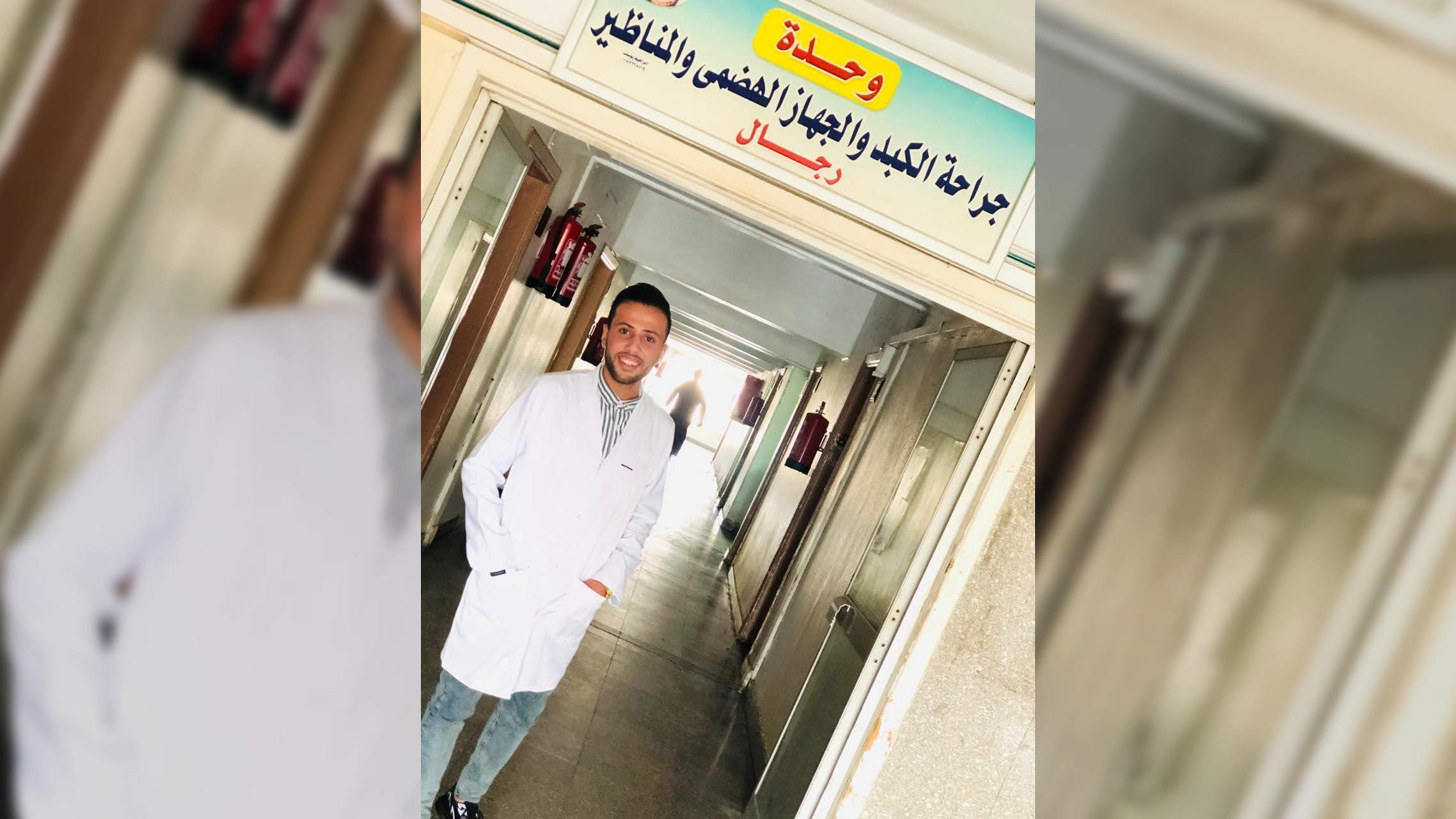
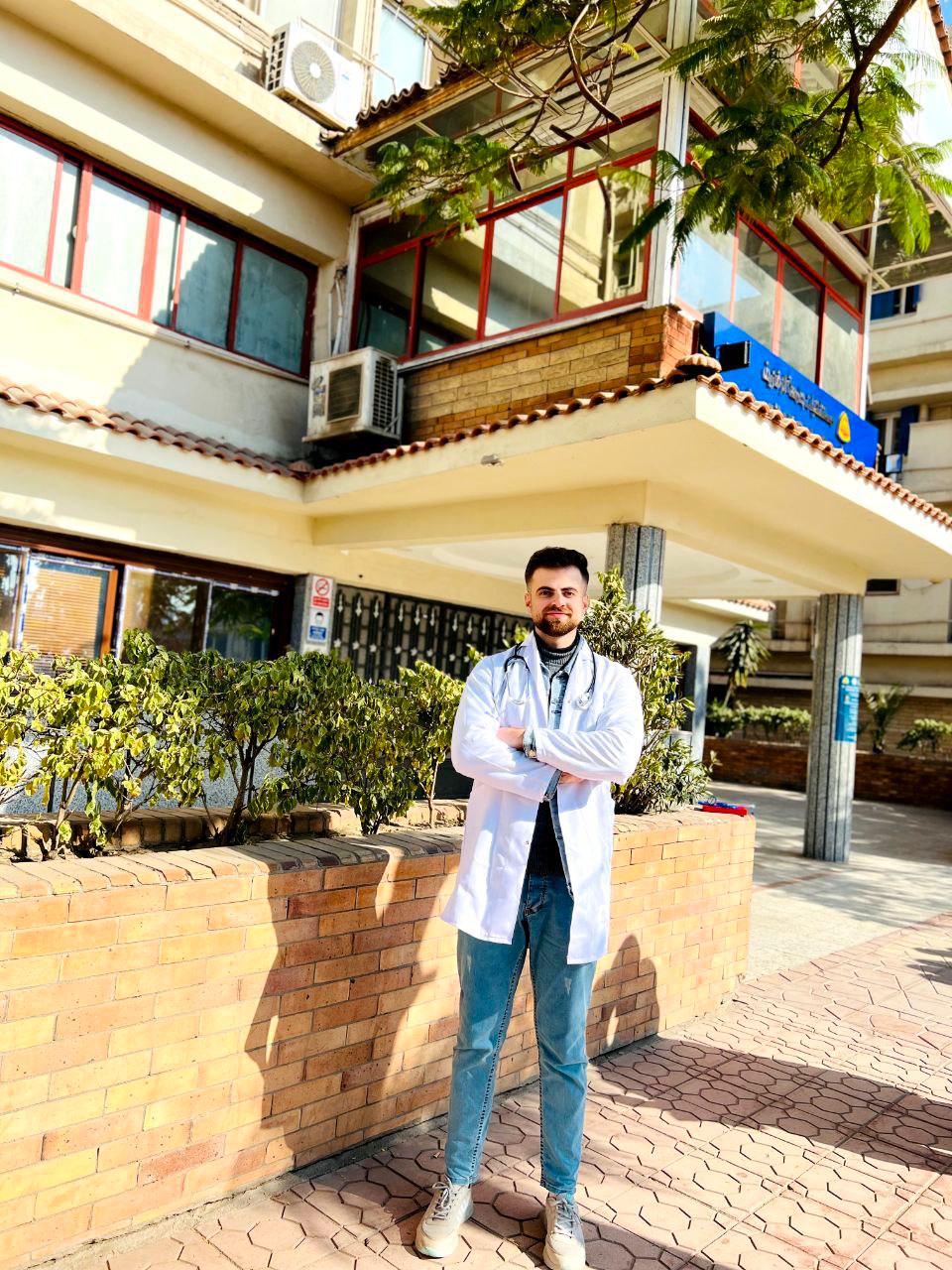
Today, he is a medical intern based in Egypt, working towards a specialisation in urological surgery. It is a field that draws him for the precision it demands and, more importantly, for the difference it can make to a patient's quality of life.
For Nu'man, medicine has never been simply a career. "It is a responsibility," he says. "A way to serve people when they are at their most vulnerable."
His commitment to service began long before medical school. From the age of nine, Nu'man volunteered with the Palestine Red Crescent Society, and went on to become one of the youngest members of a local municipal youth council. Before the war, like many Palestinian students, he left Gaza to pursue specialised medical training unavailable at home. Even from a distance, he stayed rooted in the community that had shaped him.
The scale of this challenge is evident in the number of Palestinian students who have sought higher education opportunities in Egypt despite mounting financial and humanitarian pressures. According to the Palestinian embassy in Egypt, approximately 13,000 Palestinian students are currently enrolled in universities across Egypt. Access to higher education, however, comes with a significant financial burden. Annual tuition fees range between USD 3,000 and USD 7,000, depending on the field of study, the university and the country in which students obtained their secondary education. When combined with accommodation and living expenses, these costs place higher education beyond the reach of many students.
The war on Gaza has further compounded these challenges. Many students have lost financial backing as a result of displacement, widespread destruction and the collapse of household livelihoods. As a consequence, those who once relied on family support to continue their studies now face the risk of interruption at a time when education remains one of the few pathways to stability, dignity and future recovery.
While the world's attention has, understandably, focused on Gaza's immediate needs, food, water and shelter, this war has also produced quieter, less visible catastrophes. Among them is a generation of students whose futures have been placed in jeopardy, not by choice, but by circumstance.
-landscape.png)
-landscape.png)
-landscape.png)
When the war escalated in October 2023, Nu'man found himself following events from Egypt while his family remained in Gaza, exposed to the danger unfolding around them. Communication blackouts often meant days would pass with no word from home. The silence was its own kind of suffering.
"I was living every day with fear," he recalls. "Sometimes we couldn't contact them for days."
The war also severed the financial lifeline that had kept Nu'man in his studies. His father, a farmer whose income depends entirely on the land, lost his livelihood almost overnight. As tuition fees mounted, Nu'man feared the dream he had carried since childhood was slipping out of reach.
Despite the fear, the financial strain and the ache of separation from his family, Nu'man kept training. Stopping, he says, was never an option.
"Continuing my studies was my responsibility, to myself, my family and my community," he explains.
Nu'man's studies were sustained through the Return to Rebuild scholarship programme for Gazan students, funded by the Arab Fund for Economic and Social Development and implemented by GlocalShift in coordination with the Embassy of the State of Palestine in Egypt. The programme prioritises students in scientific and medical fields, recognising that Gaza's recovery will depend, in no small part, on the doctors, engineers and specialists now training abroad.
The scholarship eased the immediate pressure of tuition and gave Nu'man the stability to focus fully on his training. But its impact reached further than the financial relief.
"It showed me that someone believes in my future," he says. "That gave me the strength to continue."
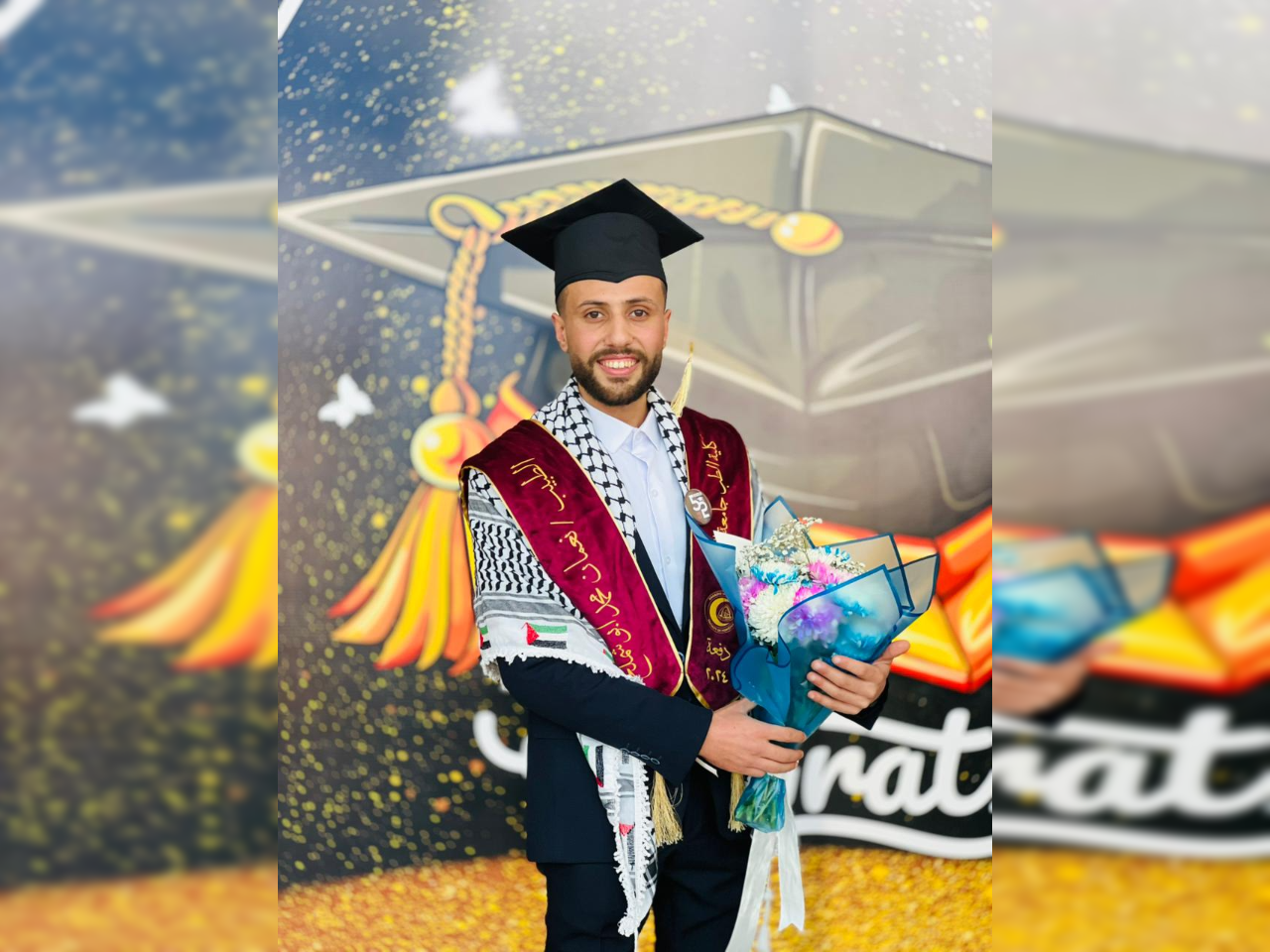
Nu'man is now completing his internship and preparing for the next stage of his medical career. His ambition remains as clear as it was in Beit Lahia: to specialise in urological surgery and, one day, return to Gaza to help rebuild its healthcare system.
"The future is no longer something guaranteed," he reflects. "It is something we have to work for."
For Nu'man, that work continues, carried forward by determination, by education, and by the hope of one day returning home to care for the people who first shaped his dream.
To date, 106 students have received the Return to Rebuild scholarship, with their outstanding tuition fees paid directly to universities in Egypt on their behalf.
In total, USD 600,000 has been paid directly towards university tuition fees, removing a critical financial barrier and allowing students to focus on their studies during an exceptionally uncertain period. The programme is funded by the Arab Fund for Economic and Social Development, whose support has been instrumental in translating solidarity into tangible, life changing outcomes.
-landscape.png)
.jpeg)
.jpeg)